France launches one-euro university meals for all students / Photo: Martin BUREAU - AFP/File

 Martin wins Austrian MotoGP sprint after Acosta crash
 Japan edge Fiji to win Pacific Nations Cup
 Black smoke, flames rising near Riyadh airport: residents to AFP

 UK actor Naomi Watts honoured at Spain film festival

 Japan emperor declares Asian Games open after turbulent build-up

 Asian Games open with unity message after troubled build-up

 Denmark hails 'binding' Greenland deal with Trump

 We don't want Games host Japan losing money, says Asian Olympic official

 Ed Sheeran returns to stage after Palestinian controversy

 Asian Games to open in Japan after troubled build-up

 Drone owners rush to offload devices ahead of Beijing ban

 Trump's beef policies irk Texas ranchers, testing their loyalty

 Kennedy Center: future unclear for iconic Washington arts hub

 Trump claims 'infinite' Greenland security deal with Denmark

 Helicopters battle wildfire threatening Ecuador's capital

 Brentford batter Chelsea to undo Alonso's promising start
 Kane hits Bundesliga century as Bayern rout Union
 Trump says CNN, MS NOW, Politico banned from White House
 Hushing and hedging: US companies retreat on climate

 Springboks to face Fiji before 2027 Rugby World Cup
 Nigeria miners struggled to breathe in cell before 37 died: survivors

 McIlroy on the charge at PGA Championship as Reed withdraws

 McIlroy on the charge at PGA Championship

 Crisis-wracked Volkswagen warns of 10-bn-euro hit to profits

 Costa Rica's Grynspan tops third informal poll for UN chief: diplomat

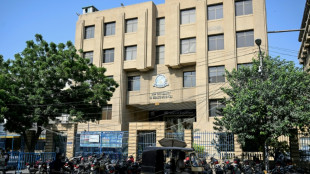
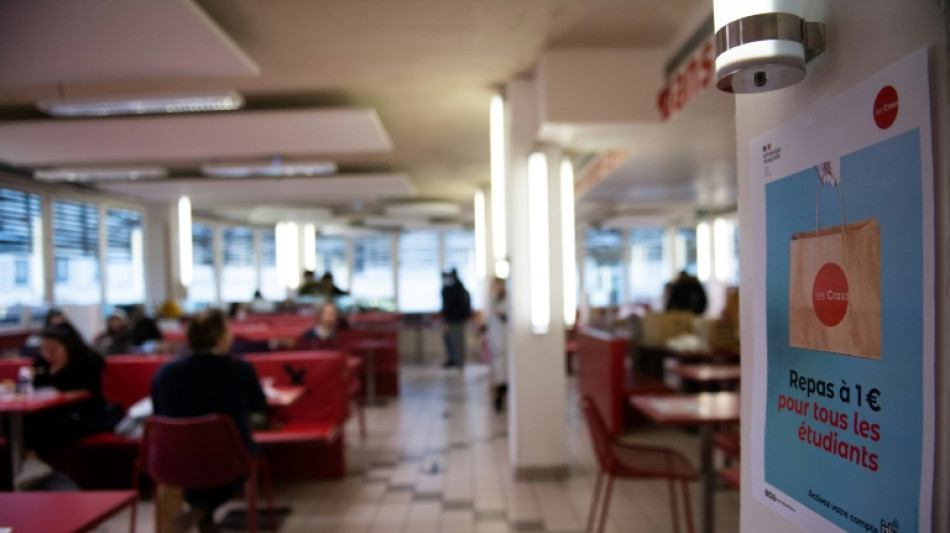
French university canteens began offering one-euro meals to all students regardless of income on Monday, in a measure designed to address financial hardship.
The move follows a push by student unions to extend the one-euro rate ($1.17) for a three-course meal to all students, down from the usual 3.30 euros.
The price, which covers a starter, main course and dessert, was previously only available to those with low incomes or receiving financial aid.
For Alexandre Ioannides, an 18-year-old student in Paris, the measure will slash his monthly canteen expenses.
"I come here 20 times a month. That's about 60 euros. Whereas now, I'll pay 20 euros," he said, adding the savings would go towards "going out or eating at a restaurant".
The policy aims to alleviate financial strain for students in France, where a January survey by a student union organisation found 48 percent have gone without food for financial reasons and 23 percent do so several times a month.
Around 667,000 students benefited from the one-euro lunch scheme in 2024, a 5.3-percent increase from the previous year, with around 46.7 million meals served at both the discounted and standard 3.30-euro rates, according to university restaurant operator Crous.
Authorities are preparing for a rise in demand, with Higher Education Minister Philippe Batiste promising 120 million euros in 2027 to back the scheme.
"It is a small internal revolution," said Batiste, who pledged to oversee the programme to ensure it does not lead to an excessive workload for canteen staff or a decline in food quality.
N.Walker--AT