Austria set to vote on headscarf ban in schools / Photo: Alex HALADA - AFP

 Carapaz out of cycling world championships

 'Fragile' Tottenham beaten by Aston Villa despite late rally

 Mourinho hails Real Madrid grit before Atletico derby clash
 Martin wins Austrian MotoGP sprint after Acosta crash

 Japan edge Fiji to win Pacific Nations Cup

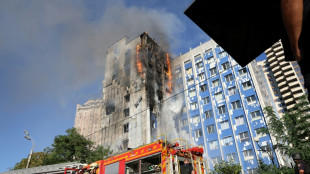
 Black smoke, flames rising near Riyadh airport: residents to AFP
 UK actor Naomi Watts honoured at Spain film festival
 Japan emperor declares Asian Games open after turbulent build-up

 Asian Games open with unity message after troubled build-up
 Denmark hails 'binding' Greenland deal with Trump

 We don't want Games host Japan losing money, says Asian Olympic official
 Ed Sheeran returns to stage after Palestinian controversy

 Asian Games to open in Japan after troubled build-up
 Drone owners rush to offload devices ahead of Beijing ban

 Trump's beef policies irk Texas ranchers, testing their loyalty

 Batman Appears Atop the Sydney Opera House for Batman Day 2026

 Nvidia, OpenAI CEOs to attend Xi dinner at White House

 Anthropic picks Accenture for in-house AI safety evaluation
 Balogun returns as Monaco beat Lens to continue strong Ligue 1 start

 'Pause' on overt repression in Venezuela, but reforms still needed: HRW

 Global stocks mixed as yen falls despite Bank of Japan rate hike

 Cuba hit with seventh major blackout of the year
 Murray out with concussion so Wentz will start for Vikings

 UN chief 'deeply regrets' US visa refusal to Abbas for annual meeting

 England quick Carse to face no charges over alleged nightclub assault

Austrian lawmakers on Thursday are expected to approve a law banning headscarves in schools for girls under 14, a move rights groups and experts say is discriminatory and could deepen societal division.
Austria's conservative-led government -- under pressure at a time when anti-immigration sentiment is running high -- proposed the ban earlier this year. They argue it is to protect girls "from oppression".
In 2019, when the country introduced a ban on headscarves in primary schools, the constitutional court struck it down, calling it unconstitutional and discriminatory. This time however, the government insists that its law is constitutional.
The law, if passed, would prevent girls younger than 14 from wearing headscarves that "cover the head in accordance with Islamic traditions" in all schools.
"When a girl... is told that she must hide her body... to protect herself from the gaze of men, it's not a religious ritual, but oppression," Integration Minister Claudia Plakolm said when presenting the bill.
The ban, which applies to "all forms" of the Islamic veil including hijabs and burqas, would take full effect with the start of the new school year in September, Plakolm said.
From February, an initial period would be launched during which the new rules would be explained to educators, parents and children with no penalties for breaking them.
But for repeated non-compliance, parents would face fines ranging from 150 to 800 euros ($175-930).
The government said that about 12,000 girls would be affected by the new law, basing its figures on a 2019 study that showed that approximately 3,000 girls aged below 14 wore a headscarf six years ago.
- 'Stigmatised' -
Rights organisations have criticised the bill, including Amnesty International Austria.
Amnesty said it "constitutes blatant discrimination against Muslim girls" and described it as an "expression of anti-Muslim racism".
Such measures risk "fuelling existing prejudices and stereotypes against Muslims", the group warned.
The draft law has also drawn criticism from the IGGOe, the body officially recognised as representing the country's Muslim communities.
It said the ban "jeopardises social cohesion", saying "instead of empowering children, they are stigmatised and marginalised".
Angelika Atzinger, managing director of the Amazone women's rights association, said a headscarf ban "sends girls the message that decisions are being made about their bodies and that this is legitimate".
Her comments appeared in a statement published by the anti-racism group SOS Mitmensch, which also opposes the proposed law.
Austria's anti-immigration, far-right Freedom Party (FPOe), which won last year's general election but failed to form a government, said the ban did not go far enough. They want it extended to all students, teachers and other staff.
The governing coalition said it was confident the revised ban would not be overturned a second time.
It argued that the law provides for such restrictions if the rights of a child, which are enshrined in the constitution, would otherwise be infringed upon.
But constitutional law expert Heinz Mayer has raised doubts that a ban can be constitutional, recalling the top court's ruling in 2020, which found that "one religion was being discriminated against".
It also ruled that "if the headscarf is a symbol of oppression", a ban puts children in "an uncomfortable situation", but not the people who impose it on them, he told AFP.
In France, authorities banned school children in 2004 from wearing "signs or outfits by which students ostensibly show a religious affiliation" -- such as headscarves, turbans or Jewish skullcaps -- on the basis of the country's secular laws, which are meant to guarantee neutrality in state institutions.
A.Moore--AT