Major German trade union wins pay hike, averting strike / Photo: JENS SCHLUETER - AFP/File

 Japan's busiest rail station tests robot bins
 Anthropic says AI systems moving towards building themselves

 Asian stocks boosted by falling oil, yen weakens after BoJ rate hike
 Pakistan court blocks expulsion of Afghan medical college students
 Athletes 'can't take it any more' as Asian Games issues mount
 Allen lights up Bills' new stadium with 41-31 win over Lions

 Afghan medical students in Pakistan hope court stops college expulsions
 AI doomsday warnings unlikely to slow IPOs but questions linger
 ICC eyes China in bid to expand cricket
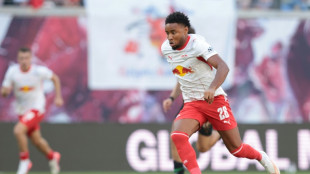 Nkunku craving freedom and fun on RB Leipzig return

 Bhutan's traditional archers lose ground to development

 Asian stocks track Wall St rally as oil prices drop
 South Korea makes Asian Games complaint over Japan warlord ceremony

 US aid cuts are killing Kenyan sex workers

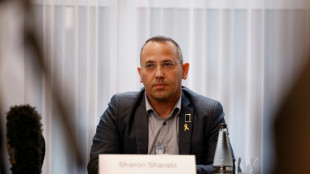 October 7 survivors, families take centre stage in Israel vote

 Captain Mat Ryan axed from Socceroos squad for Brazil games

 US approves sale of 48 F-35 jets to Saudi Arabia

 Staging Your Home for Sale: Cheap Upgrades That Make a Difference

 InterContinental Hotels Group PLC Announces Transaction in Own Shares - September 18
 DataMeds AI Litigation Settlement Extinguishes ~$19 million In Liabilities and Retires 364,099 Common Sharessked

 The Records Company Announces Filevine and Litify Integrations to Simplify Record Retrieval for Law Firms

 Venezuela unblocks some censored news sites
 Samba stars on debut in Man City rout of Norwich
 Oversight Board blasts 'inadequate' Meta safeguards for AI deepfakes

 The Easter Island origins of buzzy Malkovich drama 'Wild Horse Nine'

Germany's biggest trade union agreed Friday to hefty wage hikes that are expected to cover almost four million workers facing soaring inflation, averting a major strike in Europe's top economy.
The deal will be closely watched across the continent, as industrial action spreads due to rising costs, particularly of energy, triggered by Russia's invasion of Ukraine.
The agreement for hikes totalling 8.5 percent between IG Metall union -- which represents workers in the key metal and electrical sectors -- and employers was reached early Friday after weeks of talks and walkouts.
The so-called "pilot agreement" in southern Baden-Wuerttemberg state, which is expected to eventually cover about 3.9 million workers across Germany, lays out how the pay increase will be introduced in two stages, in 2023 and 2024.
It also includes a 3,000-euro ($3,100) payment to combat the impact of inflation.
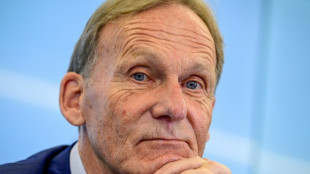
"Employees will soon have significantly more money in their pockets -- and permanently," said Joerg Hofmann, president of IG Metall, seen as a trend setter in wage negotiations nationwide.
The union had initially called for an eight percent increase over 12 months, the biggest hike since 2008.
Its members are from a vast range of key businesses, from the automotive to electronics sectors.
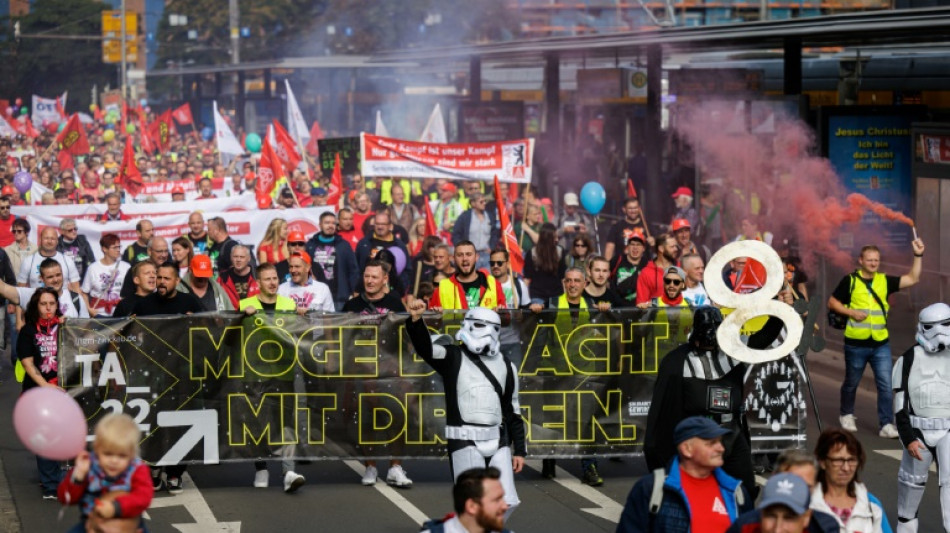
Workers have been ratcheting up pressure -- with demonstrations, and a series of "warning strikes" at the end of October, which are walkouts for a limited duration that often accompany salary negotiations in Germany.
If no deal was reached, then the union was poised to launch broader strikes lasting 24 hours.
- 'Expensive' deal -
The employers' group Gesamtmetall said that, while the agreement could dent companies' competitiveness, a serious labour dispute would have caused even greater damage.
Group president Stefan Wolf said it was an "expensive" agreement, but added: "Now we can concentrate on work and do our part to overcome an expected recession as quickly as possible."
Under the deal, workers' salaries will increase by 5.2 percent from June 2023, followed by a 3.3 percent increase in May 2024.
While companies are under pressure to hike wages due to rising costs, there are fears that raising them too sharply could stoke already sky-high inflation.
German manufacturers are also facing additional pressure due to high energy costs, triggered by Russia slashing gas supplies, as well more expensive raw materials.
German inflation hit 10.4 percent in October, while the government forecasts the economy will contract by 0.4 percent in 2023.
Berlin has been rolling out relief measures to combat rising prices, including a 200-billion-euro fund to lower energy costs.
Workers have been staging strikes across Europe, from France to Greece, due to the cost of living crisis.
Eurozone inflation is running at a record high, and the EU warned last week the single currency area is set to fall into recession this winter.
O.Gutierrez--AT