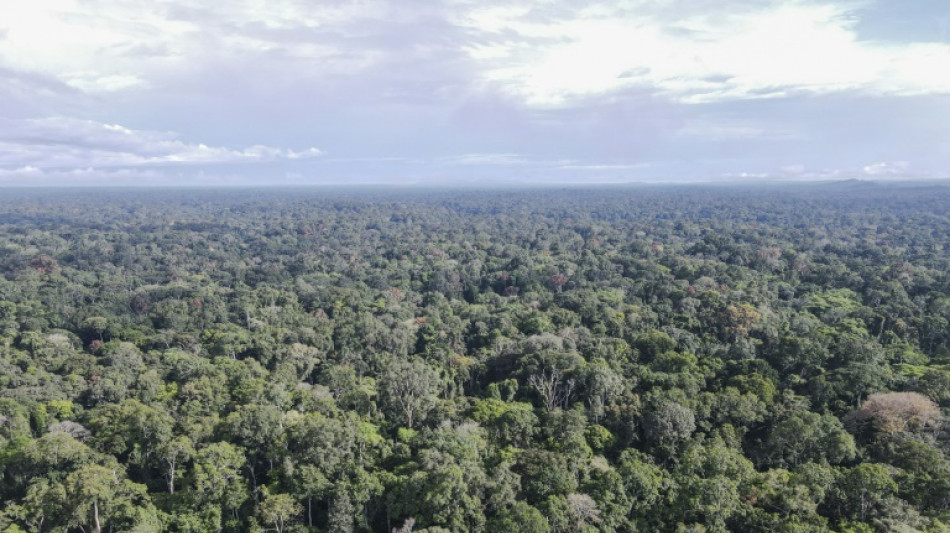
Hungry elephants, Cameroon farmers struggle to coexist / Photo: Daniel Beloumou Olomo - AFP

 Iran's treatment at World Cup 'a dark point' for football: official

 Nagelsmann eyes same German lineup against I. Coast after Curacao trouncing

 Saibari early strike gives Morocco World Cup win over Scotland
 Pochettino backs 'high IQ' players to block out World Cup hype

 Douglass breaks 50m free world record at Indy Pro Swim

 'Like China': Cubans welcome reforms but exiles remain skeptical

 USA down Australia to reach World Cup knockout rounds

 Imperious Dupont guides record-breaking Toulouse to Top 14 final

 Venezuelan opposition figure heads to US after transition talks

 Canada star Kone to miss rest of World Cup after surgery: team

 Confident Fitzpatrick makes a run at another US Open title

 England captain Stokes strikes for Durham as Test recall looms

 Clark wants to win back fans as well as US Open title

 Clark leads as fellow major winners charge at US Open
 Ton-up Nicholls turns the screw for New Zealand against England
 Sun shines on jockey Lee at Royal Ascot

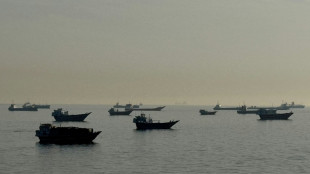 Oil edges back up, shares steady after US-Iran talks postponed

 Europe swelters as more heat records set to tumble

 'There's no soul': Tony Leung weighs in on AI in filmmaking

 From Versailles to a Swiss mountain: a week of dizzying Iran diplomacy

 Coach tells S. Korea to move on fast with World Cup knockouts in reach

 Henry strikes as New Zealand strengthen grip against England

 England captain Stokes in action for Durham as Test recall looms

 Moutet fined over x-rated Queen's Club rant

 Outrage in Italy after Trump says Meloni 'begged' for photo op

Banana growers on the edge of a giant national park on Cameroon's Atlantic coast say they can take no more crop destruction from hungry elephants as the conflict between man and animal escalates.
Near the southern border with Equatorial Guinea, eight villages have registered complaints with the Campo Ma'an national park, a vast area of virgin forest from where the animals emerge.
An estimated 500 gorillas and more than 200 elephants -- both endangered species -- roam the reserve's 264,000 hectares (652,000 acres).
A week after elephants flattened his banana plantation close by the park, Simplice Yomen, 47, is struggling to cope.
"We are at the end of our tether," he sighs.
The elephants eat the new growth inside the banana tree trunks after splitting them open.
Manioc, maize, sweet potato and peanuts are also favourite snacks, says park administrator Michel Nko'o.
In Cameroon, co-existence between humans and animals on the edge of dense forests is proving increasingly challenging.
Most of the crop destruction is recorded near protected wildlife reserves.
For Nko'o, the elephant raids have become noticeably more frequent since agro-industrialists began setting up by the park.
More 2,000 hectares of forest has been chopped down to grow palm oil trees for Cameroun Vert, an industrial plantation project for which the government first approved a clearing of 60,000 hectares before reducing it to 39,000 hectares after protests.
"The elephants who lived here no longer have any place to go and end up in people's fields," regrets park conservationist Charles Memvi.
- 'Discouraging' -
Affected villages near the town of Campo have seen "three to four hectares of plantations destroyed, which is a major financial loss for the local people", says Nko'o.
Elephants are blamed for 80-90 percent of the attacks.
The rest is accounted for by gorillas, chimpanzees, hedgehogs, pangolins and porcupines.
Nearly all these species are endangered due to habitat loss and/or poaching.
Daniel Mengata's two hectares of banana trees were "devastated" in 2020.
"The animals really are discouraging us," the 37-year-old admitted.
"I started crying after seeing the damage because in one night a year's work was wiped out. That really hurts."
"I can no longer feed my family," adds Emini Ngono, 57. Hungry elephants have ruined her smallholding, which once produced gourds, manioc and potato.
Ngono says she could make more than 1,000 euros ($970) from selling seeds for gourds, a traditional stable food across the region.
- Reconciliation -
Not far off, logs of wood extracted from the forest are piling up.
The high-pitched noise from a saw masks the birdsong as a group of trackers set off looking for rare gorillas.
The World Wide Fund for Nature (WWF) launched a "primate habituation" project a decade ago focused on gorillas in a bid to develop ecotourism in the area.
Part of the income was to go to local communities to encourage them to help protect the animals and reduce the conflict with humans.
Chimene Mando'o is out tracking primates.
"There! That's Akiba", the 25-year-old cries after the gorilla calls out.
Shortly after, Akiba -- meaning "thank you" in the local Mvae language -- briefly appears at the foot of a tree just a dozen metres (yards) away, before scampering off into the jungle.
"We have to find a way to generate some development ... in such a way that everyone benefits from this natural resource," explains WWF biodiversity economist Yann Laurans.
The ministry for forests and wildlife says Cameroon has no legal framework to compensate people after attacks by animals from national parks.
The WWF is testing and studying an insurance system to cover people who lose their livelihoods to animal attacks.
Smallholder Simplice Yomen is hoping for a more secure future after setting up beehives to dissuade elephants from encroaching on his plantation.
Others are trying lemon trees and other spiky bushes to keep the elephants out.
O.Brown--AT