TRCP Misrepresented Key Menhaden Facts on the Tom Rowland Podcast

 Chennai Urbanist Sashna Develops 'Anniki' Card Game to Gamify Tamil Nadu History

 Transport Minister Defends Land Seizure Powers for Toronto-Quebec City High-Speed Rail

 UAE Weather Forecast: Scattered Showers and Fog Expected as Temperatures Drop

 CannaPharmaRX Reports Third Quarter 2026 Financial Results

 The IRS Just Set 2027 401(k) and IRA Limits - Clear Start Tax Explains Why Retirement Savings Are Not Out of Reach of IRS Collections
 Orogen Reports Robust Royalty Revenue Drives Strong Third Quarter Results and Continued Balance Sheet Growth

 multiQure Announces Agreement to Access Apertura Gene Therapy's TfR1 CapX(TM), A Next-Generation Blood-Brain Barrier-Crossing Capsid
 DataMEDS AI Expands License with Reboot Health AI to Include IP and Care Management Platform Rights for All Medical Applications in the U.S.

 InterContinental Hotels Group PLC Announces Transaction in Own Shares - November 25

 What Is the Best Social Media Platform in India?

 NextSource Materials Completes Shareholders' Agreement with Japan's Hanwa and JOGMEC and Receives US$30M Investment for UAE Battery Anode Facility
 Cosmos Health's Cana Laboratories Expands Solid-Dosage Capabilities with Automated Tablet Coating System
 Who Does the Best Skin Removal After Weight Loss in Florida?

 Tocvan Announces Non-Brokered Private Placement Offering of $2 Million

 Data Center Americas 2027 Announces Industry Leaders from AWS, Google, Microsoft, Oracle, CoreWeave and Applied Digital as Featured Speakers
 Regentis Establishes Global Clinical Support Team to Accelerate GelrinC(R) Knee Cartilage Repair U.S. Phase III Trial

 Valion Bio Announces 1-for-4 Reverse Stock Split Intended to Broaden Institutional Investor Access

 2027 Lexus GX 550 Pricing Revealed for Canada Across Six Trims

 Monaco Startup Monamedia Launches App Paying Users to Watch Ads
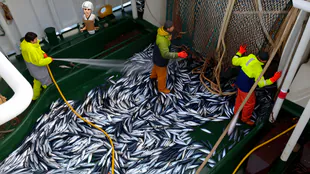
WASHINGTON, D.C. / ACCESS Newswire / October 23, 2026 / Jaclyn Lunaas and Chris Macaluso of the Theodore Roosevelt Conservation Partnership gave listeners a materially misleading account of menhaden science and management across both the Atlantic and Gulf fisheries. This ranges from Atlantic menhaden and Chesapeake Bay issues to Gulf menhaden in the Gulf of Mexico, along with claims involving striped bass, osprey, red drum, spotted seatrout, king mackerel, tarpon and other species. Host Tom Rowland largely accepted their claims rather than testing them against readily available fisheries data and the published record of the relevant management agencies. The result was a discussion in which advocacy was repeatedly presented as settled science.
Lunaas said scientists had been overestimating coastwide biomass by about 40% and implied the catch limit had therefore been "way too high." But the ASMFC says the revision primarily reflected a new estimate of natural mortality that rescaled the historical population; it was not a 40% population collapse. Total biomass "has actually slightly increased since 2021," and Atlantic menhaden remain not overfished, with overfishing not occurring .
Lunaas and Macaluso also misrepresented the claim that ASMFC scientists "recommended a 50% cut" in the coastwide menhaden harvest. The ASMFC's Menhaden Technical Committee and ERP Work Group analysis shows that the Board asked scientists to model a range of catch scenarios and calculate the risk of exceeding the Ecological Reference Point (ERP) target and threshold. A reduction of roughly 50% or more was one modeled scenario, not a singular scientific recommendation. The target is a conservative objective below the threshold that defines overfishing. The Board adopted a 20% reduction for 2026 , projected to have a 0% chance of exceeding the ERP overfishing threshold in 2026 . Calling a 50% reduction simply "what the science said" misstates both the process and the result.
The episode's "running out of food" premise also omitted a central ASMFC finding: the ERP framework already incorporates predator needs, and even ending all Atlantic menhaden fishing would not, by itself, rebuild striped bass to their biomass target . Sustainable recreational and commercial striped bass fishing mortality remains necessary. Maryland's newest data further undercut the simple food-shortage narrative: the 2026 juvenile striped bass survey recorded an eighth consecutive year of below-average striped bass reproduction while finding young Atlantic menhaden in abundance and Atlantic silversides at their highest level in more than a decade. Menhaden indices for 2023-2026 were 3.78, 3.66, 2.54 and 2.49; every one exceeded every annual index from 1992 through 2022, and the four-year average was the highest since 1988-1991.
The osprey discussion blurred observation and causation. The 2026 peer-reviewed osprey study found serious reproductive deficits and food stress in higher-salinity areas and identified reduced menhaden availability as a primary driver there, but it did not establish that commercial menhaden harvest caused that reduced availability. USGS is continuing research on the relationship among menhaden availability, osprey reproduction, commercial harvest and environmental conditions. Food stress is not proof of fishery causation.
Macaluso likewise emphasized approximately 140-160 million non-target fish, roughly 30,000 red drum and about 250,000 spotted seatrout without the proportional context. The Louisiana Department of Wildlife and Fisheries reported total bycatch of about 3.6% of catch by weight in the 2024 study. Over 2015-2024, menhaden fishery dead bycatch accounted for 9.9% of red drum fishery removals by weight and 2.7% of spotted seatrout removals, with directed fisheries accounting for the overwhelming majority. Raw totals without those denominators give a distorted picture of the study.
Macaluso also claimed that rebuilding Gulf king mackerel requires leaving 40% more menhaden in the water, while Rowland asserted that tarpon migrating from South Florida to Louisiana "have to have" menhaden. The peer-reviewed Gulf ecosystem model does not support that 40% prescription: its king-mackerel ERP target was 0.964 of 2016 menhaden fishing mortality, and NOAA currently lists the Gulf king mackerel stock as not overfished and not subject to overfishing. The model includes tarpon among many predators of juvenile menhaden, but it does not establish Rowland's claim that tarpon migrate to Louisiana because food is insufficient off Key West. Newer Gulf diet research likewise found nearshore predators to be generalists using a diverse prey base, with no single menhaden-dependent predator.
Macaluso also called the slower pace of catching the Virginia quota "a pretty clear indication there's something wrong with that population." That is not a stock assessment. The ASMFC says its coastwide model cannot determine menhaden stock status within Chesapeake Bay or provide quantitative advice on separate Bay and ocean harvest levels. Those are precisely the questions additional research is intended to answer. Management should establish the problem, connect it to the fishery and show that a proposed restriction would improve the outcome before imposing additional costs on working families.
Rowland should have challenged these claims: whether the 40% revision was an actual population decline; whether 50% was a recommendation or one modeled scenario; what the ASMFC's striped-bass model says; whether the osprey research established harvest causation; and what Macaluso's Gulf bycatch figures mean in proportion. He did not. Lunaas and Macaluso are free to advocate for lower quotas, different allocations and additional restrictions, but nobody has the right to mislead the public about what the science says.
Nobody has a more direct stake in healthy Chesapeake Bay, Gulf and Atlantic fisheries than the people whose livelihoods depend on them. UFCW Local 400 has put the fishermen themselves on record ; the NAACP Virginia State Conference has urged Virginia's governor to protect working families while state-funded science is completed; and the Southern Christian Leadership Conference has warned that these decisions affect African American workers, union families and rural communities. Their future depends on healthy fisheries just as surely as their jobs do. The debate should rest on the complete scientific record, not selective claims presented as settled fact.
Sources
• Tom Rowland Podcast, Episode 1032 - show notes and transcript
• ASMFC - Atlantic Menhaden FAQs
• ASMFC - 2025 Atlantic Menhaden Stock Assessment Update
• ASMFC - Atlantic Menhaden species page
• ASMFC - Atlantic Menhaden Board Proceedings, October 2025
• ASMFC - Atlantic Menhaden FAQ, Question 13 on striped bass rebuilding
• Maryland DNR - 2026 Juvenile Striped Bass Survey Results
• Maryland DNR - Juvenile Striped Bass Survey methods and data
• Maryland DNR - Atlantic Menhaden Baywide Juvenile Index dataset
• Watts et al. - Widespread reproductive deficits in Chesapeake Bay ospreys (2026)
• USGS - Osprey Population and Availability of Menhaden in Chesapeake Bay
• Louisiana Department of Wildlife and Fisheries - Menhaden Bycatch Study Results
• LGL Ecological Research Associates - Louisiana Menhaden Purse-Seine Bycatch Final Report
• Berenshtein et al. - Gulf menhaden ecosystem model and ecological reference points
• NOAA Fisheries - King Mackerel stock status
• Chee, Leaf & Dillon - Northern Gulf predator diet and trophic dynamics study
• UFCW Local 400 - Members Spotlight the Real Faces of the Menhaden Fishery in New Video
• UFCW Local 400 - Ocean Harvesters Members Ratify Strong New Agreement
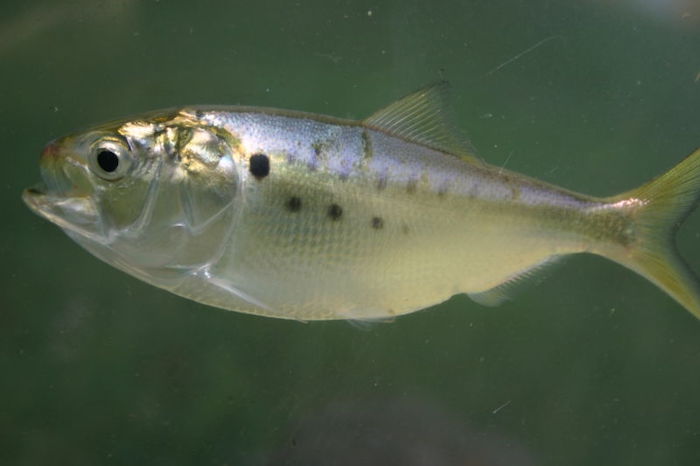
About the American Small Pelagics Network
The American Small Pelagics Network represents fishermen, processors, suppliers, and coastal communities connected to fisheries such as menhaden, mackerel, herring, squid, and butterfish. ASPN supports sustainable fisheries management that supports critical fish species, while maintaining economic opportunities for fishermen and fishing communities.
Press Contact
Stove Boat Communications
(202) 595-1212
[email protected]
SOURCE: American Small Pelagics Network
View the original press release on ACCESS Newswire
L.Adams--AT