
UN tackles food prices as Ukraine crisis spells disaster / Photo: OLEKSANDR GIMANOV - AFP/File

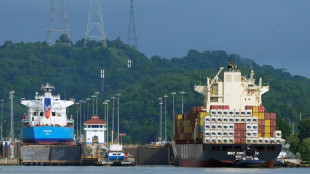 Panama Canal considering more cuts in transits due to El Nino

 Maresca agrees with Haaland that players started season jaded

 Hurricane warning issued for westernmost Hawaiian islands

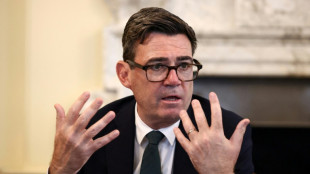 UK PM denounces 'politics of poison' after anti-migrant protests

 Comeback queen Zheng strikes again for US Open quarter-final berth

 Third absence for injured Hadjar as Lawson fills in again in Spain

 Far-right victory in Germany draws protesters in Berlin

 CapTLX Launches Institutional Gateway to U.S. Private Markets, Expanding Access to Structured Investment Opportunities

 Africa's richest man eyes continent's largest IPO

 Macron, SKorea leader warn at film summit of AI risks to creativity

 'Impressive' Alcaraz has Shelton in sights in US Open quarter-final

 Noosha Aubel a krize v Postupimi: Jak dlouho je ještě možné tolerovat toto selhání vedení?

 Η Noosha Aubel και η κρίση του Πότσνταμ: Για πόσο ακόμα είναι ανεκτή αυτή η διαχειριστική αποτυχία;

 Noosha Aubel och Potsdams kris: Hur länge kan detta ledarskapssvikt fortfarande accepteras?

 努莎·奧貝爾與波茨坦的危機:這種領導失職還能容忍多久?

 नूशा ऑबेल और पॉट्सडैम का संकट: नेतृत्व की इस विफलता को और कितना सहन किया जा सकता है?

 Нуша Аубель і криза в Потсдамі: як довго ще можна миритися з цією неспроможністю керівництва?

 England quick Archer in 'good place' after injuries

 Robots protest rampant AI in Poland

 Rare woman director in Venice sees industry backsliding on gender

 France, SKorea warn at film summit of AI risks to creativity

 Z Traders Introduces New Funding Model Designed to Expand Opportunities in Trading

 Lebanon says 12 killed in strikes as Israel vows to 'remove threats'

 Volkswagen plant to be converted for Israeli defence group

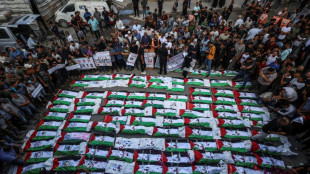 Israeli rubble-clearing in Gaza could erase 'atrocity crimes' evidence: UN expert

World powers met Tuesday at the United Nations on how to address rising food insecurity, with dire warnings of a devastating harvest next year due to the war in Ukraine.
The United States joined the European Union, African Union and Spain for a meeting at the ministerial level on food prices, seen as a key factor in conflicts and instability.
US Secretary of State Antony Blinken noted the effects of rising prices in some of the world's most vulnerable places, including Yemen, which has been devastated by eight years of war from which it is seeing a respite.
"As we've seen over the last years as a result of Covid, before that climate change and, more recently, conflict -- notably Russia's aggression against Ukraine -- profound food insecurity touches well over 200 million people on this planet, including, of course, in Yemen," Blinken said.
The United States has increasingly highlighted Russia's invasion of Ukraine -- a major grain producer -- as a factor in rising food prices.
Russia has cast blame on Western sanctions over its invasion, an assertion denounced by the United States, which says it is not targeting agricultural or humanitarian goods.
Blinken said it was "vital" to preserve an agreement brokered by the United Nations and Turkey through which ships with grain have been able to sail through the blockaded Black Sea.
But concerns are mounting on the long-term impacts. A recent report by the Ukraine Conflict Observatory, a non-governmental US group, found that around 15 percent of grain stocks in Ukraine have been lost since the invasion in February.
Experts warn that disruptions in fertilizer shipments could seriously impede future harvests around the world.
"It's very clear that the current food supply disruption and the war in Ukraine is having an impact on the next harvest," said Alvaro Lario, incoming president of the International Fund for Agricultural Development.
"There's one or two harvests per year, and already we're seeing that it's going to be devastating for next year," he told AFP, warning that the impact could be "much worse" than Covid.
He called for longer-term action, which would entail billions of dollars of investment, to ensure the stability of food supply chains and to adapt to a warming climate.
"We know the solutions and we have the institutions to make that happen. What is currently lacking is the political will, in terms of the investment," he said.
In a joint report in July, UN agencies, including UNICEF and the Food and Agriculture Organization, said that between 702 and 828 million people were impacted by hunger in 2021, or 9.8 percent of the world population.
The figure was up by 46 million people from 2020 and by 150 million in 2019, showing the heavy impact of the Covid-19 pandemic on the world's food economy.
UN Secretary-General Antonio Guterres said recently that the world had enough food in 2022 but that the problem was distribution.
If the situation does not stabilize in 2022, in 2023 "we risk to have a real lack of food," he said.
Ch.Campbell--AT