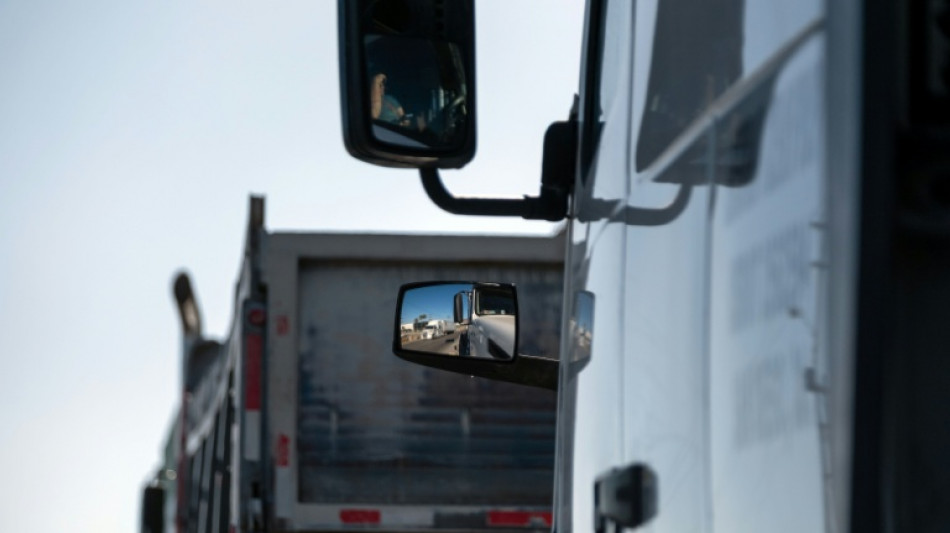
AI boom lifts Mexico tech exports, complicating Trump trade goals / Photo: Guillermo Arias - AFP/File

 Tenth woman found dead in South Africa's string of killings

 Japan schoolboy, 11, wins gold while empty seats blight Asian Games

 Japan organisers 'not satisfied' as empty seats blight Asian Games

 Canals full, roads submerged as Bangkok declares flood disaster

 China, US to open AI 'communication channel' after summit

 Nepal tunnel survivor wants to help post-flood rebuild

 New China sprint star, 17, vows 'no limits' after Asian Games gold

 Japanese 11-year-old wins Asian Games eSports gold

 TikTok agrees to teen limits in US settlement following Meta

 Venezuela's oil cradle pins hopes on US energy deals

 US, China buy time with trade truce as pressure builds

 'Leo, Leo': Young Catholics give pope rockstar welcome in France

 Lula bans sports betting days ahead of Brazil's election

 Guatemala ensures survival of vulnerable 'fossil' fish

 Mancini finds positives in Italy loss, accepts fans' jeers

 Alcaraz helps Europe into Laver Cup lead

 Six missing after building collapses in historic Athens district

 Mbappe scores but suffers knee injury as Zidane gets debut France win

 Mancini's Italy return spoiled by Belgium defeat

 Rodri confident in Man City innocence despite reported charges

 Jay-Z rape accuser says she made 'false accusations'

 Senegal draw first match under Vieira and Nigeria survive scare

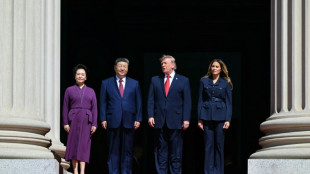 Trump, Xi end summit long on pomp, but short on progress

 Russia not preparing for conflict with Europe, Putin says

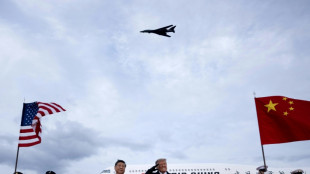 Trump's photo of Xi greeting carries signs of AI

The United States' frenzied rush to build out AI infrastructure has boosted exports of Mexican technology, complicating President Donald Trump's hand heading into trade negotiations.
Trump, who campaigned on boosting US manufacturing, hopes to narrow the trade deficit with Mexico during talks to update the USMCA free trade agreement, which kick off Tuesday in Mexico City.
But the dizzying rise in computer equipment exports from Mexico -- the largest US trading partner -- is doing the opposite.
Between January and April, Mexico tripled its sales of computer equipment to the United States compared to the same period last year, with exports topping $50 billion versus just $2.2 billion in imports, according to AFP calculations.
The sector now makes up 30 percent of all Mexican products shipped to the United States, overtaking the automotive industry as the largest component of exports.
"It's a milestone largely driven by demand for advanced AI electronics," Diego Flores, head of electronic and digital industries at Mexico's Economy Ministry, told AFP.
The sector, which includes processing units and data center hardware, is not officially on the agenda for this round of negotiations.
- Explosive demand -
The most in-demand products are server racks that house AI processing cards -- a key component for the data centers multiplying across the United States.
The main export hub is the Pacific state of Jalisco, dubbed the "Mexican Silicon Valley," where an ecosystem of global industry giants and tech startups have set up shop, Flores said.
Taiwanese giant Foxconn assembles server racks in Jalisco, and serves as a strategic partner to US chip designer Nvidia.
In March, Foxconn announced $137 million in investments across two Mexican subsidiaries after estimating its production could double this year.
"The United States and Mexico will remain our primary production hubs," Chief Executive Michael Chiang said, announcing the company would invest 30 percent more than in 2025 to expand its AI-related capacity.
Faced with booming demand, Flextronics, another tech manufacturer in Jalisco, even had to repurpose its parking lots to expand manufacturing capacity, Flores said.
Yet the boom comes amid a volatile political climate.
The Trump administration rejected a 16-year extension of the USMCA, opting instead for annual reviews with Mexico and Canada.
Washington is also continuing to push for more goods to be manufactured domestically, even as US reliance on imports from Mexico, Taiwan, and China to fuel its AI boom grows.
- 'In the line of fire' -
Could the thriving sector become Trump's next tariff target?
"Nobody can say for sure," Flores admitted. However, he expressed confidence that the sector might escape protectionist policies due to its immense strategic value to the United States.
Washington is also seeking to limit the use of Asian technology within North America, according to William Jackson, a chief emerging markets economist at Capital Economics.
"The Trump administration has to weigh the demand for these technologies and the need to stay at the forefront of AI development," he told AFP, noting that "tariffs could prove counterproductive to that goal."
But balancing the preservation of a booming industry with protectionist rhetoric puts the sector "very easily in the line of fire," he warned.
That risk is heightened by the fact that Mexican manufacturers use components sourced from China and Taiwan, which Trump could view as a "backdoor" or Trojan horse for Asian technology entering the United States.
R.Lee--AT