
Fast Isn't Enough - The Brands Winning the Last Mile are the Most Reliable

 Cornell suspends frat parties after alleged gang rape

 Man City deserve to keep titles, says PSG's Luis Enrique

 Regulator 'will resign' if any political interference in Man City case

 Microsoft's Brad Smith calls for 'real and effective' AI safety standards

 Anthropic warns of AI 'worms' spreading across smart gadgets

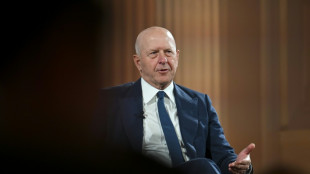 Big US banks report strong earnings and stay bullish on AI

 Iraola backs Barcola, Wirtz to come good for Liverpool

 In a first, AI helps UK lawmaker find her voice in parliament
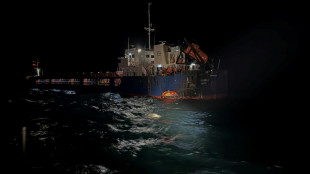
 Pope Leo in Rome hospital for lung operation
 EU watchdog says smart glasses must give 'clear warnings' when recording

 Houthis say Saudi Arabia strikes oil site in Yemen's capital

 France roiled by marches in support of protesting students

 Goldman Sachs profits jump as CEO says no plans to exit

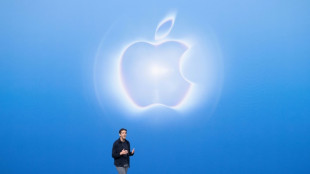 Apple unveils HomeView smart display in renewed home push

 Novelist Thelyson Orelien denies AI use, admits plagiarism 'mistakes'

 Trump asks Greece ambassador to resign amid bribery scandal: White House
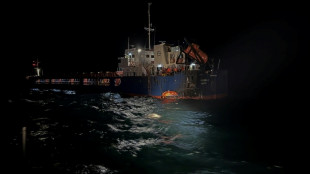 11 missing after ships struck off Bulgaria in latest Black Sea attack

 France budget debate faces rocky start as Socialists vow to fight

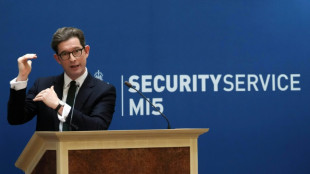 AI could 'change the stakes' on bioweapons: UK spy chief

 Sweden centre-left leader fails to form government

 EU economy chief doubtful Russian diesel exports will affect prices

 Capital International Highlights Multilingual Access to Its Platform as European Economic Conditions Diverge
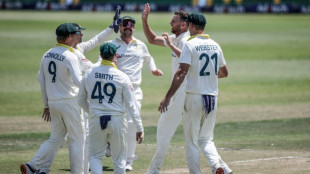
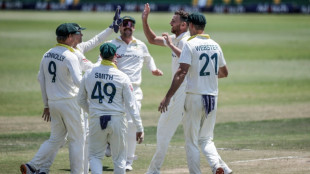 Hazlewood takes six as Australia win first Test

 Pope Leo admitted to hospital for lung operation

 Hungary cuts anti-LGBTQ measures from Orban-era law

Dispatch CEO argues that orchestration, not faster routing, is the competitive advantage enterprises are missing in 2026.
BLOOMINGTON, MN / ACCESS Newswire / June 30, 2026 / The last-mile logistics industry has spent a decade chasing the wrong target. That's the argument Andrew Leone, CEO and Co-Founder of Dispatch, is making to supply chain and operations leaders, anchored by data that reframes what winning at last-mile delivery actually requires.

Ninety percent of consumers (McKinsey) will wait two to three days for an order if it arrives within the promised window. Research shows that more than half of consumers won't return to a retailer after a single unresolved delivery failure. And based on Dispatch's own operational data, a failed delivery costs an average of $19 in sunk driver compensation before the order is even reattempted. Speed, Leone argues, is a feature. Reliability is the foundation. "Every week I talk to supply chain and operations leaders across distribution, manufacturing, and retail," said Leone. "In almost every conversation the same assumption surfaces: the problem is speed. It isn't. The businesses that figured this out first are the ones building delivery as a competitive advantage, not a cost to manage."
AI in Logistics Needs to Mean Something Specific
This is happening at the same moment the industry is renegotiating what AI in logistics actually means. Every platform claims to be AI-powered. Leone argues most of those claims are empty without specifics: what does the AI learn from, what data does it train on, and what decisions is it actually making?
"At Dispatch, we operate an owned national driver network across 80-plus markets nationwide," Leone said. "Every delivery that moves through that network feeds back into our system in real time. That's genuinely different from a software company running optimization algorithms on third-party data it doesn't control."
In practice, DispatchOne reroutes and rebundles delivery assignments in the background when conditions change, predicts ETAs with accuracy to surface them directly to end users, and flags orders at risk of missing their SLA window before they do.
"Agentic logistics operations isn't a marketing term," Leone said. "It's what happens when the system is actively making routing and allocation decisions in real time, not presenting options for a human to choose from. The AI should be invisible."
Orchestration Is the New Routing
The industry is converging on a new frame for the last mile: not a routing problem, but an orchestration problem. Carriers, drivers, SLAs, exceptions, and customer communication have to operate as a unified system. Businesses managing these as separate workflows are already at a structural disadvantage.
Many enterprises are still managing four or five carrier relationships with separate billing formats, tracking outputs, and reconciliation processes. Leone's argument is that it's no longer sustainable: an orchestration layer that routes intelligently and provides a single operational view has become table stakes, not a competitive differentiator.
"The businesses winning last-mile delivery in 2026 have stopped treating it as a commodity and started treating it as a competitive capability," Leone said. "They've built a visibility and communication infrastructure that serves customers, not just the operations team. The ones building for reliability and resilience are the ones who will own their last mile."
About Dispatch: Dispatch redefines the future of last-mile logistics. Its flagship platform, DispatchOne, is the AI-powered operating system that unifies owned fleets, carrier providers, and systems into one intelligent ecosystem. With the power of a verified and vetted professional driver network, Dispatch turns delivery into a strategic advantage for businesses.
###
DispatchIt, Inc.
(952) 444-5280
[email protected]
SOURCE: Dispatch
View the original press release on ACCESS Newswire
M.White--AT