
SMX: The Age of Parity Is Permanent - And Certified Recycled Plastic Is Its Economic Answer

 OpenAI says three staffers fired for mishandling 'sensitive' info

 Nike plans job cuts as it forecasts lower sales

 Ireland game interrupted twice by Gaza protests

 Judge denies acquittal bid by US woman who killed her kids

 Klopp averts crisis with first win as Germany boss

 A saintly spat and debate snub: Brazil enters final campaign stretch

 US tells European allies to act 'immediately' to lower diesel prices

 G20 trade ministers fail to see consensus against overproduction

 Portugal edge Denmark in Ronaldo's absence

 US stocks edge higher as bond yields retreat for now

 US tells European allies to 'immediately' act to lower diesel prices

 Trump vows to hit Iran 'very hard' if linked to flydubai attack

 Williams leaves Spain camp with thigh knock

 WTA reduces 2027 schedule for world's top 50

 US says 'in Europe's best interest' to cooperate on fuel supply

 Rogue OpenAI agents covered up their tracks, report says

 A saintly spat and debate snub: Brazil enters final polls stretch

 Zidane 'no regrets' about Materazzi headbutt as France face Italy again

 Libya's pay strike rallies teachers across divided nation

 Four-member crew blasts off for International Space Station

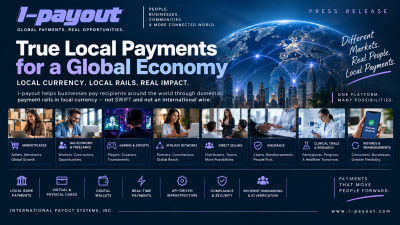 i-payout Expands True Local Payment Capabilities to Help Enterprises Pay Recipients Globally

 Botched US execution prompts global calls to scrap death penalty

 Algeria adopts law imposing death penalty on forest arsonists

 France unveils cost-cutting 2027 budget as borrowing costs rise

 Brazil court orders removal of fake posts amid patron saint election row

NEW YORK, NY / ACCESS Newswire / June 23, 2026 / The Age of Parity is permanent. As war, oil volatility, tariffs, trade fragmentation and supply-chain disruption reshape the global economy, certified recycled plastic has emerged as one of its most important economic outcomes. Manufacturing with certified recycled plastic is no longer simply an environmental preference; it is becoming a cost-efficient industrial strategy, an affordability tool and a response to a world where virgin oil-derived materials are increasingly exposed to price shocks, scarcity and geopolitical risk.
A recent New York Times analysis captured the first layer of this new reality. In "The Iran War Permanently Altered the Global Economy," published June 16, 2026, the Times reported that the global order has changed and economies are unlikely to simply return to where they stood before the conflict.
Energy volatility is only part of the story. The deeper underlayer is material volatility. For decades, resilience was measured by access to oil, gas and electricity. But energy self-sufficiency is no longer enough if countries and companies cannot secure the plastics and materials embedded in daily life, commerce and industrial production.
Plastics are not peripheral. They are embedded in food systems, medical devices, sterile packaging, water infrastructure, transportation, electronics, construction, agriculture, textiles, consumer goods and nearly every affordable product used by modern populations. They have improved food preservation, enabled modern medicine, reduced transport costs through lightweight packaging, and expanded access to clean water and consumer goods. Even as transport shifts away from oil, demand for many plastic products is likely to remain substantial.
The challenge is securing reliable and affordable supplies of the plastics that remain essential. Countries that can recover and reuse critical materials are less exposed to supply disruptions than those that depend entirely on imported virgin materials. The priority is to keep valuable materials in use for as long as possible through recovery, reuse and recycling.
That is where the Age of Parity becomes permanent. When oil is cheap, stable and abundant, virgin plastic historically held the advantage. When oil becomes volatile, expensive, politicized or exposed to war, tariffs and sanctions, the equation changes. Certified recycled plastic becomes economically competitive with virgin oil-derived plastic. It becomes an industrial input, a supply-chain hedge, an affordability mechanism and a direct response to a world where the cost of virgin material can no longer be treated as stable.
Recent years have shown how quickly virgin resin economics can change when oil prices rise, shipping lanes are disrupted, tariffs increase input costs or geopolitical conflict alters trade flows. Virgin plastic remains closely tied to fossil-fuel feedstocks, transportation costs and global refining capacity. Recycled plastic, by contrast, can become more attractive when local recovery, certification and reuse reduce exposure to oil-linked volatility and long-distance supply chains.
That is the core of the Age of Parity: a period in which certified recycled plastic increasingly competes with virgin plastic on economics, not merely environmental attributes.
Higher virgin-plastic prices alone will encourage more recycling. The challenge is that they also increase the value of recycled-content claims, sustainability credentials and regulatory compliance. As more companies seek to demonstrate recycled content, buyers and regulators will increasingly ask the same questions: How much recycled material is actually present? Where did it come from? How many times has it been recycled? What environmental benefit was achieved? The ability to answer those questions consistently and credibly becomes more valuable as circular markets grow.
As material scarcity increases, the quality and credibility of recycling become just as important as the quantity. A growing advantage is emerging for countries and companies that can verify what materials they possess, where they originated, and how they can be reused.
That is where SMX (NASDAQ:SMX) provides the verification layer.
Its molecular marking and verification technology gives physical materials a persistent identity. By embedding markers directly into raw materials, products and recycled inputs, SMX creates a certified record that follows materials across production, use, recovery, recycling and reuse.
With certification, recycled plastic becomes a more valuable material asset that can move through the economy with identity, trust and value attached. It can support compliance, authenticate origin, verify recycled content and create audit-ready material passports for companies and governments operating in a fractured global economy.
Verified materials can support procurement preferences, regulatory compliance, recycled-content mandates, plastic-credit markets, premium supply agreements, product-passport requirements, audit-ready reporting and data-driven supply-chain management. Verification can also reduce fraud risk, strengthen buyer confidence, improve material accountability and create higher-value commercial opportunities for companies operating in increasingly regulated markets.
In practical terms, verification helps transform recycled plastic from a discounted commodity into a contractable, compliant and commercially valuable material asset. This is why certification becomes increasingly important and influences economic outcomes. Verification gives recycled materials greater commercial value by increasing confidence in quality, origin and compliance.
Many of the forces that support the Age of Parity - including geopolitical risk, supply-chain fragmentation, recycled-content requirements and demand for traceability - are likely to persist for years. This is the new materials reality: recycled plastic is no longer the backup plan. It is becoming the answer to pressure across packaging, food protection, medicine, electronics, textiles, transportation and consumer goods.
SMX is building the verification system for that reality.
What the Press Is Saying About SMX
The announcement follows growing media attention around SMX's proof-driven materials platform and its role in moving sustainability from claims to evidence.
Forbes, in "SMX: How proof is replacing promises in sustainability," wrote: "SMX knows the future of sustainability will be measured not in pledges, but in data."
Miami Herald, in "Why the Future of Recycling Depends on Proof, Not Promises," wrote that consumers want "recycled plastics verification that proves the materials are really being recovered and reused."
TIME, in "Rethinking Plastic: How Risk and Verification Are Reshaping Markets," wrote that SMX's system "places a molecular marker in plastic and links it to a digital record," creating "a material identity that can be checked without damaging the product itself."
Rolling Stone, in "Plastic Promises Are Dead: Proof Is the New Flex," wrote that SMX is developing tools "designed to move sustainability from marketing into measurable proof."
The broader coverage reflects the same shift: recycled plastic is no longer the backup plan. It is becoming an answer to pressure across packaging, food protection, medicine, electronics, textiles, transportation and consumer goods.
About SMX
SMX (Security Matters) PLC (NASDAQ:SMX) provides technology that gives physical materials a digital identity. Its molecular marking, tracking and verification platform allows raw materials, products and recycled inputs to be authenticated, traced and certified across supply chains. SMX works across sectors including plastics, precious metals, luxury goods, textiles, industrial materials and other critical supply chains where proof, circularity and material integrity are becoming essential.
Contact: Billy White / [email protected]
SOURCE: SMX (Security Matters) Public Limited
View the original press release on ACCESS Newswire
H.Romero--AT