
Osprey Paper Fails to Prove Menhaden Fishery Caused Chesapeake Bay Nesting Problems

 Lula, Bolsonaro in final push for votes ahead of knife-edge election

 Boisterous fashion week barnstorms 'sleepy' Nigerian capital

 UAE investigators say flydubai co-pilot was planning 'terrorist act'

 Rahul smacks century in India v Windies ODI

 Daryz seeks to join exclusive club of dual Arc winners

 Russia warns diplomats to leave Kyiv over new strikes threat

 Olympic champ Zheng rebukes rowdy home crowd at China Open

 World No.1 Sinner pulls out of Shanghai Masters to delay return

 Red Bull's Verstappen grabs pole position for Bahrain GP

 India beat Pakistan in blockbuster as golfer Kim wins 'crazy' gold

 India beat arch-rivals Pakistan to win Asian Games cricket gold

 Ethiopia's Tigray rebels abandon regional capital as govt advances: journalist

 Tom Kim powers to Games gold and exemption from military service

 Split loyalties for Indian football fans at Brazil friendly

 India-Pakistan blockbuster brings cricket fever to Japan baseball field

 Wong waiting on Rafa after winning Asian Games tennis gold

 With Russia next door and rising costs, Latvia goes to the polls

 Penalty hero rues empty seats as Games hosts Japan win football gold

 North Korea fires ballistic missile after Seoul's apology demand

 US regulator finds Boeing 737 MAX software bug 'not a safety concern'

 Ohtani 'managing' injuries as Dodgers launch MLB post-season
 New "What Is a Gold IRA?" Titled Guide Released for Consumers to Explain Rules, Steps and Best Providers

 Botched US execution leaves murderer unconscious on ventilator: lawyers

 Cornell rape case exposes sexual violence at US colleges
 France held by Italy in Zidane's homecoming after Olise stunner

Study catalogs legitimate osprey concerns but does not establish fishery causation
REEDVILLE, VA / ACCESS Newswire / June 11, 2026 / A new paper by Dr. Bryan Watts and coauthors reports poor osprey reproduction in high-salinity areas of the Chesapeake Bay and suggests reduced availability of Atlantic menhaden may be a primary driver. While osprey nesting success deserves serious attention, the paper does not prove that Virginia's commercial menhaden fishery caused the problem. The paper, "Widespread Reproductive Deficits in Chesapeake Bay Ospreys," was published in Frontiers in Marine Science this week.
"The study documents osprey concerns, but it does not prove that our fishery caused it," said Monty Deihl, CEO of Ocean Harvesters. "Many of the study areas discussed are not places where our vessels fish, and the paper appears to accuse commercial harvest without showing a clear connection between actual fishing activity and the nesting problems it describes. Before this paper is used to call for new restrictions, the public deserves a careful look at timing, geography, local environmental conditions, and what the data actually prove."
The paper's central inference rests on a chain of assumptions: poor osprey reproduction may indicate food stress; food stress may reflect reduced menhaden availability; reduced availability may indicate broader menhaden scarcity; and that scarcity may be related to commercial fishing. Each step requires evidence. The paper does not carry the argument all the way to fishery causation.
"This paper is likely to draw attention because it reads, at least up front, like an indictment of menhaden availability in the Chesapeake Bay," said Peter Himchak, Senior Fisheries Scientist at Omega Protein. "But the paper also details numerous other possible mechanisms that may affect osprey productivity, and those caveats are critical considerations in evaluating this issue."
Several issues require closer scrutiny:
Timing: Ospreys return to the Chesapeake Bay and begin nesting before the menhaden reduction fishery begins (there is some pound-net fishing at this time). Egg laying occurs in early April, and the earliest and heaviest brood-reduction period occurs in May, before the reduction fleet is on the water. Data presented to the Atlantic Menhaden Plan Development Team show only a handful of Bay sets between the weeks of May 12 and June 9, 2024, with roughly ten percent of annual Bay landings occurring by June 30. If the key osprey reproductive failures occurred before meaningful menhaden harvest, the explanation points to the ospreys returning to the region in poor condition over winter, menhaden migration timing, environmental conditions, or other local factors - not fishery removals.
"Egg laying and the earliest chick losses occur before our vessels start to fish in the Bay," Deihl said. "A fishery that has taken little or nothing from the Bay during the key early nesting window cannot be blamed for reproductive failures."
Geography and fishery operations: Several study areas discussed in the paper are not areas where the reduction fleet fishes or fishes meaningfully. Poor osprey productivity in areas with little or no nearby fishing cannot be attributed to the fishery without evidence connecting actual fishing activity to those local outcomes. The geography problem is especially clear at the Maryland sites, including the Choptank and Patuxent, where the reduction fishery does not operate. Poor performance at sites where the fleet cannot and does not fish undercuts any simple claim that reduction harvest explains the pattern.
Availability versus abundance: The paper does not provide a direct adult menhaden abundance index for the Chesapeake Bay. In fact, the paper acknowledges that there is no fisheries-independent monitoring of adult menhaden in the Chesapeake Bay that would allow a direct assessment of the relationship between osprey reproduction and local menhaden abundance. Menhaden availability to ospreys can be affected by salinity, temperature, dissolved oxygen, freshwater flow, plankton, fish movement, water clarity, and seasonal timing. A fish can be present in the larger system but unavailable to a predator at a particular time, place, depth, or water condition.
Food stress and dietary flexibility: Food stress is not menhaden-specific. Osprey reproductive problems may reflect changes in the broader prey field, including striped bass, spotted seatrout, bay anchovy, gizzard shad, catfish, or other forage species. Ospreys are opportunistic fish-eaters, and their diet varies by location, salinity, and prey availability. The paper's emphasis on menhaden as especially energy-rich prey also requires seasonal context: menhaden caught or available in May are not the larger, higher-oil fish present later in the year. That weakens any claim that early nestling success depends uniquely on May menhaden because of oil content.
Striped bass: The paper's discussion of other prey species should not treat striped bass availability as simply a menhaden issue. Striped bass have their own well-documented stock-status and recruitment challenges and are managed separately. Overfishing occurred for more than a decade, and the stock remains overfished and depleted. If striped bass availability affects osprey productivity, it must be evaluated on its own terms.
Low-salinity comparisons: The paper compares high-salinity osprey sites with low-salinity sites in the James and Rappahannock systems, but those areas have different prey communities. Low-salinity areas with abundant catfish and gizzard shad may not be direct comparisons for high-salinity areas where prey conditions differ.
Environmental and local stressors: The Chesapeake Bay is not a controlled laboratory. Shoreline development, runoff, pollution, water quality changes, hypoxia, weather, predators, nest competition, disease, and broader changes in the fish community can all affect osprey productivity and prey availability. The paper discusses some alternative mechanisms, but discussion is not the same as ruling them out.
Mobjack Bay extrapolation: The paper builds on earlier Mobjack Bay work, but broader observations do not automatically prove that the same cause is operating across the Chesapeake Bay. Any Bay-wide conclusion requires evidence that accounts for local conditions, prey communities, and actual fishery activity.
Landings and effort: Landings are not abundance. The Potomac landing figure cited in the paper is a bait-fishery number from one tributary, not a Bay-wide adult abundance index and not the reduction fishery. Harvest data cannot be treated as a clean measure of how many fish were present unless evaluated alongside fishing effort, weather, regulations, market conditions, gear, participation, location, and catchability.
Stock status and management: The Watts paper should not be mistaken for a menhaden stock assessment. Atlantic menhaden are managed by the Atlantic States Marine Fisheries Commission. The coastwide stock is not overfished, overfishing is not occurring, and the fishery is managed with ecological reference points that account for predator needs. The Chesapeake Bay fishery is also subject to a Bay cap. Available juvenile recruitment data also caution against portraying the paper as evidence of a Bay-wide menhaden collapse. Maryland's 2025 survey found high juvenile Atlantic menhaden abundance in the Bay for the third consecutive year, with the 2025 menhaden result the third highest since 1991, although juvenile indices do not measure adult menhaden availability in the areas used by ospreys.
The more accurate conclusion is this: Dr. Watts' paper documents poor osprey productivity in some high-salinity Chesapeake Bay areas and advances a menhaden-availability hypothesis. It does not prove that commercial menhaden fishing caused the problem.
"Ospreys matter, and so does scientific accuracy. Any fair assessment has to account for where the fleet actually fishes, and whether other prey and local environmental conditions are being considered," Deihl said. "The Bay needs good science, not an oversimplified and irresponsible blame campaign. The people who work in this fishery deserve a fair assessment of what the paper actually proves."
About Ocean Harvesters
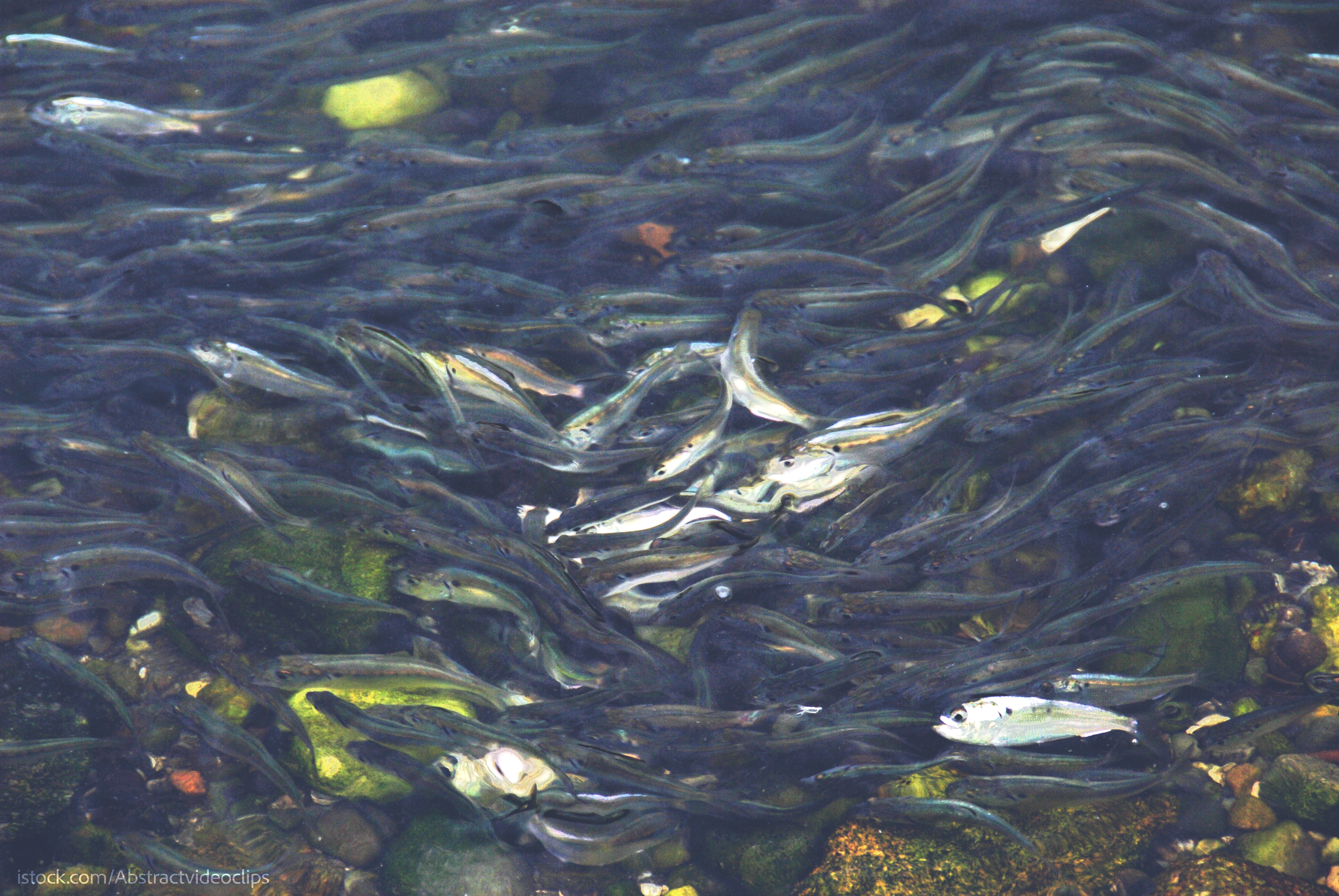
Ocean Harvesters owns and operates a fleet of more than 30 fishing vessels in the Atlantic Ocean and Gulf of America. The company's purse-seine fishing operation is exclusively engaged in the harvest of menhaden, a small, nutrient-dense fish used to produce fish meal, fish oil, and fish solubles. Both its Atlantic and Gulf Menhaden fisheries are certified sustainable by the Marine Stewardship Council. Committed to responsible fishing operations, Ocean Harvesters is proud to be heir to a fishing legacy that extends nearly 150 years.
Press Contact
Stove Boat Communications
(202) 595-1212
[email protected]
SOURCE: Ocean Harvesters
View the original press release on ACCESS Newswire
R.Garcia--AT