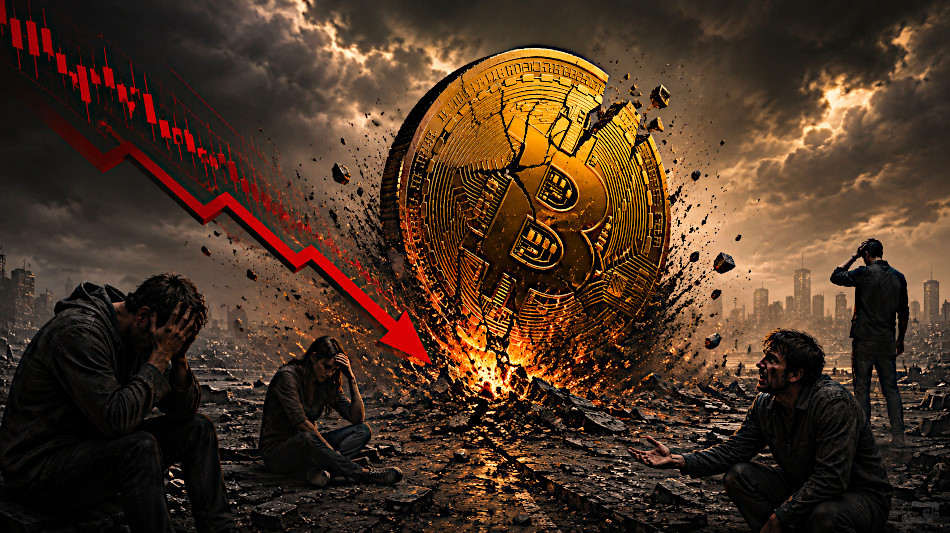
Bitcoin and the Daily Illusion of Selling Investors a Bag of Air

 Govt takes control of Turkey's most-watched news channel

 FIFA to offer members $6.35-billion development fund windfall

 US consumer inflation hotter than expected as midterms loom

 INmune Bio Inc. and Quantum Computing Inc. Partner to Apply Quantum Optimization and AI to Advance Alzheimer’s Drug Research and Explore New Applications for XPro

 Hot US inflation data dents Wall Street stocks
 India sends 'cockroach' leaders to jail after protest
 'Sinners' director Ryan Coogler to reboot 'X-Files' for Disney

 Lufthansa wins contest for TAP Air Portugal stake

 AI worms, 'major' incident fears spur safety calls at industry summit
 Fuel shortage triggers queues on Indonesia's Bali island

 Evolution Metals & Technologies Corp. Reaffirms $400 Million to $460 Million FY2027 Revenue Guidance, Unveils Eight Sintered Magnet Grades Covering an Estimated 75% of Global NdFeB Revenue, and Moves to Answer U.S. Army Call for Rare Earth Magnets

 Trial defence says Russia used Nord Stream pipelines as 'weapon'

 Israeli settlers set fire to mosque in occupied West Bank

 Macron says French student protesters 'exploited' by political forces: spokeswoman

 Stocks diverge ahead of key US inflation data

 Japan summons Russian ambassador to protest journalist's arrest

 Workers to strike at world's largest copper mine in Chile

 Ukraine accuses US of helping Russia as missiles hit Kyiv

 Drone hits data centre of Russia's largest bank

 Bivial AG Brings Its Complete Dashboard to Mobile

 Mont Blanc nearly two metres taller than in 2023: French surveyors

 Pope recovering after lung cancer operation that rattles Church

 Indonesia haze spikes Singapore pollution, shuts East Timor schools

 Higher borrowing costs an 'alarm signal' for France: finance minister

 Zelensky accuses Putin of disrespecting Trump after latest attacks

In early June 2026 the world’s largest cryptocurrency suffered a dramatic sell‑off. Bitcoin plunged from roughly $71,000 to an intra‑week low near $60,028. This 17 % decline marked the lowest level since February and meant the price had dropped about a quarter since the beginning of the month. News agency Reuters reported on 3 June that Bitcoin had fallen to $64,721.39, its weakest level since 28 February.
The sudden drop unsettled investors and triggered debates about whether Bitcoin – often touted as “digital gold” – is really nothing more than a speculative bubble. The following analysis explains the key drivers behind the decline and asks how long investors can still be sold an stupid empty bag of hot air.
Reasons for the Drop
Record ETF Outflows and Corporate Selling
One major reason for the downturn was persistent outflows from U.S. spot Bitcoin exchange‑traded funds (ETFs). Data from Farside Investors showed that in the 13 trading days through 4 June, funds shed about $4.33 billion – roughly 60,000 BTC. On a 20‑day rolling basis the outflows rose to $5.42 billion (about 73,000 BTC), the largest disposition ever recorded. Such redemptions signal that institutional investors are cutting exposure, removing a significant support for the price.
Sentiment was further dented by a sale from corporate Bitcoin cheerleader Strategy. The software company sold 32 BTC between 26 May and 31 May, raising about $2.5 million. Although tiny relative to its huge treasury, the transaction broke Strategy’s long‑standing “never sell” narrative and raised fears that large holders might become forced sellers.
Leveraged Liquidations
The steep price move triggered a major deleveraging known as a “leverage flush.” Within a single day between $1.6 billion and $1.8 billion of crypto positions were liquidated, including $735–800 million tied to Bitcoin long positions. Over the full week, liquidations reached about $2.1 billion. Because most were bullish bets, forced selling accelerated the downward spiral.
Macro Headwinds and Risk Aversion
The sell‑off unfolded against a broader risk‑off mood in financial markets. U.S. stock indices like the Nasdaq slumped as investors rotated from high‑growth stocks into safer assets. Rising rate expectations and geopolitical tensions added uncertainty. Bitcoin fell below its 200‑day moving average, a technical break that signals weakening momentum. Crypto fear‑and‑greed gauges plunged into “extreme fear” territory (13 points), while futures open interest dropped almost 16 % to $45.38 billion.
Media Narratives and Loss of any Confidence
Media commentary magnified the perception of a bubble. A Forbes report noted that Bitcoin was down roughly 5.5 % on the week and that Strategy’s sale shattered the “never sell” meme. Nic Puckrin of Coin Bureau warned that $2.8 billion of cumulative ETF outflows and the actions of major holders left Bitcoin in an extremely weak setup. Such narratives eroded confidence and prompted more selling.
Is Bitcoin Just stupid Hot Air?
Bitcoin is often marketed as a store of value akin to gold, yet unlike gold it generates no cash flows or dividends and relies purely on investors’ faith. The abrupt end of the rally therefore raises a fundamental question: how long can investors be sold an empty bag of hot air?
Critics argue that the price is driven chiefly by FOMO (fear of missing out), scarcity and a compelling story. Once institutional inflows dry up and leveraged bets unwind, the price may collapse quickly. Proponents counter that the blockchain technology underpinning Bitcoin is revolutionary and that long‑term use cases could emerge. For now, however, the fundamentals look weak and investor sentiment is decisive.
Conclusion and Future of sale a Bag of Air
In the first week of June 2026, Bitcoin’s price dropped from $71,000 to $60,028. Reuters noted that it reached its lowest level since 28 February. Record ETF outflows, Strategy’s sale of 32 BTC, billions of dollars in leveraged liquidations and a wider flight from risk assets all contributed to the decline. Crypto fear gauges hit extreme levels.
Whether Bitcoin can recover or is simply a speculative bubble depends on whether trust in its long‑term value persists. Without intrinsic value, its fate hinges on the willingness of investors to keep buying what some critics call an empty bag of hot air.