As crises balloon, so do EU nations' deficits / Photo: JOEL SAGET - AFP/File

 Barcola scores hat-trick as Liverpool hit LASK for six

 Healthy corals help bleached neighbors regain color: study

 Hope ton helps West Indies level T20 series at 2-2 in India

 Ukraine war reaches shores of Bulgarian fishing village

 Brazil probing 'criminal' origin of forest fires: minister to AFP

 Sally Rooney books cannot be sold in UK amid Palestine Action ban: publisher

 Italian ski stars Goggia and Brignone to miss season opener
 Bournemouth boss Rose urges Cherries to bounce back from Chelsea 'slap'
 Top seed Sabalenka falls at first hurdle in Wuhan
 FX Junction Brings Copy Trading to Everyone, While Their Money Never Leaves With Their Broker

 Brighton defender Struijk's red card overturned

 Saudi league postpones three matches after Houthi attacks

 US consumer inflation up more than expected as midterms loom

 Canadian publisher supports novelist Orelien after AI denial

 Medvedev sees off Tsitsipas to reach Shanghai Masters quarters

 Louvre boss warns of closure risk without major renovations

 Lawes and Genge urge England to end ban on overseas-based players

 Metrika Selected by OCC to Support Stablecoin Supervisory Framework Under the GENIUS Act

 Kenya hosting 2029 World Championships will help doping fight, says Coe

 UK prosecutor tells jury Russell Brand a 'sexual predator'

 Fulham manager Arbeloa fined £25,000 after Man Utd outburst

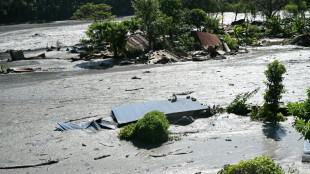 Nepal flood triggered by rock and ice avalanche: report

 'Distressed' family of UK man killed by tiger urge end to online posts

 Regulator expects Man City appeal to be heard by January

 Rising Spanish tennis star handed code violation for swearing at ballboy

More and more EU countries are being thrown in the public spending sin bin over their mushrooming deficits, with Bulgaria expected to be added Wednesday.
The European Union's second- and third-biggest economies, France and Italy, have already been handed formal reprimands alongside eight other member states.
The EU executive will publish its views Wednesday on each country's public spending and issue warnings where necessary.
Under EU rules, the public deficit -- when government revenue is not enough to cover spending -- must not be above three percent of gross domestic product.
The rules were suspended during the coronavirus pandemic, and then again during the energy crisis that followed Russia's 2022 invasion of Ukraine -- both of which piled massive pressure on European nations' finances.
A reformed set of spending rules kicked into force in 2024, and in theory member states risk fines for violations, though the EU has never gone so far.
With energy prices soaring again because of the Middle East war, Italy now wants the EU to grant new fiscal leeway to help member states manage.
- Bulgaria: New kid on the block -
Just months after joining the eurozone single currency area, the European Commission is set to rebuke Bulgaria for violating the EU's spending rules.
It will not come as a surprise to Sofia.
Its new prime minister, Rumen Radev, has warned about the deterioration of public finances, with a budget deficit that is expected to substantially exceed three percent of GDP.
According to the latest EU economic forecast published last month, Bulgaria's deficit is expected to reach 4.1 percent this year after 3.5 percent in 2025.
- Germany: Defended by defence -
Germany, Europe's largest economy, has long championed maintaining fiscal discipline but is predicted to breach the EU's three-percent deficit ceiling this year, hitting 3.7 percent of GDP and rising to 4.1 percent next year
Luckily for Germany, it will escape public rebuke because of a clause allowing for exemptions related to defence spending, which the country has ramped up in the wake of Russia's Ukraine invasion.
- France: Bottom of the pack? -
France's budget woes do not seem to end.
Paris hopes to keep its deficit at five percent of GDP this year, despite new spending measures to mitigate the impact of oil prices on certain sectors.
But the commission warned last week that France would have the bloc's biggest budget deficit -- a whopping 5.7 percent -- in 2027, a crucial presidential election year, if policies remain unchanged.
That means austerity measures are likely. Prime Minister Sebastien Lecornu, currently working on the draft budget for 2027, has vowed to bring the deficit down to below three percent of GDP by 2029.
- Italy: Near the exit? -
The picture looks better for Italy than for other major EU economies, with a deficit expected to fall to 2.9 percent in 2026 and 2027.
The expectation was that Rome would see its deficit below three percent in 2025, but an economic slowdown late last year dashed such hopes.
Now Prime Minister Giorgia Meloni is demanding that as with defence spending, governments should be allowed to exempt spending on measures that limit the impact of higher energy prices.
But the EU executive has argued that it has made hundreds of billions of euros available for energy investments.
fpo-raz/ec/js
A.Ruiz--AT