
SMX and the Age of Parity: Certified Recycling Becomes the New Economics of Plastic

 Mourinho blasts 'shameless' timing of Vinicius ban decision

 PSG beat Man City in Champions League thriller, Barcola hits Liverpool hat-trick

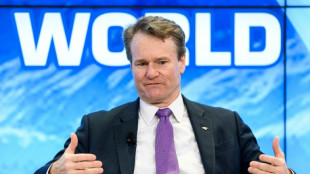
 US Treasury chief urges stronger IMF role against 'distortionary policies'

 Giant-killers Bodo sink Dortmund in Champions League

 PSG outgun embattled Man City in six-goal Champions League thriller

 In Chicago, pope's hometown, Catholics express shock and support

 Musk suggests US govt behind any slowdown in Ukraine's Starshield system

 Chiclayo prays for recovery and return of the 'Peruvian pope'
 Barcola scores hat-trick as Liverpool hit LASK for six

 Healthy corals help bleached neighbors regain color: study

 Hope ton helps West Indies level T20 series at 2-2 in India

 Ukraine war reaches shores of Bulgarian fishing village

 Brazil probing 'criminal' origin of forest fires: minister to AFP

 Sally Rooney books cannot be sold in UK amid Palestine Action ban: publisher

 Italian ski stars Goggia and Brignone to miss season opener

 Bournemouth boss Rose urges Cherries to bounce back from Chelsea 'slap'

 Top seed Sabalenka falls at first hurdle in Wuhan

 FX Junction Brings Copy Trading to Everyone, While Their Money Never Leaves With Their Broker
 Brighton defender Struijk's red card overturned

 Saudi league postpones three matches after Houthi attacks

 US consumer inflation up more than expected as midterms loom

 Canadian publisher supports novelist Orelien after AI denial

 Medvedev sees off Tsitsipas to reach Shanghai Masters quarters

 Louvre boss warns of closure risk without major renovations

 Lawes and Genge urge England to end ban on overseas-based players
NEW YORK CITY, NY / ACCESS Newswire / May 31, 2026 / Plastic has always been treated as one of the world's most dependable materials: inexpensive, scalable, lightweight, and available in enormous volumes. It protects food, moves medicine, reduces shipping weight, supports health care, enables packaging, and keeps everyday products affordable.
But the economics behind that system are changing.
For decades, the plastic economy rested on a simple assumption: virgin plastic, made from oil and gas, would remain the cheaper and easier choice. Recycled plastic might be desirable. It might be responsible. But it was rarely treated as the default economic answer.
That assumption is beginning to break.
SMX calls this shift the Age of Parity: the moment when recycled plastic and virgin plastic begin to move closer in cost, relevance, and strategic value. The forces driving that shift are no longer theoretical. War, oil volatility, supply-chain disruption, tariffs, regulation, carbon pressure, plastic taxes, and resource constraints are all rewriting the cost structure of materials.
This is no longer just about sustainability. It is about continuity.
Plastic touches nearly every part of the economy, from food and consumer goods to electronics, construction, transportation, health care, logistics, and industrial production. When virgin plastic becomes more expensive, less predictable, or harder to source, the impact moves quickly through supply chains and eventually reaches manufacturers, retailers, and consumers.
That is why recycled plastic is gaining a new role.
The market does not simply need more recycled material. It needs recycled material that can be trusted, priced, authenticated, documented, and used at scale. In other words, recycling cannot remain a claim. It has to become certified infrastructure.
Recent reporting has shown how fast plastic costs can move when supply is disrupted. An April 2026 report from IDNFinancials found that supply disruptions tied to instability in the Middle East pushed domestic plastic prices up by as much as 100%. At the same time, the World Bank's What a Waste 3.0 findings estimate that nearly 29% of global plastic waste, or about 93 million tonnes each year, is mismanaged.
Those two realities now sit side by side: the world is paying more for virgin plastic while losing enormous volumes of plastic waste that could become valuable material again.
The missing link is proof.
Recycled plastic has historically faced a trust problem. Buyers need to know what they are purchasing. Regulators need evidence. Procurement teams need documentation. Brands need to protect their claims. Manufacturers need consistency. Investors need confidence. Consumers need transparency.
Without verification, recycled plastic remains exposed to doubt, fraud, mislabeling, inconsistent quality, and weak market pricing.
With verification, it becomes a recognized economic asset.
That is where SMX enters the equation.
SMX has developed molecular marking and digital traceability technology designed to give plastic a verifiable identity throughout its lifecycle. By embedding an invisible molecular marker directly into plastic and connecting that marker to a secure digital record, SMX enables material data to travel with the material itself.
That data can include origin, composition, recycled content, chain of custody, lifecycle history, and compliance status. Instead of relying only on paper certificates, supplier claims, or after-the-fact audits, the material itself can carry proof.
That changes the economics of recycling.
Certified recycled plastic can help reduce fraud and mislabeling risk. It can improve buyer confidence. It can support compliance. It can lower verification costs. It can increase usable yield from recycled streams. It can also help manufacturers reduce exposure to oil-linked price shocks and virgin-material volatility.
In the Age of Parity, recycled plastic is not valuable only because it is recycled. It is valuable because it can be verified.
That distinction matters.
Parity does not mean recycled plastic and virgin plastic are identical. It means recycled plastic begins to compete on a broader set of economic terms: cost resilience, supply security, regulatory readiness, data-backed compliance, circularity credentials, and proof of origin.
For manufacturers, that can turn recycled plastic from a procurement compromise into a strategic input. For brands, it can turn sustainability claims into measurable evidence. For regulators, it can create a clearer path to enforcement. For consumers, it can bring greater trust to the products they buy.
SMX's platform is designed to support that transition by connecting physical materials with digital identity. Its technology enables molecular marking, authentication, traceability, chain-of-custody verification, recycled-content certification, lifecycle monitoring, and digital material passports.
Together, those capabilities help convert plastic from an anonymous commodity into a data-rich material that can be tracked, valued, and reused with confidence.
That is the deeper meaning of the Age of Parity.
The next plastics economy will not be built only on producing more. It will be built on knowing more: knowing where material came from, what it contains, how it moved, whether it was recycled, and whether its claims can be proven.
By giving plastic memory, SMX is helping turn waste into verified economic infrastructure.
In the old plastic economy, recycling was often treated as a side program. In the new one, certified recycling may become one of the systems that keeps modern life affordable, compliant, and moving.
About SMX
SMX (Security Matters) PLC (NASDAQ:SMX)(NASDAQ:SMXWW) provides technology for molecular marking, authentication, traceability, and digital material identity. The company's platform connects physical materials to secure digital records, enabling verification of origin, composition, chain of custody, lifecycle history, recycled content, and compliance across global supply chains.
Contact:
Billy White/ [email protected]
SOURCE: SMX (Security Matters) Public Limited
View the original press release on ACCESS Newswire
A.Williams--AT