
SMX and the Age of Parity: Recycled Plastic is Becoming the New Cost-Control Infrastructure

 Trump's new press secretary faces scrutiny over credentials

 PSG 'got lucky' to win Man City thriller, says Luis Enrique

 Real Madrid comeback stuns Roma as Mourinho enjoys happy reunion

 Shakhtar make winning start at new Champions League 'home'

 Hat-trick hero Barcola primed to shine for Liverpool: Iraola

 Villa put six past Fenerbahce in record rout

 US stocks fall after hot inflation report as leading AI shares tumble

 Government buildings torched in violent Albanian protests

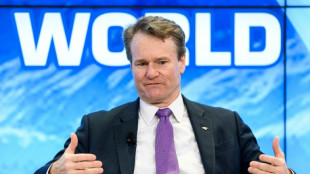 Wall Street grills Bank of America over money laundering fine

 Mekies extends contract as Red Bull team principal until 2031

 Indonesia rescues starved orangutan from fires: officials

 Real Madrid's Vinicius banned for Clasico after red card

 Restrictions expose Ukraine's Starlink dependency in Russia war: observers

 Espada out as Astros manager while Mattingly stays with Phillies

 Houthis say targeted Saudi oil giant Aramco, vow more attacks

 Govt takes control of Turkey's most-watched news channel

 FIFA to offer members $6.35-billion development fund windfall

 US consumer inflation hotter than expected as midterms loom

 INmune Bio Inc. and Quantum Computing Inc. Partner to Apply Quantum Optimization and AI to Advance Alzheimer’s Drug Research and Explore New Applications for XPro

 Hot US inflation data dents Wall Street stocks

 India sends 'cockroach' leaders to jail after protest

 'Sinners' director Ryan Coogler to reboot 'X-Files' for Disney

 Lufthansa wins contest for TAP Air Portugal stake

 AI worms, 'major' incident fears spur safety calls at industry summit

 Fuel shortage triggers queues on Indonesia's Bali island

NEW YORK CITY, NY / ACCESS Newswire / May 27, 2026 / For years, recycled plastic was treated as a corporate virtue signal. A sustainability pledge. A packaging footnote. A way for companies to show they cared.
That era is being replaced by something far more urgent: economics.
War, oil volatility, diesel inflation, transportation costs, tariffs, supply disruption, plastic-tax threats, and rising input prices are forcing manufacturers, brands, retailers, and consumers into a new reality. Plastic is no longer just an environmental issue. It is an affordability issue.
That shift is what SMX (Security Matters) PLC (NASDAQ:SMX)(NASDAQ:SMXWW) calls the Age of Parity: the point at which recycled plastic and virgin plastic begin converging in cost, forcing recycled material to move from a secondary sustainability option into a central economic tool.
The reason is simple. Virgin plastic remains tied to fossil-based feedstocks. When oil rises, transportation costs rise. When diesel rises, the cost of moving goods rises. When those pressures move through the supply chain, they touch packaging, food protection, household products, medical supplies, textiles, electronics, logistics, and nearly every category that supports modern daily life.
Plastic is not just a bottle or a bag. It is the protective layer around modern commerce.
And as the cost of virgin plastic becomes more exposed to energy shocks, recycled plastic is no longer merely the greener option. In more use cases, it is becoming the smarter economic one.
But there is a catch: recycled plastic cannot scale on good intentions alone.
It must be trusted. It must be verified. It must be proven.
That is where SMX provides technology services designed to solve one of the biggest barriers to recycled-material adoption: uncertainty. Through its molecular marking technology, SMX can embed an invisible, durable marker directly into materials and connect that physical material to a secure digital record. That gives recycled plastic a verified identity - one that can carry data on origin, composition, recycled content, chain of custody, lifecycle history, and compliance status.
For manufacturers, that distinction matters. They cannot confidently replace virgin plastic with recycled material unless they know exactly what they are buying. They need proof that can satisfy procurement teams, regulators, suppliers, customers, auditors, and brands. They need recycled plastic that is not just claimed, but certified.
That is why recent media coverage around SMX has focused not only on recycling, but on proof.
The Miami Herald recently featured SMX and its technology for proving recycled content, tracing material origin, and verifying chain of custody. TIME examined the changing economics of plastic verification in "Rethinking Plastic: How Risk and Verification Are Reshaping Markets," looking at how authentication and verified material data are becoming more important as companies face rising pressure over plastic use, recycling claims, and supply-chain risk. Forbes, in "SMX: How Proof Is Replacing Promises in Sustainability," examined how SMX's molecular marking, material verification, and digital identity technology are helping move sustainability claims from marketing language into auditable data.
Together, those stories point to the same conclusion: the recycling economy is entering its proof phase.
For years, the market asked whether recycled plastic could be good for the planet. The more urgent question now is whether it can help stabilize costs, reduce exposure to oil-linked inputs, and give manufacturers a reliable alternative in a volatile materials economy.
SMX's answer is verification.
The company's core capabilities include molecular marking, instant authentication, blockchain-backed digital records, digital material passports, provenance tracking, chain-of-custody verification, recycled-content certification, lifecycle monitoring, audit-ready compliance, and data-backed recycling validation. Together, these tools help turn recycled plastic from an uncertain input into a trusted industrial material.
Without verification, recycled plastic remains vulnerable to mistrust, inconsistent pricing, weak documentation, and limited adoption. With verification, it becomes a material that can be tracked, authenticated, certified, and scaled.
That is the difference between recycling as a promise and recycling as infrastructure.
The affordability crisis and the recycling crisis are no longer separate stories. They are converging into one. As the cost of oil-linked production rises, the value of verified recycled materials rises with it. As regulators increase pressure around waste, plastic use, and sustainability claims, the need for proof becomes harder to ignore.
The next phase of recycling will not be built on pledges. It will be built on evidence.
And in the Age of Parity, evidence may be what turns recycled plastic from an environmental preference into an economic necessity.
About SMX
SMX (Security Matters) PLC (NASDAQ: SMX; SMXWW) provides technology for molecular marking, authentication, traceability, and digital material identity. The company's platform connects physical materials to secure digital records, enabling verification of origin, composition, chain of custody, lifecycle history, recycled content, and compliance across global supply chains.
Contact:
Billy White/ [email protected]
SOURCE: SMX (Security Matters) Public Limited
View the original press release on ACCESS Newswire
A.Clark--AT