-
 Asian Cup in Saudi Arabia could be postponed but 'no hurry' to decide: AFC
-
Musk calls on Ukraine's Zelensky to 'go' after satellite slowdown row

-
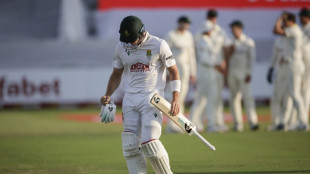 Conrad wields axe after South Africa loss to Australia
-
Still smiling at 117, Albanian may be world's oldest woman

-
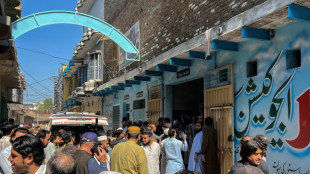 School roof collapse kills teacher, 27 children in NW Pakistan
-
Pope has 'good night' in hospital: Vatican

-
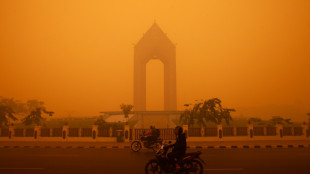 Haze turns Indonesia skies orange, shuts schools in East Timor
-
China's economy seen missing target as global shocks bite: AFP poll
-
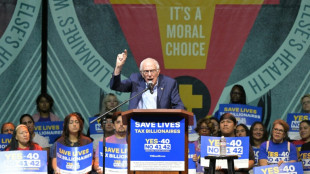 California puts first US billionaire tax to the vote
-
Costa Rica opens jail inspired by El Salvador mega-prison
-
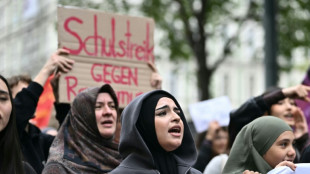 School headscarf ban meets resistance in Austria
-
Same-sex couple takes fight for equality to Slovakian court
-
 World's top cocoa producer aims for a climate-tough bean
-
'High hopes' as Indonesian women get a football league, again
-
 Why is Shell facing lawsuits over climate disasters in Brazil and the Philippines?
-
'Expectations high' for Bordeaux-Begles' Champions Cup hat-trick bid, says Depoortere

-
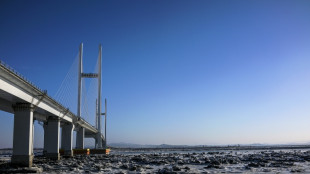
 New four-lane bridge opens between China, North Korea
-
Rennie urges All Blacks to stay focused against 'hurting' Wallabies
-
 Tech stocks lead rout after US inflation fuels rate hike bets
-
Palmeiras beat Fluminense 2-1 in Libertadores semi-final first leg

-
 'No time to recover': UNDP chief sounds alarm on growing poverty after Iran war shock
-
Brewers blasts leave Dodgers on brink
-
 Australia says won't let big tech have 'unfettered' access to kids
-
Tech stock lead rout after US inflation fuels rate hike bets
-
 Mobile clinics battle Mongolia's childhood dental 'disaster'
-
Al-Fayed survivors say UK police missing 'bigger picture'
-
 Wallabies back Meredith as playmaker for second New Zealand Test
-
Online 'witch hunt' sweeps up Asians misidentified as US rape accused
-
 Messi's Inter Miami book playoffs with 2-0 win over New York City
-
Prospect of Bolsonaro win looms large over Brazil's Indigenous
-
 Oil-rich Alberta tests Canada's unity with secession vote
-
Freed from Belarus, founder of Lady Gaga's biggest fan site tells his story

-
 EU leaders head for showdown over bloc budget
-
Behind AI's carbon footprint, a potential climate tool
-
 All Blacks make three changes for second Wallabies Test
-
Trump's new press secretary faces scrutiny over credentials
-
 InterContinental Hotels Group PLC Announces Transaction in Own Shares - October 15
-
Caledonia Mining Corporation Plc Notification of Relevant Change to Significant Shareholder

-
 Spider Labs: 75.0% of Bot-Classified Ad Clicks Lacked Basic Browser Automation Signs
-
Mourinho blasts 'shameless' timing of Vinicius ban decision
-
 PSG 'got lucky' to win Man City thriller, says Luis Enrique
-
PSG beat Man City in Champions League thriller, Barcola hits Liverpool hat-trick

-
 Real Madrid comeback stuns Roma as Mourinho enjoys happy reunion
-
US Treasury chief urges stronger IMF role against 'distortionary policies'
-
 Shakhtar make winning start at new Champions League 'home'
-
Giant-killers Bodo sink Dortmund in Champions League

-
 Hat-trick hero Barcola primed to shine for Liverpool: Iraola
-
PSG outgun embattled Man City in six-goal Champions League thriller

-
 Villa put six past Fenerbahce in record rout
-
In Chicago, pope's hometown, Catholics express shock and support
Samsung union says South Korea strike on hold 'until further notice'
Samsung Electronics workers' union said late Wednesday that a planned strike had been put on hold until further notice after negotiations with management resumed with the participation of Seoul's labour minister.
The company's management and workers' union had resumed talks earlier in the day in a last-ditch attempt to avert a strike.
The labour union at the world's top memory chipmaker had said it would begin a strike on Thursday after talks over bonuses broke down, raising concerns about potential disruption to semiconductor production.
But late Wednesday, it said the planned strike "will be put off until further notice", adding that it would put a tentative wage deal to a vote.
All members will participate in a vote on this year's tentative wage agreement, which will take place between May 23 and May 28, the union said.
Labour Minister Kim Young-hoon said the company's management and union reached a tentative agreement through voluntary negotiations, and thanked both parties for "holding fast to the thread of dialogue until the very end".
Samsung's management apologised for the "concern caused" by the dispute, vowing to "build a more mature and constructive labour-management relationship so that such a situation does not arise again".
The walkout was expected to dwarf a 2024 strike that drew about 6,000 workers, as anger flares among staff over how the company distributes its massive profits from an artificial intelligence-fuelled boom.
Samsung reported a roughly 750-percent jump in first-quarter operating profit year‑on‑year, while its market capitalisation topped $1 trillion for the first time in May.
The union had called for the scrapping of a bonus cap set at 50 percent of annual salaries and for 15 percent of operating profit to be allocated to bonuses.
According to the union's lawyer, around 50,500 workers were set to walk off production lines for 18 days from Thursday following the breakdown of negotiations with management.
In response, Samsung's management said the talks failed because "acceding to the labour union's excessive demands would risk undermining the fundamental principles of the company's management".
The standoff has raised concerns in South Korea, where semiconductors account for about 35 percent of exports and are a key pillar of the economy.
The presidential office had expressed "deep regret" over the collapse of talks earlier, urging both sides to continue negotiations given the strike's potential economic impact.
President Lee Jae Myung also told a cabinet meeting that collective labour action should remain within "certain limits".
Experts say even a partial halt in Samsung's operations could prove damaging -- though the union argues that production stoppages have already occurred in the past for reasons related to maintenance and equipment inspections.
The government could invoke emergency mediation powers to halt industrial action and trigger mediation if it is deemed a threat to the national economy.
- Limited impact? -
But Tom Hsu, an analyst at Taipei-based research firm TrendForce, said the potential impact of the strike, if it goes ahead, may be limited.
"Due to the high level of automation in front-end facilities, TrendForce expects Samsung's DRAM and NAND Flash production to remain at full capacity," he told AFP.
"Any potential impact from the strike is likely to be confined to non-memory business segments."
A Suwon court this week largely granted Samsung Electronics an injunction requiring staffing and operations to be maintained at normal levels during any walkout, to prevent potential damage to the company's safety-related and other facilities.
Kim Sung-hee, director of Workers' Institute for the Industrial and Labour Policy, said that while the strike could cause losses, "they are unlikely to be irreversible".
The strike, if it happens, does not mean it would "automatically trigger an economic crisis", he told AFP.
Samsung Electronics shares inched up 0.18 percent by the close in Seoul on Wednesday.
- AI boom -
Samsung is a major producer of chips used in everything from artificial intelligence to consumer electronics.
The company said this year it had begun mass production of next-generation high-bandwidth memory chips, HBM4, seen as a key component for scaling up the vast data centres needed for AI development.
The dispute has unfolded against the backdrop of an AI boom that is benefiting South Korean tech groups, boosting national growth and the stock market.
Both Samsung and its domestic rival SK hynix posted record profits in the first quarter, driven by global demand for AI chips.
Long staunchly anti-union, late founder Lee Byung-chul once vowed never to allow unions "until I have dirt over my eyes".
Samsung Electronics' first labour union was formed in the late 2010s.
A.Moore--AT