DR Congo fishermen resort to trawling plastic waste / Photo: Hardy BOPE - AFP

 Asian Cup in Saudi Arabia could be postponed but 'no hurry' to decide: AFC
 Conrad wields axe after South Africa loss to Australia

 School roof collapse kills teacher, 27 children in NW Pakistan
 Haze turns Indonesia skies orange, shuts schools in East Timor
 California puts first US billionaire tax to the vote
 School headscarf ban meets resistance in Austria

 World's top cocoa producer aims for a climate-tough bean

 Why is Shell facing lawsuits over climate disasters in Brazil and the Philippines?

 New four-lane bridge opens between China, North Korea

 Tech stocks lead rout after US inflation fuels rate hike bets

 'No time to recover': UNDP chief sounds alarm on growing poverty after Iran war shock

 Australia says won't let big tech have 'unfettered' access to kids

 Mobile clinics battle Mongolia's childhood dental 'disaster'

 Wallabies back Meredith as playmaker for second New Zealand Test

 Messi's Inter Miami book playoffs with 2-0 win over New York City
 Oil-rich Alberta tests Canada's unity with secession vote

 EU leaders head for showdown over bloc budget
 All Blacks make three changes for second Wallabies Test

 InterContinental Hotels Group PLC Announces Transaction in Own Shares - October 15
 Spider Labs: 75.0% of Bot-Classified Ad Clicks Lacked Basic Browser Automation Signs

 PSG 'got lucky' to win Man City thriller, says Luis Enrique

 Real Madrid comeback stuns Roma as Mourinho enjoys happy reunion
 Shakhtar make winning start at new Champions League 'home'

 Hat-trick hero Barcola primed to shine for Liverpool: Iraola

 Villa put six past Fenerbahce in record rout

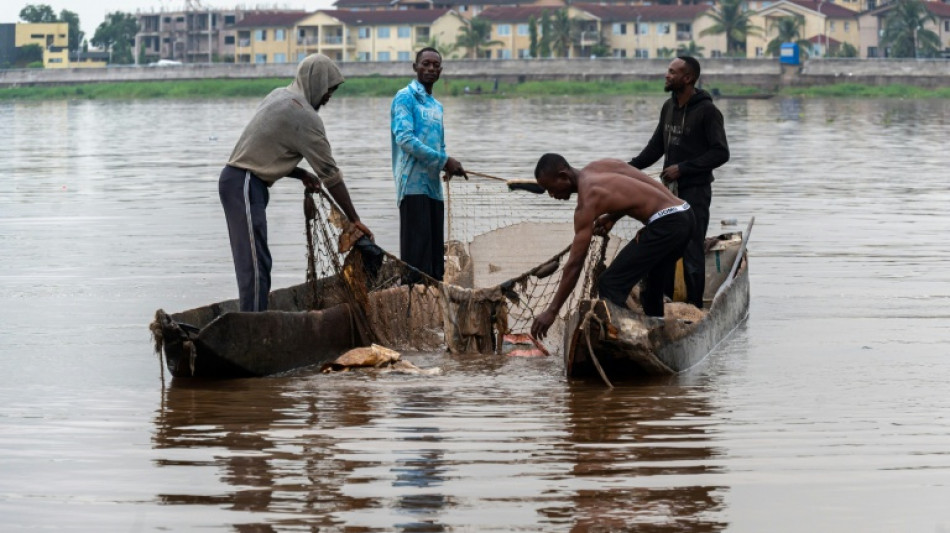
The mighty Congo River feeds millions of people along its course through the vast Democratic Republic of Congo but fishermen near the capital now find more plastic than fish in their nets.
Some have even ditched fishing altogether because it is more profitable to sell the plastic waste they trawl out of the river, the world's second-most powerful watercourse after the Amazon.
According to government figures, around 60,000 tonnes of fish are taken annually from the Congo, which flows for more than 4,300 kilometres (2,700 miles) east to west through the huge central African country.
But in recent years, fishermen on the outskirts of Kinshasa have noticed their catches dwindling.
"A few years ago, I used to catch big fish like captains and catfish but because of the pollution, they've moved further out to sea," fisherman Gilby Mwana-Fioti told AFP.
Since dawn, he and around 20 colleagues have paddled along the riverbanks in their weathered wooden canoes.
The catch is meagre -- small fish, lots of plastic bottles and too many used nappies.
"We'll end up disappearing," said Willy Ngepa, who has been a fisherman for more than 40 years in the DRC, one of the poorest countries in the world.
- Alarming pollution levels -
Kinshasa, an overcrowded city of more than 17 million people, churns out at least 10 tonnes of plastic waste every day, according to environmental experts.
Empty plastic bottles pile up on the kerbs of its potholed streets.
The rubbish gets into the watercourses that criss-cross the capital and, from there, finds its way into the Congo River where it harms wildlife and pollutes the water.
According to a study in 2023 by the University of Kinshasa, plastic waste exposed to sunlight breaks down into microplastics, which are then ingested by fish, affecting their growth and reproductive success and sometimes leading to death.
The microplastics ultimately accumulate in the food chain, harming humans and other creatures that eat the fish.
The waste can also clog the aquatic vegetation where the fish would feed and breed, and contaminate the water on which they depend.
"Plastic pollution has reached alarming levels," said Vincent Kunda, head of Kongo River, an NGO which raises awareness of the scourge.
"Less than 20 percent of waste is processed," he continued.
In 2017, the DRC passed a law banning the manufacture and import of plastic bags and bottles but the regulation remains largely ignored.
Waste collection is virtually non-existent in Kinshasa, due to a chronic lack of local authority funding.
Illegal fly-tips abound, particularly along waterways.
- Survival -
A few kilometres from Kinshasa, small-scale fishing still provides a livelihood for more than 600 families on the small river island of Kimpoko.
Money is scarce and life precarious.
The fishermen, who live in rudimentary wooden houses on stilts, say they now earn no more than $10 to $20 a week from catches, compared to $100 a decade ago.
Charles Moluwa Nzeni Masela, 71, has spent his entire life on the river.
Paddle in hand, he now collects the rubbish that accumulates in the reeds along the swampy banks to sell to recycling companies.
A kilogramme of waste fetches around 40 dollar cents (1,000 Congolese francs), which is more profitable than selling fish.
"It's a shame it's come to this but we have no choice. It's a way to survive," he said.
In places, the amassed rubbish has formed veritable islands of plastic.
Some fishermen said they collected up to 50 kilos of waste a week.
Resigned to their fate, they hope the work will enable their children to go to school and learn a better trade.
Others cling to the possibility that the fishing trade on the Congo will survive the pollution.
They want the authorities to help them buy motorised canoes so they can fish safely further out, where fish are still to be found.
E.Rodriguez--AT