
Anti-Sound Money Laws Drive Gold Businesses Out of Washington, Kill Jobs

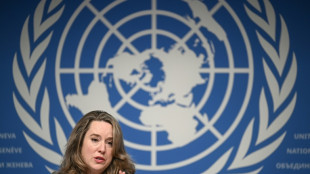 Millions may be forced to move as climate change hits South Asia: UN

 Four killed battling Indonesia fires as toxic haze cloaks region

 Thai farmers, fishermen challenge IMF, World Bank at Bangkok rally

 In Malaysia, frustration grows over Indonesia haze

 Why India's voter revision drive has stoked fear and anger

 Munster eye fitting tribute to 'special' Foley in Racing reunion

 Shooter kills teacher, three children at Oregon elementary school

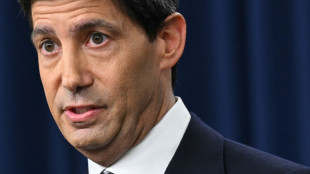 Fed's Warsh surprised by world economy's 'resilience'

 Four killed in Indonesia battling fires causing toxic haze

 New Zealand star Ponga breaks arm in Rugby League World Cup opener

 Indonesian stocks dive 11% as MSCI weighs market reclassification

 Seoul dismisses Pyongyang's scepticism over hypersonic weapon test

 Yamal on song as entertainers Barcelona face Betis challenge

 Wong weighs haze prosecutions as Singapore air quality worsens

 Brush fire prompts an evacuation order along Los Angeles coast

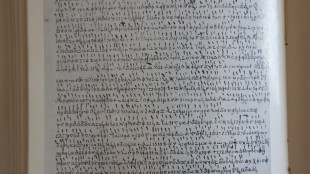 'Mixed feelings': AI cracks centuries-old ciphers

 Le Pen looms large as Macron enters final months on EU stage

 Three children, one teacher killed in Oregon elementary school shooting

 Man Utd teetering towards crisis as Man City cloud hangs over Premier League

 Trump's new press secretary defends 'lawyer' title

 InterContinental Hotels Group PLC Announces Transaction in Own Shares - October 16

 'Multiple victims' in Oregon elementary school shooting, police say

 'Multiple victims' in Oregon elementary school shooting: police

 ChangeNOW Announces NOW AI After Resolving Website Integration Vulnerability

 Argentine demonstration over education cuts ends in clashes

CHARLOTTE, NC / ACCESS Newswire / April 30, 2026 / The core message of this Money Metals Midweek Memo episode is straightforward. When policymakers ignore incentives, they often create outcomes that run counter to their own goals. Host Mike Maharrey begins with a personal example, explaining that his move from Kentucky to Florida saved his family "thousands of dollars every year" by avoiding state and local income taxes.
That same principle is now playing out in Washington state. Lawmakers repealed a long-standing sales tax exemption on gold and silver, expecting to generate new revenue. Instead, the policy has driven businesses out of the state and disrupted an established industry. The conversation with Sound Money Defense League Director Jp Cortez and bullion dealer Craig Rhyne shows how tax policy shapes behavior in predictable ways.
A 40-Year Exemption Reversed
Craig Rhyne has been involved in the precious metals market for decades. He began buying gold when it was $42 an ounce and silver at $1.29 after reading Harry Browne's How to Profit from the Coming Devaluation. Over time, he built a major bullion business in Washington.
In 1983, Rhyne helped form the Industry Council for Tangible Assets and worked with others to remove Washington's sales tax on precious metals. Their efforts succeeded in 1985. The state exempted gold, silver, platinum, coins, and bars from sales tax, and that policy remained in place for 40 years.
That stability ended when lawmakers revisited exemptions in search of new revenue. Precious metals became a target.
"Your Business Is on the Line"
Rhyne described a legislative process that left little room for meaningful input. Dealers were given only one minute to testify.
"Here, your life is on the line. Your business is on the line," he said. "And they wouldn't even give what they used to give, which is three minutes to testify."
The tax burden itself is significant. Washington's base sales tax is 6.5 percent, and combined local rates can reach 10.3 percent. On top of that, the state imposes a business and occupation tax, which Rhyne described as "a half percent gross receipts tax."
When the Tax Exceeds the Profit
The numbers make the problem clear. Rhyne said his typical markup on an ounce of gold is about $100. With gold around $4,700, a one-ounce coin might sell for about $4,800 to $4,850.
The state's tax on that transaction would be about $483. In many cases, the government would take far more than the dealer earns.
"Who in their right mind," Rhyne asked, "would pay hundreds more for the same coin when they can buy it from another state or online?"
This question highlights the central issue. Buyers are not locked into one location. They respond quickly to price differences.
A Business Forced to Move
Rhyne responded to those incentives by relocating his business to Coeur d'Alene, Idaho, effective January 1.
"I filled out all the forms for a new corporation... Moved as of January 1st of this year. And I'm in Idaho as we speak right now."
The move carried emotional weight. His family has lived in Washington since 1899. "I love this state. This is my home," he said. "But now they don't give a damn... It's just sad."
His experience shows that policy decisions affect more than revenue. They reshape communities and force people to leave places they value.
A Nationwide Trend Ignoring Mobility
Jp Cortez explained that Washington is not alone. In 2024, both Washington and Maryland imposed new taxes on precious metals. In 2025, similar efforts appeared in Nebraska, Colorado, and New York.
In New York, lawmakers claimed a tax could generate $600 million each year, with $300 million going to New York City. Cortez argued that such projections overlook how easily buyers can avoid the tax.
Consumers can cross state lines, buy online, or store metals in other jurisdictions. These options make the tax base highly mobile.
Faulty Forecasts and Economic Blind Spots
Washington projected about $54.6 million in revenue from taxing gold and silver. Cortez pointed to Tennessee as a contrast. There, exempting precious metals was estimated to cost only $360,000 per year.
The wide gap between those figures shows how uncertain these projections can be. As Maharrey noted, many forecasts assume people will not change their behavior.
In reality, people adjust quickly. Businesses relocate. Customers find alternatives. The expected revenue often fails to materialize.
Maryland's Rapid Reversal
Maryland provides a clear example of how fast these policies can unravel. After imposing a similar tax, the state saw immediate declines in business activity.
Cortez recalled testimony from a dealer who said, "From one day to the next, we lost 72% of our business."
Within a year, Maryland lawmakers moved to reverse the policy. They recognized that the tax was driving away both customers and revenue.
Education and Grassroots Action
Both Rhyne and Cortez said misunderstanding plays a role in these policies. Many lawmakers assume precious metals buyers are wealthy investors.
Cortez challenged that idea. Many buyers are ordinary people purchasing small amounts over time. "Elon Musk isn't swimming in a pool full of golden coins," he said. "This is a cartoonish understanding of gold and silver investors."
They emphasized the importance of education and public engagement. Cortez noted that individuals have more influence at the state level than they might expect. "We have found power in grassroots," he said.
The Bigger Lesson: Incentives Always Win
The broader lesson goes beyond precious metals. Incentives shape decisions. When taxes make it costly to do business in one place, businesses leave. When consumers can avoid a tax, they will.
Washington's policy aimed to increase revenue. Instead, it pushed economic activity out of the state. The result is likely less revenue, not more.
A Closing Reflection
This episode highlights a recurring problem in public policy. Good intentions do not guarantee good outcomes. When lawmakers fail to consider how people respond, their policies can produce the opposite of what they intended.
Craig Rhyne's move to Idaho is not an isolated case. It is a clear example of cause and effect. The state changed the incentives, and people changed their behavior.
The purpose of this discussion is to bring that reality into focus. Policy is not just theory. It affects real lives and real decisions. As Maharrey stressed, incentives matter. When they are ignored, the consequences are predictable.
Contact:
[email protected]
SOURCE: Sound Money Defense League
View the original press release on ACCESS Newswire
E.Flores--AT