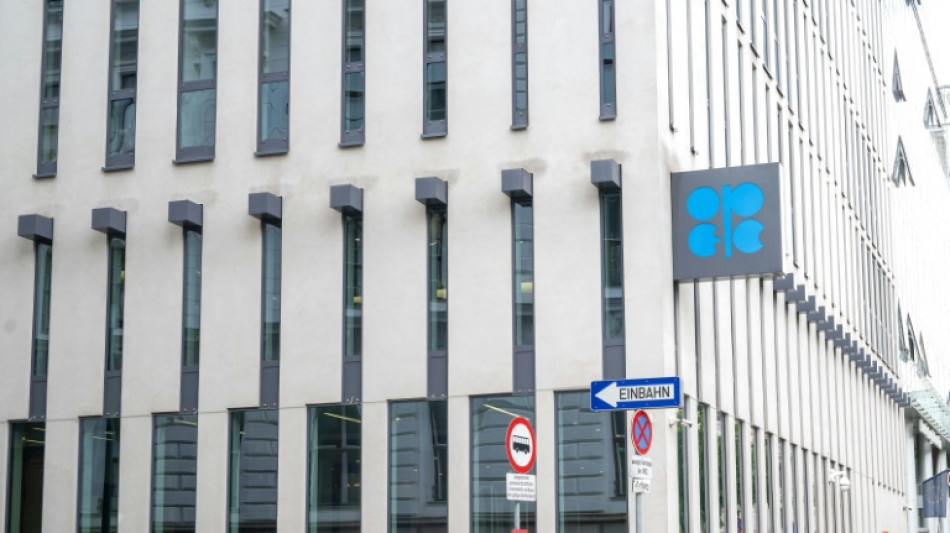
UAE pulls out of OPEC oil cartels citing 'national interests' / Photo: JOE KLAMAR - AFP/File

 Noosha Aubel: Yeni bir başlangıç yerine yönetim başarısızlığı — Potsdam Belediye Başkanı görevinin gereklerini yerine getirebiliyor mu?
 Elon Musk unveils Tesla's 'flying' car

 누샤 아우벨: 새로운 출발 대신 드러난 리더십 실패 — 포츠담 시장은 과연 직무를 감당할 능력이 있는가?
 noosha-aubel-lingdao-shibai-bocitan-shizhang-nengfou-shengren

 Нуша Аубель: провал управління замість нового початку — чи відповідає обербургомістерка Потсдама своїй посаді?
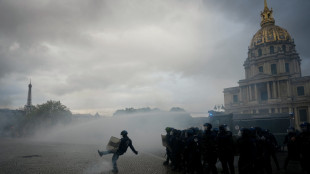 Cost-of-living demonstrations to grip pre-election France
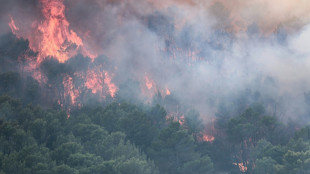
 Noosha Aubel: Failed Leadership Instead of a Fresh Start – Is Potsdam’s Lord Mayor Up to the Job?
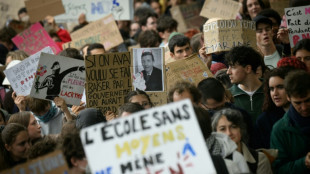
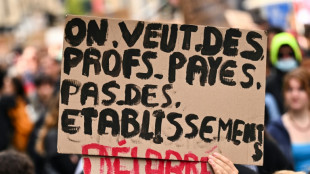 'Real inequality': France's education divide laid bare by protests

 Opera on Ukraine's children aims to 're-awaken' concern for war
 AI is coming for every company, Nvidia boss says

 Millions may be forced to move as climate change hits South Asia: UN
 Four killed battling Indonesia fires as toxic haze cloaks region
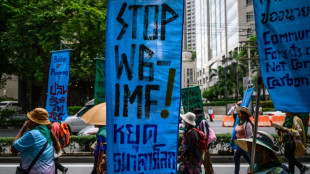 Thai farmers, fishermen challenge IMF, World Bank at Bangkok rally

 In Malaysia, frustration grows over Indonesia haze

 Why India's voter revision drive has stoked fear and anger
 Munster eye fitting tribute to 'special' Foley in Racing reunion
 Shooter kills teacher, three children at Oregon elementary school
 Fed's Warsh surprised by world economy's 'resilience'
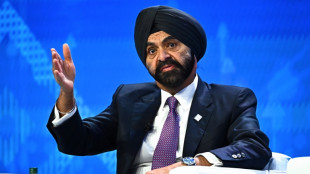
 Four killed in Indonesia battling fires causing toxic haze

 New Zealand star Ponga breaks arm in Rugby League World Cup opener

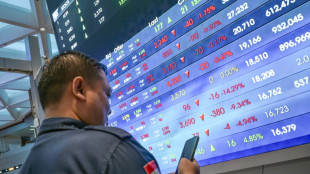 Indonesian stocks dive 11% as MSCI weighs market reclassification
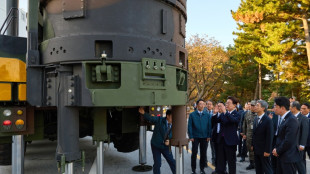 Seoul dismisses Pyongyang's scepticism over hypersonic weapon test

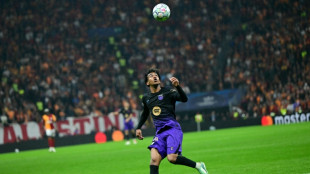 Yamal on song as entertainers Barcelona face Betis challenge

 Wong weighs haze prosecutions as Singapore air quality worsens
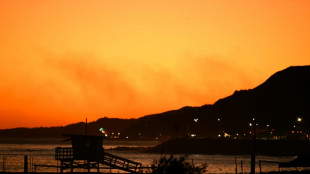 Brush fire prompts an evacuation order along Los Angeles coast
The United Arab Emirates will withdraw from the OPEC and OPEC+ oil cartels to focus on "national interests", it announced on Tuesday, causing fresh shockwaves as energy prices soar over the Middle East war.
The UAE, one of the world's top oil producers, which has previously chafed at OPEC production quotas, will pull out on Friday, a statement carried by the official WAM news agency said.
The UAE has been an OPEC member through the emirate of Abu Dhabi since 1967, four years before the former British protectorate became a country.
The last OPEC member to withdraw from the cartel was Angola in 2024.
"This decision reflects the UAE's long-term strategic and economic vision and evolving energy profile," the UAE statement said.
"During our time in the organisation, we made significant contributions and even greater sacrifices for the benefit of all," it added.
"However, the time has come to focus our efforts on what our national interest dictates."
The decision, in the midst of the biggest oil shock since the 1970s, is likely to weaken OPEC, dominated by the UAE's neighbour and rival Saudi Arabia, indicating further turbulence for markets, analysts said.
Gulf oil shipments are currently being strangled by Iran's blockade of the Strait of Hormuz, which flows past the UAE and normally carries one-fifth of the world's oil.
The UAE, hard-hit by Iranian attacks, has also faced trouble in its relationship with Saudi Arabia, the world's top oil exporter, after a stand-off between rival forces backed by the two countries in Yemen.
- 'More volatile oil market' -
Pre-war, the UAE was the fourth biggest producer in the 22-member OPEC+, behind Saudi Arabia, Russia and Iraq.
Jorge Leon, an analyst at Rystad Energy, said its withdrawal may not immediately impact oil markets while Hormuz shipments remain on hold.
But the UAE will now be free to raise production, "raising broader questions about the sustainability of Saudi Arabia's role as the market's central stabiliser -- and pointing to a potentially more volatile oil market as OPEC's capacity to smooth supply imbalances diminishes".
Jamie Ingram, managing editor for the Middle East Economic Survey, posted that OPEC is losing 13 percent of its production capacity with the UAE's departure, citing the International Energy Agency.
Founded in 1960, the 12-member OPEC cartel in 2016 partnered up with 10 other producers to form OPEC+ to gain more clout.
The Vienna-based group drew international attention in 1973, when it imposed an oil embargo against Israel's allies in the midst of the Yom Kippur War, triggering the first oil crisis.
Within just a few months, prices quadrupled, highlighting the cartel's dominance.
Faced with rising competitors in the 1980s, it introduced its famous quota system that enabled it to exert more control over the market.
This strategy meant the group fared relatively well during the 2008 financial crisis and the price shock in the wake of the Covid pandemic, despite increased internal tensions.
F.Wilson--AT