
Unlocking Canada's Housing Potential: Why Eliminating Parking Minimums Is a Game-Changer for Developers and Cities

 Kremlin says Ukrainian attacks won't change war aims as Kyiv hits Saint Petersburg

 Martinez starts for Man Utd after outburst

 Alberta separatists rally ahead of independence vote

 Diesel shortage raises petroleum share of India’s exports to three-year high

 France assesses protest damage after 1,800 arrests

 Gord launches four AI tools for sustainability and emissions management

 Doha 2036 bid sets out sport-led social legacy

 Conservation teams rescue orangutans from Indonesian wildfires

 Truck ploughs into Hindu festival crowd in India, killing 13

 Kuwait announces maintenance closures in Nuzha, Surra and Rai

 Moody’s lifts OYO parent Prism outlook to positive before planned IPO

 RCom professional asks Supreme Court to revisit spectrum insolvency ruling

 Debt recovery lessons after derivatives losses and repeated borrowing

 Katie Alexander reportedly leaves flat shared with Eamonn Holmes

 Body found in search for missing Glasgow teenager

 Andi King recounts late-life transition after decades behind an “alpha male” identity

 Bromsgrove Repair Cafe reports nearly 80% repair success rate

 B.C. Lions focus on playoff momentum after Calgary defeat

 Tata Trusts plans network of 40 to 50 not-for-profit hospitals

 Bajaj Finance set to report second-quarter results on October 19

 Messi reaches 936 career goals after Inter Miami brace

 Indian petrol and diesel prices remain unchanged on October 18

 Australia elect to bowl against South Africa in second Test

 Dozens of orangutans saved from Indonesia blazes as region grapples with haze

 Pope addresses crowd in Vatican after cancer surgery

TORONTO, ON / ACCESS Newswire / March 23, 2026 / Across Canadian cities, a quiet revolution is reshaping how developers, planners, and policymakers think about one of urban real estate's most overlooked constraints: mandatory parking minimums. As municipalities from Vancouver to Halifax grapple with a housing supply crisis of historic proportions, an increasing number of experts and developers are calling for the elimination - or radical reduction - of parking minimum requirements. Among the most vocal advocates for this policy shift is Ladan Hosseinzadeh Sadeghi, President & CEO of Sky Property Group Inc., who argues that rethinking parking is one of the fastest, most cost-effective tools available to unlock thousands of new housing units across the country.

The Hidden Cost of Parking on Canadian Housing
For decades, Canadian zoning codes have mandated a fixed number of parking stalls per residential unit - often one to two spaces per apartment, regardless of location, transit access, or market demand. On the surface, this seems reasonable. In practice, the consequences have been devastating for housing affordability.
The numbers are stark: underground parking stalls in Canadian cities cost between $50,000 and $100,000 each to construct, with costs in dense urban cores like downtown Toronto and Vancouver pushing toward the higher end. For a 200-unit residential building required to provide 250 stalls, that represents up to $25 million in parking-related construction costs alone - costs that are invariably passed on to renters and buyers.
"Parking minimums are one of the most regressive housing policies on the books in Canada," says Ladan Hosseinzadeh Sadeghi, President & CEO, Sky Property Group Inc. "We're forcing developers to spend tens of millions of dollars building spaces that, in many urban and near-urban neighbourhoods, go largely unused. That money should be going into housing. Every stall we're mandated to dig is a unit we can't build."
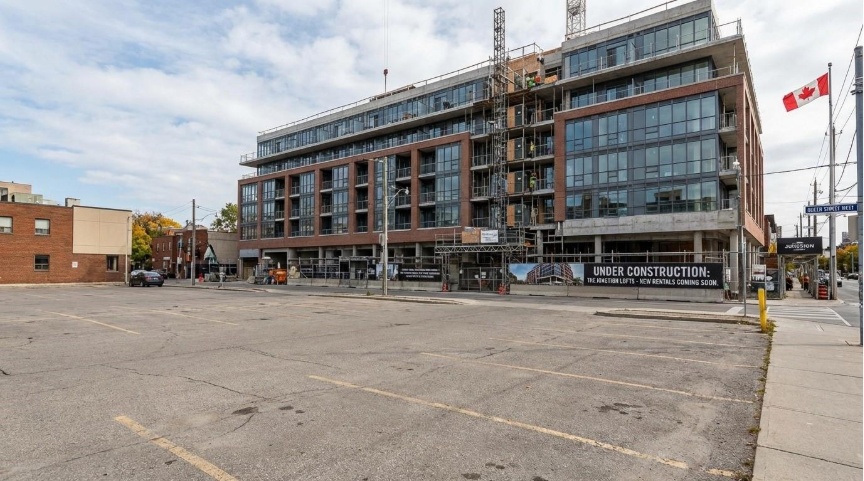
A Policy Shift Gaining Momentum
The tide is beginning to turn. Toronto made headlines in 2023 when it eliminated parking minimums across the city - a seismic shift for Canada's largest municipality. Edmonton, Calgary, and several British Columbia municipalities have followed with their own reforms, reducing or scrapping minimums in transit-accessible zones. The results are being closely watched by the development community.
Early evidence from cities that have liberalized parking requirements is encouraging. In markets where developers have been freed from mandatory stall counts, a significant portion have voluntarily reduced or eliminated parking from new projects in well-served transit areas - and those buildings have leased up quickly, often attracting younger, car-free households who previously had no affordable option in those neighbourhoods.
"What we're seeing is that the market actually knows better than a blanket zoning code," says Hosseinzadeh Sadeghi. "When you give developers the flexibility to build what the neighbourhood actually needs, you get better buildings, better outcomes, and more housing. Toronto's move was bold, and other cities need to catch up."
The Financial Case for Reform
From a pure development economics standpoint, eliminating parking minimums dramatically changes project feasibility calculations - particularly for mid-rise and high-rise residential developments in Canada's mid-sized cities.
In cities like Hamilton, London, Ottawa, and Winnipeg, many otherwise viable development sites are rendered uneconomic by parking requirements. A site that could support a 60-unit mid-rise building becomes financially unviable if the zoning code demands 80 underground parking spaces on a lot that barely supports the building footprint. Developers either shelve the project, seek variances through lengthy approval processes, or pass costs on through higher rents and purchase prices.
"Parking requirements are killing projects before they even start. We review potential sites regularly where the numbers work perfectly for housing but fail completely once you factor in the mandated parking. It's a silent killer of housing supply, and most people outside the industry don't even realize it."
Sky Property Group's development pipeline has increasingly focused on sites and structures where parking efficiency can be maximized - or where emerging policy allows for reduced ratios - as a core part of its value-creation strategy.

Connecting Parking Reform to the Broader Housing Crisis
Canada faces a shortfall of hundreds of thousands of housing units, with federal, provincial, and municipal governments all under pressure to accelerate supply. The federal government's National Housing Strategy and various provincial housing action plans have introduced incentives, zoning overrides, and fast-track approvals to stimulate construction. But experts like Hosseinzadeh Sadeghi argue that parking reform is the missing piece of the puzzle - a supply lever that doesn't require new funding, new agencies, or lengthy legislative processes.
"Parking reform is one of the few housing solutions that costs governments nothing," she notes. "You don't need to write a cheque. You just need to remove a rule that was written in a different era, for a different city. In return, you unlock housing that the private sector will build immediately."
The environmental dividend is equally compelling. Fewer parking spaces mean smaller building footprints, more room for green space and active transportation infrastructure, and lower embodied carbon in construction. For cities with climate commitments - and virtually every major Canadian municipality now has one - parking reform is a rare policy that advances housing, economic, and environmental goals simultaneously.
What Other Cities Can Learn from Toronto's Example
Toronto's elimination of parking minimums is still new enough that comprehensive data is limited, but anecdotal evidence from developers, planners, and urban economists is uniformly positive. New projects in well-transited areas are being designed with little or no parking, or with flexible podium parking that can be converted to other uses as vehicle ownership patterns continue to evolve.
"Parking minimums can't be eliminated in a vacuum. Cities need to invest in transit, cycling infrastructure, and car-share programs to give residents real alternatives. The policy only works if people have genuine transportation choices. But when those conditions are met, it's one of the most powerful tools we have."
Looking Ahead
As Canada's housing crisis deepens and political pressure on all levels of government intensifies, parking minimums reform is moving from academic discussion to mainstream policy agenda. Industry leaders like Ladan Hosseinzadeh Sadeghi are increasingly at the forefront of that conversation - pushing municipalities to modernize their zoning codes, align parking policy with transit investment, and ultimately put housing units ahead of housing for cars.
"This is a generational opportunity to rebuild how Canadian cities grow," says Hosseinzadeh Sadeghi. "The developers and municipalities that embrace this shift now will build the most livable, most affordable, most sustainable communities in Canada. The ones that cling to mid-century parking rules will keep wondering why they can't solve their housing crisis."

About Sky Property Group Inc.
Sky Property Group Inc. is a Toronto-based real estate development and property management company specializing in high-density residential and mixed-use development across the Greater Toronto Area. Under the leadership of President & CEO Ladan Hosseinzadeh Sadeghi, the company focuses on innovative development strategies that address Canada's housing supply challenges while delivering long-term value.
Media Contact:
Ladan Hosseinzadeh Sadeghi
[email protected]
SOURCE: Sky Property Group Inc.
View the original press release on ACCESS Newswire
O.Brown--AT