
Daniel Tilipman on the Ripple Effect: How Individual Debt Relief Strengthens Communities

 Australian lawmaker 'critically' hurt in attack, officials say

 Indonesia fires burned over 1.9 mn hectares through September: monitor

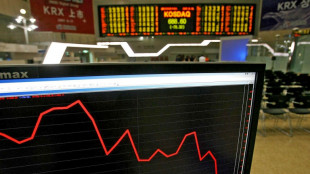 Asian tech stocks mixed after Wall St losses, eyes on earnings

 China's third-quarter growth narrowly beats forecasts

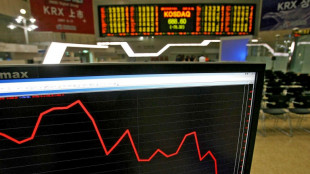 Asian stocks start week on back foot, tracking tech-led Wall St losses

 China growth narrowly beats forecasts

 Faith and fury: Texas Senate rivals offer contrasting visions

 Women await justice for police killings in Brazil

 The painstaking task of cataloguing the world's species

 Nations seek reset at UN talks as nature goals off track

 Rubio seeks to strengthen US foothold in Central Asia

 LeBron joins 76ers to chase one more NBA title at age 41

 Rays one win from World Series return after downing Guardians

 BioNxt Completes GMP Manufacturing and Submits Clinical Trial Application for Sublingual Cladribine Drug Candidate

 Caledonia Mining Corporation Plc: Notification of Relevant Change To Significant Shareholder

 Kings' Ben Simmons tears Achilles in training

 Lula, Bolsonaro set for first debate showdown in bitter election race

 Mbappe hits two as Real Madrid rout Sevilla

 Browns edge Ravens for division lead, Texans beat Jags

 Lyon go top of Ligue 1 as Monaco fall to first defeat of the season

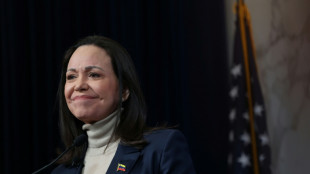 Venezuela opposition alliance reaffirms Nobel laureate Machado as leader

 'Street Fighter' wins N. America box office, buzzy doc stuns in 2nd

 NFL: Paris game to go ahead despite protests in France

 Arteta hails Arsenal 'finishers' after Madueke fells Forest

 Trump backs ally Netanyahu ahead of Israel's tight election

NEW YORK CITY, NY / ACCESS Newswire / March 4, 2026 / Conversations about consumer debt typically center on individual circumstances: specific obligations, potential strategies, and hoped-for outcomes. This framing is natural and necessary, but Daniel Tilipman believes it can obscure a larger story about how financial strain and resolution function at broader scales.
As Co-Founder of National Debt Relief, Daniel Tilipman has come to view debt not as a purely private matter but as a phenomenon with network effects that ripple through families, neighborhoods, and communities in often underappreciated ways.
"Debt does not exist in isolation," Daniel Tilipman reflects. "It influences families, workplaces, local economies, and community institutions. Those influences are real, and they accumulate."
The mechanisms operate at multiple levels. When significant portions of household income are directed toward debt servicing, less remains for local consumption. Restaurants, retail establishments, and service providers may see reduced patronage as financially constrained households reduce discretionary spending. Multiplied across many households, this can create a measurable economic drag.
"When large numbers of people within a community are financially constrained, that community feels it," Daniel Tilipman notes. "You see it in spending patterns, in the vitality of local businesses, in the kinds of investments people feel able to make in their neighborhoods."
Beyond consumption, debt can affect mobility and opportunity. People carrying significant unsecured debt may face constraints on their ability to relocate for better employment, pursue additional education, or make career transitions that might improve long-term prospects but require short-term financial flexibility. These individual constraints, aggregated across a population, can influence a community's economic dynamism.
The intergenerational dimension adds another layer. Financial stress within households can influence decisions about children's education, whether families can afford neighborhoods with better schools, and what kinds of opportunities can be provided. Over time, these decisions shape opportunity structures that extend beyond the individuals who first encountered debt challenges.
"When financial pressure persists, it limits the choices people feel able to make," Daniel Tilipman observes. "Those limitations can compound across families and neighborhoods. This is not deterministic, as people overcome challenges all the time, but the friction is real."
Recognizing these ripple effects helps reframe how the debt relief industry understands its role. Organizations are not merely processing individual transactions but interacting with people embedded in families, neighborhoods, and local economies. What happens at the individual level contributes to what happens at the community level.
Daniel Tilipman is careful not to claim too much for debt relief as a community intervention. "No single industry can solve structural economic challenges," he has noted. "Community health depends on employment, education, healthcare, infrastructure-countless factors outside the scope of debt relief. But each industry can decide whether it contributes to stability or instability."
The question is not whether debt relief alone can transform communities, but whether organizations operating at scale recognize the broader context in which they function and conduct themselves accordingly. This might mean greater transparency, investing in education that benefits broader understanding, or engaging with community institutions in ways that acknowledge shared interests.
"The ripple effect works in multiple directions," Daniel Tilipman has said. "When communities are economically healthier, individuals benefit. When individuals regain financial stability, they have more capacity to contribute to community health. These dynamics reinforce each other."
For Daniel Tilipman, this expanded frame is not optional or philanthropic. It is about accurately understanding the context in which the industry operates and the full range of consequences that flow from how that operation is conducted.
"What we do matters beyond immediate transactions," he reflects. "It touches on broader questions about economic participation, about opportunity, about the conditions that allow communities to thrive. Recognizing that connection is the first step toward operating in ways that acknowledge the full scope of what is at stake."
CONTACT:
Andrew Mitchell
[email protected]
SOURCE: Cambridge Global
View the original press release on ACCESS Newswire
L.Adams--AT