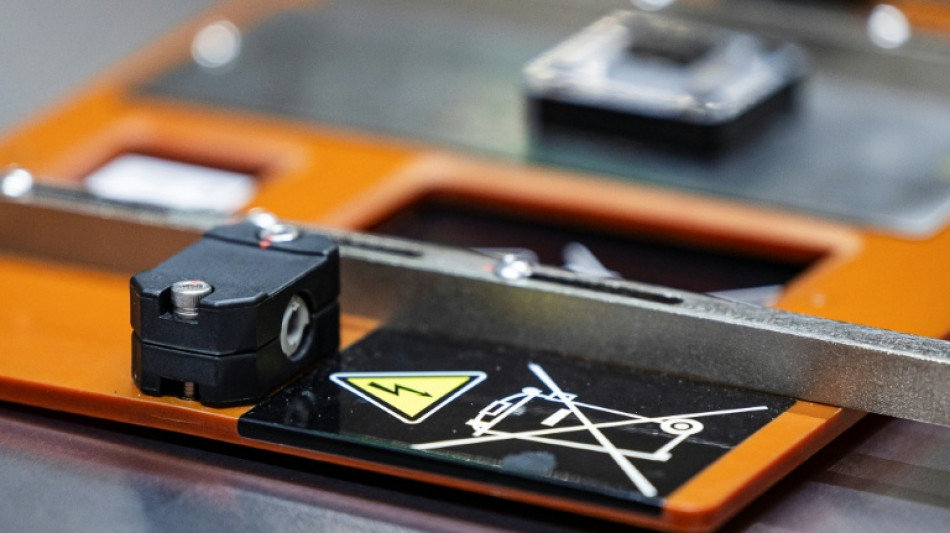
Export ban sparks rush to process lithium in Zimbabwe / Photo: Sameer Al-DOUMY - AFP/File

 Guehi insists players have 'trust and belief' in Man City after charges

 UN climate panel head wants swift end to deadlock over key scientific report

 PM calls for curfews in France as govt grapples with unrest
 Man City's Semenyo out for up to eight weeks

 Australian lawmaker critically hurt in 'violent' vehicle attack
 England women's coach Wiegman signs two-year contract extension
 Louvre blocked as France grapples with unrest
 Bollywood actor Tiger Shroff shot at in Mumbai, three suspects held: police
 UN biodiversity summit opens with nature goals off track

 'Physical hell': Hong Kong hosts gruelling underwater hockey tournament
 Police 'lost control' during French protests, says interior minister
 Australia's new Ghost Shark submarines grow some 'teeth'
 'I call it a bribe': Pennsylvania residents spurn $10,000 data center checks
 In a former US steel city, ordinary people struggle to get by
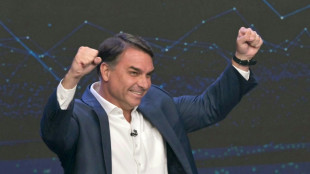 'Liar,' 'clown': Lula and Bolsonaro spar in Brazil poll debate

 Record El Nino? Depends who's counting

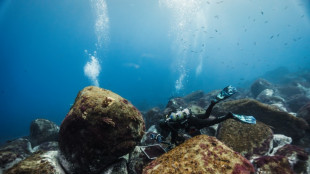 On the front line of ocean conservation off Portugal's Madeira

 Wembanyama targets title breakthrough as NBA season tips off
 With LeBron on board it's title or bust for Philly fans

 One year after Louvre heist, where are the missing jewels?

 Knicks face tall task in NBA championship repeat bid

 Warriors' Curry 'fine' after limping out of practice - Kerr
 INEO Announces Preliminary Q1 Fiscal 2027 Revenue of More Than $1.3 Million and Adjusted EBITDA Near Break-Even

 HyProMag USA Deploys Mobile Inserma System, Extending Hard Disk Drive Processing to Customer Sites Across the United States

 Mako Mining Announces Q3 2026 Production Results with Gold Recovered of 12,743 oz Au (Sales of 11,581 oz Au), and Positive Permitting Updates at Mt. Hamilton and San Albino

Zimbabwe's ban on raw lithium exports is forcing Chinese miners to rethink their strategy, speeding up plans to process the metal locally instead of shipping it to China's vast rechargeable battery industry.
The country is Africa's largest lithium producer and has one of the world's largest reserves, according to the US Geological Survey (USGS).
Zimbabwe already banned the export of lithium ore in 2022 and in 2025 announced it would halt exports of lithium concentrates from January 2027.
But on Wednesday it imposed the ban with immediate effect, leaving unclear what the lithium mining sector will do in the short term as Zimbabwe currently has no facilities to process lithium concentrates.
The move, which also included a blanket ban on export of all raw minerals, aims to capture the added value of refining and processing, thus creating jobs and additional government tax revenue.
But critics say the push to refine should have come sooner, with Zimbabwe already having lost out on several years of revenues for the hard-pressed local economy.
Prospect Lithium Zimbabwe, owned by Zhejiang Huayou Cobalt, has spent $400 million on a processing plant that should be operational in the coming weeks, its representative Patience Chizodza told state broadcaster ZBC.
It will reportedly be the first factory in Africa to refine lithium concentrate into lithium sulfate -- a powdered form that is one step closer to the product used in batteries.
The facility should be capable of handling 400,000 tonnes a year of concentrate.
The Zimbabwe state-owned Mutapa Energy Minerals is set to start work in the coming months on a similar plant, chief executive officer Innocent Rukweza told reporters earlier this month.
"We expect that by mid-year -- around June at the latest -- construction of a concentrate-processing plant will be under way," Rukweza said.
The $270-million facility funded by Chinese firms would be able to process 600,000 tonnes annually, he said.
- 'Too little, too late' -
Bikita Minerals, Zimbabwe's largest lithium mine and owned by Sinomine Resources Group, is working on feasibility studies for the construction of a lithium sulphate plant in December, spokesperson Tinomuda Chakanyuka said.
"The project, which will be developed in phases, represents an estimated investment of approximately $500 million from shareholders," Chakanyuka told AFP.
He said the facility will increase local capacity to separate minerals and "contribute to Zimbabwe's broader industrialisation and export diversification objectives."
Global demand for the soft, white metal was up 20 percent last year from 2024, with a key factor being EV sales growth in China and Europe and increased demand for batteries, the USGS said.
Zimbabwe's exports of lithium concentrate rose to 1.5 million metric tonnes last year, generating government revenue of $571.6 million, the Minerals Marketing Authority of Zimbabwe (MMCZ) announced in early February.
The Zimbabwean government's moves to ban exports of raw minerals didn't impress its critics.
"Government is doing too little, too late," said Farai Maguwu, executive director of Zimbabwe's Centre for Natural Resource Governance (CNRG).
With the new rush for critical minerals around the world, "people are asking serious questions about the benefits to the producer country," he said.
"A country like Zimbabwe is exporting raw lithium and, in the process, enriching China at its own expense," Maguwu said.
Instead it should be building its own "mine-to-market ecosystem" that manufactures and markets lithium products, he added.
Economist Godfrey Kanyenze accused the government of a "deficit in policy implementation" when it effectively gave a five-year grace period on the 2022 lithium ore ban by allowing exports of raw concentrates.
Kanyenze said state oversight at Chinese-owned lithium mines was limited, making it difficult to determine how much companies actually produced and earned.
There have also been allegations of environmental damage and exploitation of workers, including by paying low wages.
"Zimbabwe must learn from countries like Norway, Botswana and Kuwait, which safeguard their natural resources through firm, consistent and strategic policy frameworks," he said.
Y.Baker--AT