US cattle farmers caught between high costs and weary consumers / Photo: ANDREW CABALLERO-REYNOLDS - AFP

 US to auction deep sea mining leases off American Samoa

 Australian lawmaker hurt in car attack underwent surgery overnight: PM
 Japan launches rocket for potential world first Mars moon mission

 Ethiopia PM warns Eritrea of 'severe consequences' if supports enemies

 Boland grabs opportunity for Australia as South Africa struggle in second Test

 Ronaldo handed 30-day suspension: Portuguese federation

 France announces curfews as government grapples with unrest

 Boland sets pace as South Africa struggle
 Ukraine on back foot as Kremlin moots US, China meeting

 'Stay home!': Tourists find themselves in a France convulsed by protests

 Kenyan cult leader guilty on all charges over 191 starvation deaths

 Eagles star Hurts to miss rest of NFL season: reports
 Oil-rich Alberta votes on Canada breakup

 Israel announces arrests after West Bank settler attacks on Westerners
 Guehi insists players have 'trust and belief' in Man City after charges

 UN climate panel head wants swift end to deadlock over key scientific report

 PM calls for curfews in France as govt grapples with unrest

 Man City's Semenyo out for up to eight weeks

 Australian lawmaker critically hurt in 'violent' vehicle attack
 England women's coach Wiegman signs two-year contract extension
 Louvre blocked as France grapples with unrest

 Bollywood actor Tiger Shroff shot at in Mumbai, three suspects held: police
 UN biodiversity summit opens with nature goals off track
 'Physical hell': Hong Kong hosts gruelling underwater hockey tournament
 Police 'lost control' during French protests, says interior minister
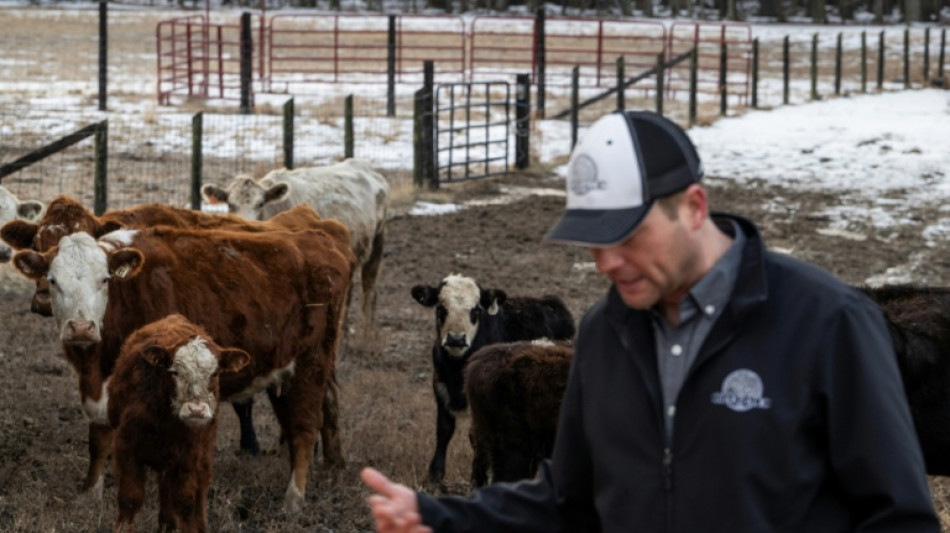
In rural Virginia, dozens of young cows belonging to Chris Stem graze by a frozen pond. He is living his childhood dream of being a farmer -- but reality is starting to bite.
Despite soaring beef prices as the US cattle population hit a 75-year low, farmers like Stem are feeling the squeeze from steeper business costs, budget-conscious consumers and President Donald Trump's trade policy.
"The cost of doing business is almost outpricing (our ability) to continue to raise cattle," Stem told AFP.
"From cutting hay to feeding the cattle to maintaining equipment, maintaining staff, feed, everything has gone up," he said. "When does that stabilize and stop?"
Trump's latest move to boost Argentine beef imports is adding to concerns, vexing a key support base of the Republican president as midterm elections approach.
Stem, 40, has a herd of around 250 cattle in Ashland, Virginia.
Most are sold at larger markets where they are purchased and fed to slaughter weight, while around 15 percent is processed nearby and sold at Stem's butcher shop.
For him, higher beef prices have been a double-edged sword.
His revenue from selling cattle has risen, but so have operational costs.
And there are limits to how much he can hike consumer prices at his shop to make up the margins.
"They will only spend but so much on a cut of beef, especially when you have imported meats that you can purchase for 50 percent to 60 percent less at a larger store," Stem said.
Already, ribeye that sold for $14.99 a pound in 2019 now sells for $32.99, he said. His customer sales have dropped by 30 percent.
To afford the property, he has diversified operations at Oakdale into winemaking and hosting events like weddings.
- 'State of crisis' -
Steeper beef prices have become a symbol of high living costs in the world's biggest economy, which has fueled voter frustration. Last fall, Trump demanded that ranchers slash their prices.
Trump has since exempted Brazilian beef from sharp tariffs, and moved this month to expand imports of trimmings from Argentina to cool ground beef prices.
Yet, officials predict costs will keep creeping up.
Beef and veal prices were up 15 percent year-on-year in January while ground beef prices, which hit a new high in December, have continued climbing.
Costs will likely stay elevated as consumer demand remains robust, while it takes years to rebuild American herds depleted by drought and import restrictions over a parasite.
Meanwhile, American farmers and ranchers fear Trump's policies will undercut their production and profits.
"We do need to feed the people of the United States," said Stem. "But we're opening a door that's going to, I think, significantly harm farmers."
"I'm a supporter of the Republican administration," he added. "I'm not a supporter of the of the unknowns that we get right now."
The Ranchers Cattlemen Action Legal Fund United Stockgrowers of America warned recently: "Our industry is in a state of crisis and needs protection against price-depressing imports."
Iowa farmer Lance Lillibridge told AFP that cattle producers have been "living off very skinny margins" for years.
"People are getting tired of working this hard for nothing," he added. "Right now, our cattle prices are exactly where they should be."
- 'Cut back' -
But households are feeling the pinch.
Endawnson Nungo, 56, a South Carolinian in the railroad industry, told AFP "we've cut back a lot" due to beef prices.
At a butcher shop in Washington, scientist Caleb Svezia, 28, said he started noticing higher meat prices around six months ago.
He has cut back on snacks when grocery shopping, to save up for better quality meats.
Jamie Stachowski, who runs Stachowski's Market, said customers have pulled back. Like Stem, he has had to raise prices, lifting them by 30 percent over the past year.
In turn, his sales dropped by 15 percent.
Some consumers also pivoted from prime cuts to secondary ones -- or buy other meats altogether.
"The beef industry is billions and billions of dollars," he said. "Yet everybody just makes pennies on the pound."
Th.Gonzalez--AT