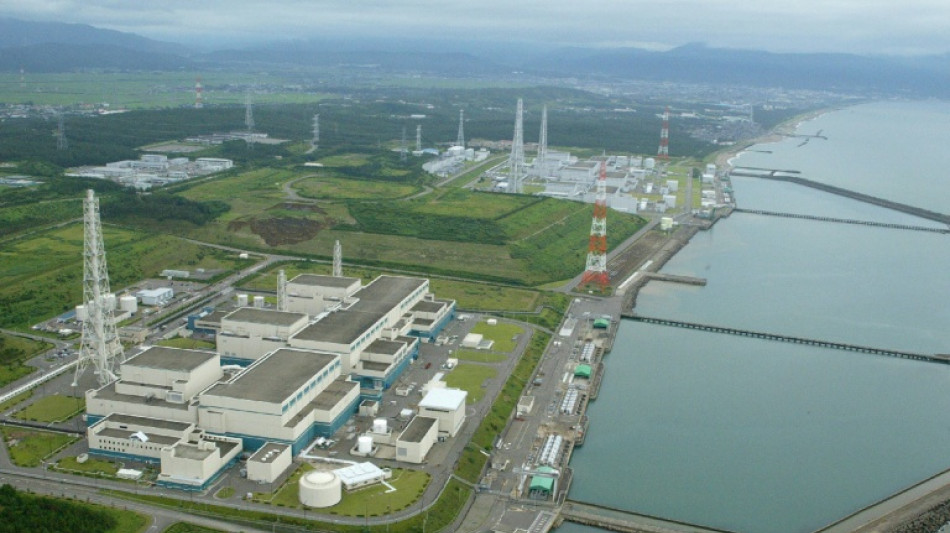
World's biggest nuclear plant edges closer to restart / Photo: STR - JIJI Press/AFP

 Trump slams NBA's LeBron James for national anthem actions

 Australia sanctions North Koreans over 'fraudulent' IT work, cybercrime

 UK singer-songwriter Raye wins Mercury Prize for second album

 Antonelli needs ‘perfect weekend’ to realise title dream

 Reclaiming the walls in a former Salvadoran gang hotspot

 Musk wants to merge SpaceX and Tesla: Here's what to know
 Musk's wants to merge SpaceX and Tesla: Here's what to know

 Hashimoto sweeps to gymnastics world all-around title

 Super Bowl MVP Walker returns to Seattle with unbeaten Chiefs

 Red Bull advisor Marko slams Horner memoir as 'collection of untruths'

 France reports first human Shamonda virus case, says no health risk

 Rekindled Gucci desirability fails to light flame under Kering sales

 Thousands rally as Serbia heads to pivotal poll

 Marathon star Aga banned six years for doping and misleading investigation

 USA to host women's football Club World Cup in 2028 - FIFA

 Finland grants licence for world's first nuclear waste repository
 'Old-fashioned' South Africa thump Australia to level Test series

 No more taking out the trash at your Airbnb

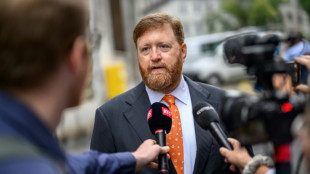 Swiss supreme court upholds Guatemala ex-police chief sentence

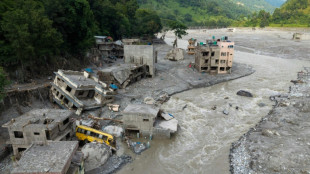 UN climate disaster fund moves to provide $20 mn aid for Nepal
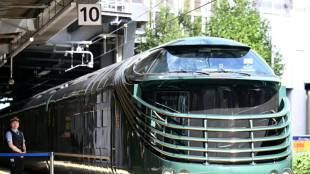
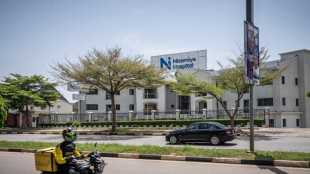 Africa faces 'complex' Ebola outbreak after spread to Nigeria: WHO
 American detained in Russia arrives in US: lawyer

 Pentagon, Lockheed announce deal for 850 F-35 jets over 10 years

 French authorities seek to ban or curb fresh protests

 Nearly all coral reefs risk collapse in 50 years: IUCN

Japanese local authorities approved the restart of the world's biggest nuclear plant on Friday for the first time since the 2011 Fukushima disaster.
Hideyo Hanazumi, governor of Niigata province where the Kashiwazaki-Kariwa plant is located, told a news conference he "would approve" the resumption, which will need final permission by Japan's nuclear regulator.
The plant was taken offline when Japan pulled the plug on nuclear power after a colossal earthquake and tsunami sent three reactors at the Fukushima atomic plant into meltdown in 2011.
However, the resource-poor nation now wants to revive atomic energy to reduce its heavy dependence on fossil fuels, achieve carbon neutrality by 2050 and meet growing energy needs from artificial intelligence.
Fourteen reactors, mostly in western and southern regions, have resumed operation since the post-Fukushima shutdown after strict safety standards were imposed.
The 400-hectare (1,000-acre) Kashiwazaki-Kariwa plant on the Sea of Japan coast facing the Korean peninsula would be the first restart for Fukushima operator Tepco since the disaster.
The huge facility in central Japan has been fitted out with a 15-metre (50-foot) wall in case of tsunamis, new power backup systems on higher ground and other measures.
Before the 2011 quake and tsunami, which killed around 18,000 people, nuclear power generated about a third of Japan's electricity, with fossil fuels contributing most of the rest.
Power company Kansai Electric said in July it was taking an initial step towards building the nation's first new nuclear reactor since the Fukushima disaster.
Japan is the world's fifth-largest single-country emitter of carbon dioxide, after China, the United States, India and Russia, and is heavily dependent on imported fossil fuels.
Nearly 70 percent of Japan's power needs in 2023 were met by power plants burning coal, gas and oil -- a figure Tokyo wants to slash to 30-40 percent over the next 15 years.
Almost all these fossil fuels must be imported, at a cost of around $500 million per day.
Japan passed a law in June allowing nuclear reactors to operate beyond 60 years to compensate for stoppages caused by "unforeseeable circumstances".
It aims to make renewables its top power source by 2040.
Under the plan, nuclear power will account for around 20 percent of Japan's energy supply by 2040 -- up from 5.6 percent in 2022.
Ch.Campbell--AT