SMX Emerges as the World's First Neutral Referee in a Global Verification Arms Race

 Ukraine's young figure skaters twizzle on despite Russian threat

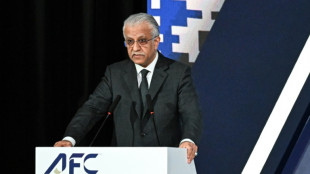 Asian football endorses Infantino re-election as FIFA president

 Complete Kane hopes for 'special night' as Ballon d'Or rumours swirl

 Rooney calls United squad 'selfish babies' after Fernandes criticism

 Teddy Wilson, son of World Cup-winner David, gets Wallabies call-up

 New Zealand military chief resigns over 'inappropriate relationship'

 Man Utd's Carrick on borrowed time, free-scoring Brighton face Liverpool

 Asian stocks head into weekend on a low as tech extends losses

 'Generational rage': Young Europeans fight to be heard

 Lula, Bolsonaro to clash once more before Brazil vote

 Dressed to kill: Haircuts cap menacing look of Japan's yakuza

 Napa Valley's wineries feel Trump's tariff squeeze

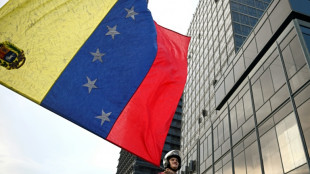 Venezuela protests demand return of Nobel winning leader Machado

 Marquez tops incident-packed opening practice for Australian MotoGP

 New York votes to ban Central Park horse carriages after decades of debate

 What Does a Race-Ready Bike Actually Cost?

 Eylsia Nicolas Hits #1 in the United States as Her Multi‑Category Chart Sweep Extends Across Global All‑Genres and International Markets

 Australia face selection headaches after 'shambolic' South Africa defeat

 Around 150,000 rally in Belgrade as Serbia heads to pivotal poll

 Hamilton sets sights on racing in African grand prix

 Bournemouth hammer 10-man Milan, Juventus denied at the death

 Judge orders Trump to give deposition in BBC lawsuit by Dec 11

 'Fake' pollsters hit US midterms

 Global markets retreat as tech mood sours, oil prices jump

 Juventus denied at the death, Sunderland make point in Poland in Europa League

NEW YORK, NY / ACCESS Newswire / November 14, 2025 / A new kind of global contest is unfolding, one that is not powered by territory, ideology, or even traditional economic leverage. It is powered by certainty. Nations can invest in new mines, expand refineries, and build strategic reserves, yet none of it secures the future if no one can verify the origins of the materials driving modern industry. In this environment, truth becomes the rarest commodity of all. And into this vacuum steps SMX (NASDAQ:SMX), with a technology designed to act as a neutral referee for a world that no longer trusts its own supply chains.
For years, physical goods lived in a parallel universe to digital systems. The digital world advanced with verification, identity, and audit trails. The physical world advanced with paperwork, declarations, and good faith. That gap became a structural fault line. Critical materials-the elements that power defense systems, energy grids, renewable technologies, and industrial manufacturing-moved through opaque channels that left governments and corporations to rely on trust instead of evidence.
SMX is closing that gap by giving physical commodities a permanent, molecular identity. Its technology embeds microscopic chemical markers directly into materials, allowing them to carry an immutable record of their own origin and lifecycle. Plastics, metals, textiles, rubber, timber, and strategic minerals can now behave less like anonymous inputs and more like authenticated assets with built-in documentation.
A System Built for a Post-Trust Economy
This shift is happening because the old system simply cannot support the demands of the new world. Supply chains optimized for speed and outsourcing collapsed under geopolitical pressure. Trade disputes exposed the fragility of documentation. Sanctions and export bans revealed how easily materials could be mixed, relabeled, or substituted. Even the most advanced nations discovered they were dependent on unverifiable flows of critical goods.
SMX offers a counterweight to this instability. Its molecular markers survive heat, pressure, remelting, and full-scale industrial processing. Each material carries a verifiable signature that is readable in seconds, anywhere in the world, by any authorized scanner. Verification becomes the property of the material itself, not the paperwork surrounding it.
This changes the game. It allows investors to fund assets with confidence. It allows governments to enforce regulations with accuracy. It allows manufacturers to certify their supply chains without relying on declarations. It turns proof into an infrastructure layer, not an afterthought.
Why Global Powers Are Suddenly Paying Attention
Across Europe, Asia, and the United States, governments and financial institutions arepouring capital into rebuilding and reshoring supply lines. But investment alone cannot fill the void left by decades of fragmented verification. Mines can produce ore, refineries can process concentrates, and smelters can ship metals, but unless every step is authenticated, the system remains vulnerable.
SMX enters at this exact inflection point. Its technology is not nationalistic, ideological, or proprietary to any political bloc. It is neutral. It gives all participants-producers, regulators, distributors, auditors, and financiers-the same access to verifiable truth.
That neutrality is what gives SMX geopolitical gravity. It levels the playing field in a moment when trust between economic powers is at its lowest point in decades.
Where Verification Becomes Advantage
The real disruption lies in what happens after authentication becomes a built-in feature of materials. Supply chains stop behaving like chains and start behaving like transparent systems. Products stop needing to be proven. They prove themselves.
A shipment of rare earths can be verified before it crosses a border. A bale of recycled plastic can justify its premium instantly. A gold bar can confirm its lineage regardless of how many times it has been melted or recast. A textile can reveal its composition, durability, and sustainability claims without relying on marketing language.
Refiners gain precision. Banks gain confidence. Auditors gain clarity. Manufacturers gain integrity. And regulators gain enforcement mechanisms rooted in chemistry rather than documentation.
Textiles, metals, plastics, and critical minerals stop being debatable assets. They become self-evident.
The Stakes Are Now Structural, Not Just Economic
As the world races to stabilize supply chains and reduce reliance on fragile or adversarial sources, one weakness still threatens everything: the inability to verify origin. A single mislabeled shipment can contaminate an entire production line. A single fraudulent batch can undermine compliance reports or trigger geopolitical conflict.
SMX's molecular system resolves this risk at its core. It eliminates ambiguity. It erases the gray zones. It replaces reliance with evidence and turns materials into transparent, traceable participants in the global economy.
This is not a theoretical promise. SMX is already operating across metals, textiles, plastics, rubber, and luxury goods, and is now being adapted to the rare earths and strategic minerals that will define the next industrial era.
A Neutral Referee in a Fractured World
The old global system was built on trust. The new global system requires verification. SMX's technology-simple in function but profound in impact-offers exactly that. Not in service of one nation or ideology, but in service of stability itself.
In an era defined by geopolitical tensions, supply chain uncertainty, and escalating competition for strategic resources, neutrality is not a weakness. It is an anchor. SMX has built the infrastructure that allows global industry to operate without collapsing under its own doubt. It has created a way for nations to compete without destroying the integrity of the system they all rely on.
This is not a battle for dominance. It is a battle for credibility.
SMX built the technology that finally makes credibility measurable.
About SMX
As global businesses face new and complex challenges relating to carbon neutrality and meeting new governmental and regional regulations and standards, SMX is able to offer players along the value chain access to its marking, tracking, measuring and digital platform technology to transition more successfully to a low-carbon economy.
Forward-Looking Statements
This information contains forward looking statements within the meaning of the Private Securities Litigation Reform Act of 1995, Section 27A of the Securities Act of 1933, and Section 21E of the Securities Exchange Act of 1934. Forward looking statements reflect current expectations, projections, and assumptions regarding future events that involve risks and uncertainties. These statements relate to SMX (NASDAQ:SMX), its molecular marking technologies, its commercial partnerships, and their potential application across critical minerals, metals, plastics, textiles, and global supply-chain verification systems.
Forward looking statements in this editorial include, but are not limited to, anticipated developments in the scalability, adoption, and commercial performance of SMX's technology; potential integration of molecular-marking systems into national or industrial supply chains; expected benefits related to traceability, authentication, compliance, and lifecycle tracking of strategic materials; and assumptions regarding regulatory trends, geopolitical dynamics, sustainability mandates, and demand for verifiable supply-chain data across global industries.
These statements also involve assumptions about market acceptance of molecular authentication, investment activity within critical-materials infrastructure, technological performance under industrial conditions, and SMX's ability to expand commercial deployments across multiple sectors and jurisdictions. Risks and uncertainties that may cause actual results to differ materially include changes in geopolitical conditions, supply-chain disruptions, regulatory shifts, partner implementation risks, competitive technologies, macroeconomic volatility, and the factors described in SMX's filings with the Securities and Exchange Commission, including the most recent Annual Report on Form 10-K and subsequent Quarterly Reports on Form 10-Q.
Readers are cautioned not to place undue reliance on forward looking statements. These statements speak only as of the date of publication. SMX undertakes no obligation to update or revise these statements to reflect future events, new information, or changes in circumstances, except as required by law.
EMAIL: [email protected]
SOURCE: SMX (Security Matters) Public Limited
View the original press release on ACCESS Newswire
E.Hall--AT