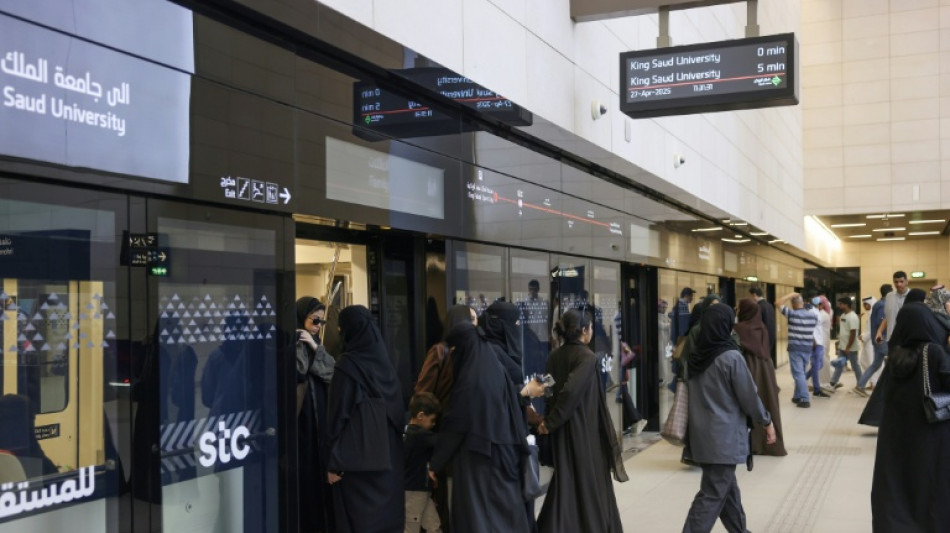
Saudi belly dancers break taboos behind closed doors / Photo: Fayez Nureldine - AFP

 Waze rejects Malaysia's data security claims after civil servant ban

 'Call of Duty' seeks to win back fans with warfare spectacle

 Volvo Cars shares plunge on losses, job cuts

 France braces for new protests as Macron seeks to restore order
 Kering shares tumble as Gucci fails to reassure investors
 West Bank attack wounds 5 as Israel PM cancels events
 Ahead of APEC summit, Trump comes knocking on Kim's door
 Emergency nurseries rescue DR Congo's Ebola orphans
 Bezzecchi tops Australian MotoGP practice as wallaby hops onto track

 Under-threat Ospreys bet on new ground and Australian 'stardust'

 India stirs up its gastronomy with French cooking schools

 Williams, Santos lead Bears over Patriots

 China's first AI film hits cinemas but ticket sales lag

 Barcelona aiming to put Real Madrid out of sight in Clasico

 Taiwan shuts down as Typhoon Champi approaches
 370 books in 20 months: S.African author defends her use of AI
 76ers rally to stun Cavs in James's first home game for Philadelphia

 How are Ukraine strikes, Mideast war driving US fuel prices?
 Colombia's Indigenous Guard up in arms over new president's agenda

 From tech giants to anonymous nonprofits, the biggest donors in US midterms
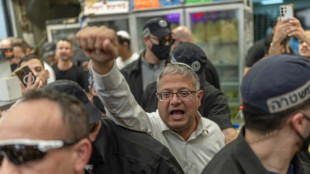 Israel's far-right Ben Gvir seeks new ground in election

 Trump slams NBA's LeBron James for national anthem actions

 What Does a Race-Ready Bike Actually Cost?
 Why Regular Boat Maintenance Saves You Money Over Time

 InterContinental Hotels Group PLC Announces Transaction in Own Shares - October 23
In a fitness studio in Saudi Arabia, dozens of women sway to Arabic music as they practise belly dancing -- an activity that many feel compelled to keep secret.
Despite their enthusiasm, none of them would give their real name or show their faces on camera, underlining the stigma and cultural prejudices surrounding the ancient dance.
In Arab communities, belly dancing has played many roles. It is a form of artistic expression, popular entertainment and a staple of classic Egyptian cinema.
More recently, many women around the world have taken it up as a group fitness routine and form of empowering self-expression.
But in Saudi Arabia, even closed-door all-female sessions remain taboo.
"We're a conservative society," one participant said. "Belly dancing is seen as something sexy, and no family or husband would accept that men see you like that."
It took AFP months to gain access to the class in Riyadh, a fiercely private affair where identities were strictly guarded.
Most of the participants said they feared how their families and friends would react.
"I won't tell my family... out of respect for their dignity -- they're elderly," the same participant, said on condition of anonymity.
It is a reminder of the deep-seated conservatism that still prevails in Saudi Arabia, despite a roll-back of social strictures in recent times.
Chief among the women's concerns is that their families will see images of them dancing. Phone use is carefully monitored by the gym staff.
"Someone might harm me and record me, so there is always fear," one dancer said.
Another said she could not tell her father she enjoyed belly dancing, knowing he would never accept it.
- 'Sense of modesty' -
Saudi Arabia is the cradle of the austere Sunni doctrine known as Wahhabism, which embraces a strict interpretation of Islamic law.
Under its 40-year-old de facto ruler, Crown Prince Mohammed bin Salman, the kingdom has loosened its arch-conservatism, allowing women to drive and shed their veils.
But cultural traditions remain and belly dancing, despite being a centuries-old art form, retains the stigma of being too suggestive.
To some, the dance with its revealing costumes and glittering sequins is linked to prostitution, but at the class in Riyadh the women are dancing for fitness and themselves.
The two instructors do not describe themselves as dancers, but coaches. They play up the fitness benefits.
"We've transformed dancing into a sport," said one of them, calling herself Oni, the name she uses when sharing dance videos on social media -- where she also hides her face.
"Saudis love to enjoy, have fun and appreciate life, but always within the boundaries of our religion and our sense of modesty," added Oni.
- Female empowerment -
Around her, dancers of all ages shook their hips to Arabic music, shimmying barefoot as a woman with a neck tattoo played the derbake, a traditional drum.
The atmosphere was festive, like a "women-only party", said another instructor, who also gave only her alias, Roro.
"All of us have fun and it's considered to be stress relief," she said.
Yoga studios and boxing gyms catering to women, as well as belly dancing classes, have sprouted around the capital -- a far cry from the days when they were banned from sport.
Gyms and studios continue to be strictly divided along gender lines, with men and women prevented from exercising together.
Belly dancing, which originated outside the Arabian Peninsula, is "a bit more provocative than regional dance", said Lisa Urkevich, professor of musicology and ethnomusicology at Georgetown University.
"So one's family may not want a girl to dance it at all at an event," she told AFP.
But Saudi Arabia is a large, diverse country and, she added, "even among families themselves there are different perspectives on women and dance".
The instructors told AFP they viewed dancing as more than a pastime or a way of keeping fit.
Classes are "deeply committed to female empowerment" and helping women feel confident, Oni said.
"Dance fosters those feelings -- it brings a sense of community and strength."
A.Moore--AT