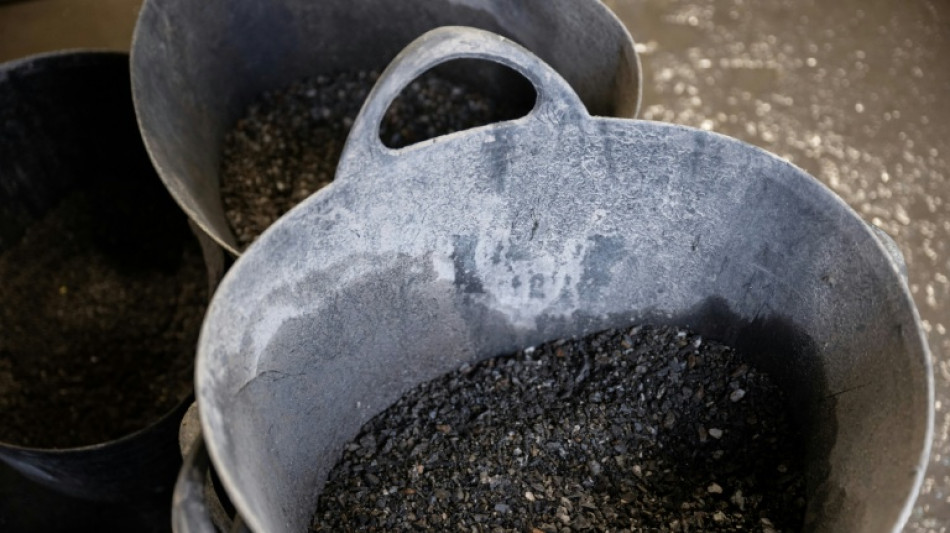
Canada's Indigenous wary of mining push in rich 'Ring of Fire' / Photo: Oli SCARFF - AFP/File

 Nigeria widens hunt for possible Ebola cases
 Liverpool star Isak back to his best says Iraola

 Lula supporters cross fingers in Rio, a Bolsonaro bastion
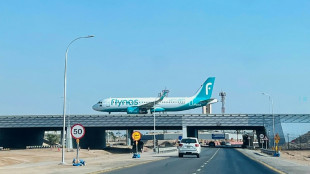 Flights resume at Riyadh airport as Houthis attack Saudi Arabia

 High-flying Betis held at Celta Vigo
 Shadab ton stuns England as Pakistan reach tri-series final

 'With you': Opposition leader Machado returns to Venezuela

 Carrick on the brink as Man Utd misery mounts, Isak stars for Liverpool
 Monaco hold Lille as both move to top of Ligue 1

 Isak extends hot streak as Liverpool sink Brighton
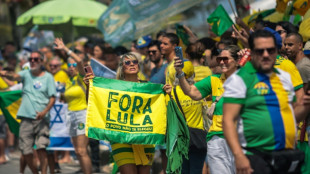 Brazil chooses between Lula and Bolsonaro in nail-biter vote

 Doha opens ninth World Investment Forum focused on future investment

 Technical outlook diverges for Bharti Airtel, PFC, REC and Alkyl Amines
 Le Pen begins presidential campaign after violent protests across France
 Adan Hospital launches catheter-based tricuspid valve replacement programme
 KIB Group nine-month profit rises 30% to KD 26.6 million

 John Catlin wins Hong Kong Open and secures first Masters invitation
 Poland’s WB Group plans $100 million India investment for drone production

 Insurance deductibles and no-claim bonuses require a careful claims decision
 Credit-card shortcuts can turn impulse spending into lasting debt
 J&K Bank raises accident cover for government employees to ₹1 crore
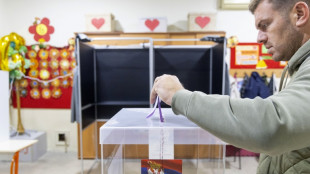 Serbia on track for high turnout as students challenge ruling party

 Pakistan keep England to 241 despite Duckett ton

 Ukraine war divides Bulgaria as voters elect president
 Shock and grief in a Jordanian village after church attack
Growing up in northern Canada, Sol Mamakwa said his Indigenous community knew their land held valuable minerals, but he didn't understand the scale of the potential riches until later in life.
"My grandparents, my parents, always said there will come a day when governments, settlers, will want access to these lands because of the minerals," Mamakwa, an opposition member of Ontario's provincial parliament, told AFP.
"It wasn't until I got into politics that I started to understand what the Ring of Fire actually means," he said.
The so-called "Ring of Fire" is a crescent-shaped stretch of territory in northern Ontario's James Bay lowlands, about 1,000 kilometers (620 miles) north of Toronto, believed to contain large quantities of the critical minerals needed to power new technologies, including electric vehicle batteries.
The area likely holds substantial deposits of chromite, nickel, copper and platinum group metals -- minerals needed for products like cell phones and computers.
Mining companies have been eyeing the Ring of Fire for years, but large-scale extraction in the remote area has not begun and would require major infrastructure spending, from new roads to logistics hubs.
Pressure to get started has surged since US President Donald Trump returned to office.
Trump's trade war and annexation threats have forced new discussion about Canadian sovereignty -- and the assets the country can tap to make it a global energy force, less reliant on trade with the United States.
Prime Minister Mark Carney this week reaffirmed his view that US-Canada relations will not return to a pre-Trump normal.
"We recognize what's going on. This is not a transition. This is a rupture," Carney said, listing critical minerals as one of the resources that can bolster Canadian economic might.
"We are top five in 10 of the world's most important critical minerals. Forty percent of the world's listed mining companies are in Canada," the prime minister told the Council on Foreign Relations.
Carney has named exploiting the Ring of Fire as one of the strategic projects his Liberal government would back to super-charge a Trump-threatened economy.
Ontario Premier Doug Ford, who has emerged as a national cheerleader in response to Trump, has also vowed to fast-track Ring of Fire infrastructure -- to "protect" the province from Washington.
Ford has said he was "ready to jump on the bulldozer" himself to build a road.
- Tariff 'excuse' -
Experts from Ontario's Western University in an article this month warned against underestimating the challenges ahead, including "opposition to new mining and infrastructure projects, particularly from some Indigenous communities."
Mamakwa was born in Sioux Lookout, which falls outside the Ring of Fire, but could be a logistical base if mining ramps up.
His provincial constituency, an area roughly the size of Italy, includes the mineral-rich crescent and the First Nations around it.
He told AFP he resents how the federal and provincial governments have used the "tariff war as an excuse to access our land."
Different First Nations have varying views about mining projects, but Mamakwa noted that none have been jarred by Trump's rhetoric.
"Threats of annexation," he said, "are not new to First Nations people... Welcome to the club."
Carney and Ford have promised mining projects will include broad Indigenous consultation and shared profits.
Mamakwa said his constituents could be brought on board but were growing concerned officials will charge forward, regardless of their consent.
"It's going to come to a head where they will have to use police to get us out of the way," he said.
- 'Dominant player' -
Wyatt Bain, an economic geology expert at Western University, told AFP Canada could become a "dominant player" in critical mineral supply, offering a counterweight to China, and a vital supplier for the United States.
In the Ring of Fire "the economics look really good," and the daunting infrastructure challenges can be overcome, he said.
But ensuring Indigenous support was essential, both to get projects launched and ensure they are durable.
"For a long time, Indigenous nations simply did not have a seat at the table," Bain said.
H.Thompson--AT