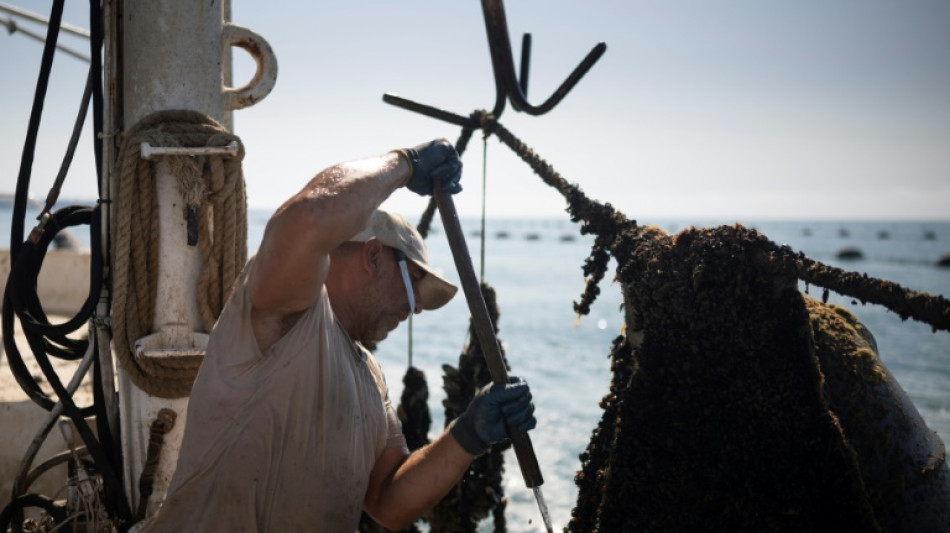
Bulgarian mussel farmers face risk, and chance, in hotter sea / Photo: Nikolay DOYCHINOV - AFP

 Chiefs and 49ers suffer first losses of NFL season, Vikings stay unbeaten

 Obama mocks Trump tariffs on Canada during Michigan campaign stop

 Brewers erase four-run deficit as Rays lose World Series Game 2

 Shadab century and record last-wicket stand carry Pakistan past England

 Baylor dismisses Dave Aranda and appoints Joe Klanderman interim coach

 Stocks sink as traders brace for tech earnings, central bank decisions

 Albert Zahn’s carved birds find a lasting home in Wisconsin museums
 NPS Vatsalya offers three choices when a child turns 18

 China's Communist Party elite gather for governance talks
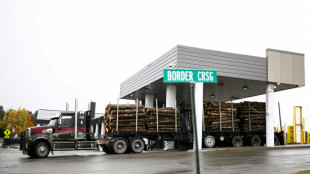 Maine logging, cross-border ties whipsawed by US-Canada tariff war

 From Carnegie to Claude: AI wealth could reshape philanthropy

 India and Russia plan 2027 pilot voyages on Northern Sea Route

 What challenges await Brazil's Lula in his fourth term?

 Brazil's Lula defies odds to clinch poll victory against Flavio Bolsonaro

 Falcons hand 49ers first defeat of NFL season, Vikings remain unbeaten

 Top Gold IRA Companies in the US Ranked in New Gold IRA Reviews Analysis Report
 Readers debate YES Bank bonds, climate commitments and candidate disclosure
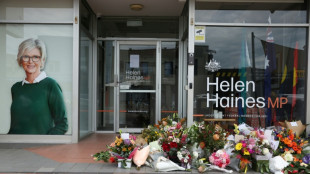 Australian politicians pay tribute to wounded lawmaker

 Modi opens RBI data centre and cybersecurity training institute

 Nifty heads toward weakest Samvat of Modi era after 13% fall

 Disappointed Verstappen admits to wrong tyre strategy at US Grand Prix

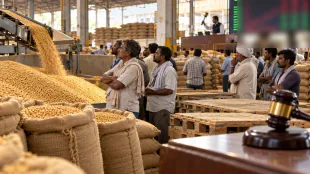 India trims weekly wheat auction volume despite strong miller demand

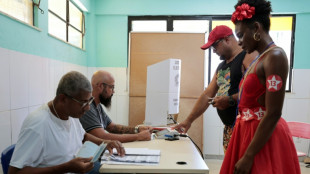 Brazil braces for result of knife-edge election after voting chaos

 Bleems adds UFFF toys and collectibles through Kuwait partnership

 Real Madrid beat Barcelona in La Liga Clasico

Faced with rising Black Sea temperatures that suffocate his mussels, Bulgarian farmer Nayden Stanev has been forced to change his ways -- shifting his seeding schedule and harvesting at cooler depths.
Yet Stanev, a 56-year-old former marine commando, sees the fallout from climate change as both a threat and opportunity for his business.
As bad as it is for Bulgaria's mussel farmers, their peers in the Mediterranean Sea have had to deal with even higher water temperatures.
"We are better off," Stanev told AFP.
Though the Balkan EU member still trails far behind major Mediterranean mussel producers such as Spain and Italy, it has taken the lead in the Black Sea.
And it is less affected by marine heat waves, which have led to a sharp decline in Europe's mussel crop, according to experts.
But the warmer waters are still a threat to Black Sea mussel farmers.
"About 20 percent of the mussels didn't survive" this year, Stanev said gravely, as empty shells piled up on deck of his old diesel boat.
"Last year, it was a massacre -- 80 percent wiped out. The mussels literally suffocate in a sea that warms too fast," he added.
- 'Lasting change' -
Scientists say climate change is making marine heatwaves more frequent and powerful, and the Mediterranean region is warming faster than the global average.
In July, the average surface temperature of the Mediterranean Sea was 26.79C, the hottest ever for that month, according to research centre Mercator Ocean International.
During the same period, the average surface temperature in the Black Sea was 25.46C -- less than in the Mediterranean, though it is also warming.
"When temperatures approach or exceed about 26C -- a threshold associated with mass mussel mortalities -- for extended periods during peak market seasons, it creates disruptions in the supply chain," John Theodorou, an expert at the University of Patras in Greece, told AFP.
In the Black Sea, the surface temperature has risen by nearly two degrees in two years, according to Radoslava Bekova from the Institute of Oceanology at the Bulgarian Academy of Sciences.
"The sea is undergoing lasting changes," she told AFP.
She added prolonged warming periods, when the sea doesn't have time to cool down, weaken the mussels, making them more vulnerable to diseases.
- High demand -
Together with his six employees, Bulgaria pioneer Stanev is on deck at dawn to harvest and deliver his mussels, with the season reaching its peak at the end of August.
He set up his business more than 20 years ago in the bay of Cape Kaliakra, a prime location protected from currents.
His phone ringing incessantly, Stanev jots down the orders on a small notebook.
On this day, he has to deliver no fewer than 10 tonnes of mussels to cater to the demand of hundreds of restaurants and vendors in Bulgaria and neighbouring Romania.
After a short trip from shore, the crew reaches the 200-hectare mussel farm.
Black buoys float on the surface, with long tubular nets holding the shells attached to them.
The men work in silence with synchronised gestures: one pulls the nets out of the water, another cleans them and a third sorts the shells.
Mussel bags pile up, each containing about 800 kilogrammes, as cormorants scout for leftovers.
When the boat returns to the quay in the early afternoon, several refrigerated trucks are already waiting, along with villagers with empty buckets, eager to buy fresh mussels for their families.
While global production has continued to grow, it has been declining in the EU since 2018, according to data from the European Market Observatory for Fisheries and Aquaculture Products (EUMOFA).
About 356,500 tonnes of mussels were harvested in the EU in 2023 -- about 21 percent fewer than in 2018, according to EUMOFA data.
Spain led with 155,700 tonnes followed by Italy with 57,279 tonnes -- by comparison, Bulgaria accounted for about 1,100 tonnes.
While European production fell over that period, their value increased almost 50 percent, standing at roughly 463 million euros in 2023.
"This value gap has created opportunities for Black Sea mussel production," Theodorou said.
R.Chavez--AT