US Fed chair leaves door open to rate cut as Trump steps up pressure / Photo: Mandel NGAN - AFP

 Nadal returns for Vegas hardcourt event

 Fainga'anuku named as loose forward for All Blacks northern tour

 Anthropic points to AI dangers, soaring sales in IPO filing
 Sinner to play rescheduled Saudi Six Kings in December

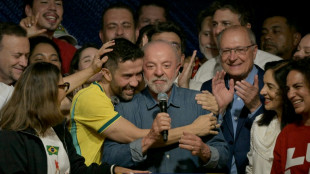 Brazilian lawmaker Andre Janones, Lula's social media 'general'
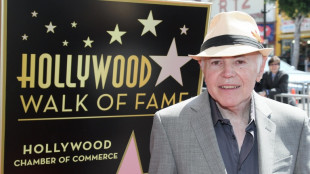
 Swiss Ebola patient repatriated from Nigeria

 Nations far from a deal as UN nature talks enter final stretch

 Brazil markets battered, tech in focus elsewhere
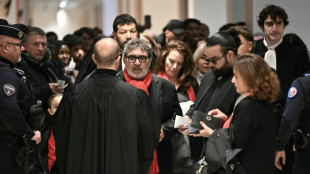 French court adjourns trial over 2020 death of delivery driver
 Serbian student movement eyes power after election triumph

 Machado ready to meet Venezuela leader after shock return

 Lula celebrates election win as Brazil markets tumble

 France's Macron accuses social media of sowing discord ahead of election

 Anthropic unveils IPO filing showing soaring sales and AI risks

 US singer Chris Brown avoids jail over London nightclub brawl
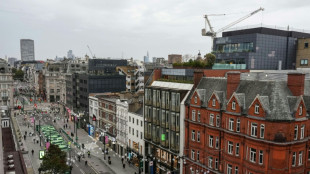
 US singer Chris Brown avoids jail over UK nightclub brawl

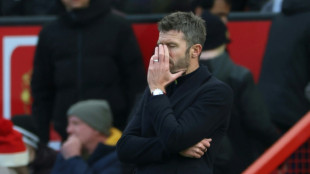 Man Utd crisis deepens as Carrick faces axe
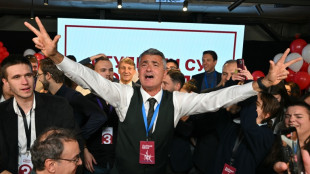 Serbian student movement eyes power after resounding snap poll victory
 Eala breezes past world number 411 in Tokyo opener
 Swedish Centre Party leader says government coalition talks failed
 Barca's big-game defeats pose familiar questions
 Russia says open to mini Ukraine ceasefires, but no let up in war
 Bangladesh measles crisis 'warning sign' of other outbreaks: report

 'Historic victory': World leaders celebrate Lula's re-election

 Stock markets mixed ahead of tech earnings, central bank decisions

US Federal Reserve Chair Jerome Powell left the door open to cutting interest rates in a keenly watched speech Friday, as he faced down President Donald Trump's intensifying pressure on the central bank.
Last year, the Fed chair used his keynote speech at the Jackson Hole Economic Policy Symposium to indicate the time had come for interest rate cuts. This time, however, the picture is murkier.
He faces constant attacks from Trump -- who is aggressively pushing the independent bank for rate cuts -- alongside mixed economic data leading him to take a more cautious approach.
Powell warned Friday that the risks of higher inflation and a weakening jobs market add up to a "challenging situation."
"Downside risks to employment are rising," Powell said in his speech, warning that these challenges could materialize quickly in the form of layoffs.
"While the labor market appears to be in balance, it is a curious kind of balance that results from a marked slowing in both the supply of and demand for workers," he noted.
He added that "the effects of tariffs on consumer prices are now clearly visible" and expected to accumulate over the coming months.
There is high uncertainty, he believes, about the timing and amounts of the tariffs' effects.
But he vowed: "We will not allow a one-time increase in the price level to become an ongoing inflation problem."
Confronted with these dual challenges, Powell said: "With policy in restrictive territory, the baseline outlook and the shifting balance of risks may warrant adjusting our policy stance."
This marks his final Jackson Hole speech at the helm of the Fed, with his term as chair ending in May 2026.
- 'Tough position' -
Wall Street rallied Friday after Powell's remarks, with both the Dow and Nasdaq climbing around 1.8 percent. Treasury yields, which are sensitive to monetary policy developments, pulled back sharply.
"The Fed is in a tough position as inflation remains above target and downside risks to the labor market are intensifying," said Ryan Sweet, chief US economist at Oxford Economics.
"Whether they cut or not in September will likely hinge on data that Powell won't have in hand" at the symposium, Sweet told AFP ahead of Powell's speech.
For now, the Fed sees intensifying pressure from the Trump administration on various fronts.
Trump said Friday that he would fire Fed governor Lisa Cook if she did not resign, after lashing out at her over claims of mortgage fraud.
Cook previously stated that she had "no intention of being bullied to step down," although she would take questions about her financial history seriously.
Trump has also made no secret of his disdain for Powell, repeatedly saying that the Fed chair has been "too late" in lowering interest rates while calling him a "numbskull" and "moron."
He previously took aim at Powell over the Fed's headquarters renovation in Washington, at one point suggesting that cost overruns could be cause for ousting the central banker.
- Jobs, inflation risks -
The Fed, which holds its next policy meeting in mid-September, has kept interest rates steady at a range of between 4.25 percent and 4.50 percent since its last reduction in December.
Policymakers cited resilience in the labor market as they monitored the effects of Trump's tariffs on the world's biggest economy.
The Fed's preferred inflation gauge rose 2.6 percent in June from a year ago, and a measure stripping out the volatile food and energy segments was higher at 2.8 percent. Both are above the Fed's longer-term target of two percent.
But cracks have emerged in the jobs market, which could call for lower rates to boost the economy.
Official employment data released this month showed that hiring in May and June was much weaker than originally estimated.
Softening employment has raised concern, with Fed governors Christopher Waller and Michelle Bowman voting against the overall decision in July to hold rates steady for a fifth straight meeting. Both had preferred a rate reduction.
CME Group's FedWatch Tool shows the market sees a 91-percent chance that the Fed will lower rates in September, with this probability surging after Powell's address.
A.O.Scott--AT