Pressure on Merz as Trump tariffs hit German economy / Photo: Axel Heimken - AFP/File

 Nadal returns for Vegas hardcourt event

 Fainga'anuku named as loose forward for All Blacks northern tour

 Anthropic points to AI dangers, soaring sales in IPO filing

 Sinner to play rescheduled Saudi Six Kings in December

 Brazilian lawmaker Andre Janones, Lula's social media 'general'

 Swiss Ebola patient repatriated from Nigeria

 Nations far from a deal as UN nature talks enter final stretch

 Brazil markets battered, tech in focus elsewhere

 French court adjourns trial over 2020 death of delivery driver

 Serbian student movement eyes power after election triumph

 Machado ready to meet Venezuela leader after shock return

 Lula celebrates election win as Brazil markets tumble

 France's Macron accuses social media of sowing discord ahead of election
 Anthropic unveils IPO filing showing soaring sales and AI risks

 US singer Chris Brown avoids jail over London nightclub brawl

 US singer Chris Brown avoids jail over UK nightclub brawl

 Man Utd crisis deepens as Carrick faces axe
 Serbian student movement eyes power after resounding snap poll victory

 Eala breezes past world number 411 in Tokyo opener

 Swedish Centre Party leader says government coalition talks failed
 Barca's big-game defeats pose familiar questions
 Russia says open to mini Ukraine ceasefires, but no let up in war
 Bangladesh measles crisis 'warning sign' of other outbreaks: report

 'Historic victory': World leaders celebrate Lula's re-election

 Stock markets mixed ahead of tech earnings, central bank decisions

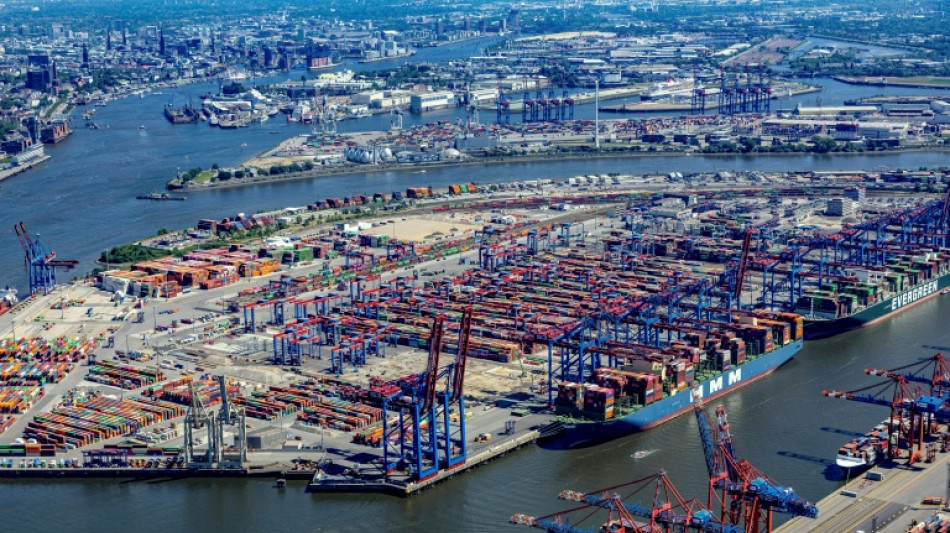
Germany's economy shrank more than expected in the second quarter as US tariffs battered exports, official data showed Friday, ramping up pressure on Chancellor Friedrich Merz to turn Europe's top economy around.
Gross domestic product (GDP) fell 0.3 percent from the previous quarter, federal statistics agency Destatis said, as it revised down an earlier July estimate of a drop of just 0.1 percent.
Goods exports fell 0.6 percent and spending on machinery and equipment fell 1.9 percent, underlying the difficulties faced by the country's manufacturers in the first full quarter after increased US tariffs took effect.
The United States is a Germany's largest trade partner, taking about 10 percent of its exports, and a key destination for products from cars to chemicals.
Household consumption came out lower than initial data had suggested while the manufacturing and construction sectors had also performed worse than expected.
Shock data released earlier in August showed that German industrial production had in June plunged to its lowest level since the pandemic in 2020.
- Trade tensions -
Fixing the eurozone's traditional export powerhouse has been a key priority for Merz, with the economy battered in recent years by high energy costs and fierce Chinese competition.
In July, Destatis said that German GDP fell 0.9 percent in 2023 and 0.5 percent in 2024, reporting that the contraction in those years was even worse than previously reported.
Plans to spend hundreds of billions of euros on infrastructure upgrades and rearmament -- combined with a series of brighter data releases since the start of the year -- had raised hopes that the worst might be over.
German business morale rose to its highest level in July after seven straight increases, while think tanks including the respected DIW institute have revised growth forecasts up for 2025 and 2026.
But ING bank analyst Carsten Brzeski said today's data suggested that increased optimism was a result not of a sustained upswing but rather temporary front-loading as US customers rushed to get orders in before new tariffs took effect.
"Optimism alone doesn't bring back growth," he said. "A full reversal of previous US front-loading effects has pushed the German economy back into recessionary territory."
Though the United States and European Union clinched a deal at the end of July to avert a full-blown trade war, ongoing uncertainty around its implementation is hitting German exporters.
The two sides released details of the deal on Thursday, with most EU goods facing a 15-percent tariff.
Cars, however, are still getting a 27.5 percent rate, with the tariff dropping to 15 percent only once the EU introduces legislation to eliminate its own levies on US industrial products.
"It is hard to see how the export-dependent German economy will be able to get out of seemingly never-ending stagnation," Brzeski said.
- Budget troubles -
Social Democrat finance minister Lars Klingbeil has meanwhile floated the possibility of tax rises to plug a 30 billion euro ($34.8 billion) hole in 2027 spending plans, sparking swift rebukes from his conservative coalition partners.
Talk of tax rises threatened to act as an extra brake on growth, Brzeski said, blunting the impact of the bumper infrastructure- and defence-spending plans.
"The longer a debate on potential austerity measures lasts, the higher the risk that households and companies will hold back spending and investment decisions," he said.
"The German economy has made itself too comfortable in stagnation, and it could take until next year before a more substantial recovery starts to unfold."
N.Walker--AT