Morocco's Atlantic gambit: linking restive Sahel to ocean / Photo: Abdel Majid BZIOUAT - AFP

 South Korea hire former Spain boss Moreno as interim coach
 China-Taiwan friction clouds Pacific summit
 Two dead after stabbing in New York's Times Square

 Anthropic signs $35B computing deal with startup backed by Nvidia

 Drones in Ithaca: Azov's Odyssey turns Ukraine war into modern myth
 Boat builders keep Pakistan's fishing heritage afloat
 Australia axe Labuschagne for Zimbabwe, South Africa ODI series

 Heavy rain at Grand Canyon after flood kills 2, dozen missing

 Kushner blames soccer power struggle for World Cup plan collapse

 Buoyant Alcaraz shakes off nerves to advance at US Open

 US draws European pushback with Russia G20 finance invite

 Jury begins deliberations in Tupac Shakur murder trial

 US Supreme Court allows Trump ballroom project to proceed

 Trump says US reviewing position on Falkland Islands

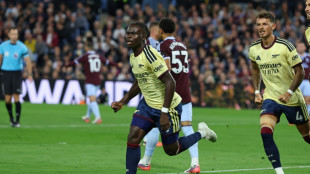 Saka strikes as flawless Arsenal punish troubled Villa
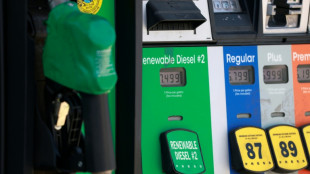 Oil prices surge on renewed fighting in US-Iran war

 Cycling superstar Pogacar has surgery after Vuelta crash
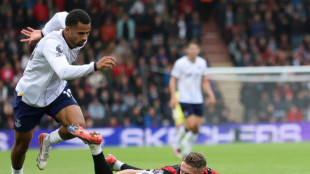 Man City agree deal for Everton's Ndiaye

 Apple CEO Tim Cook gives nod to founder Steve Jobs in final memo
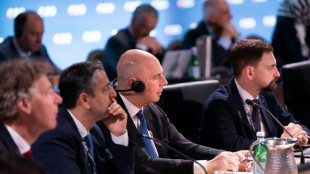 Russian finance minister makes unexpected appearance at G20
 Happy to be back in NY, Sabalenka advances
 Naomi Watts to receive lifetime award at top Spain film fest

 Jury hears closing arguments in Tupac Shakur murder trial
 Pakistan sack coach, send seven players home after England defeats

 New storms threaten Grand Canyon flood search, 2 bodies recovered
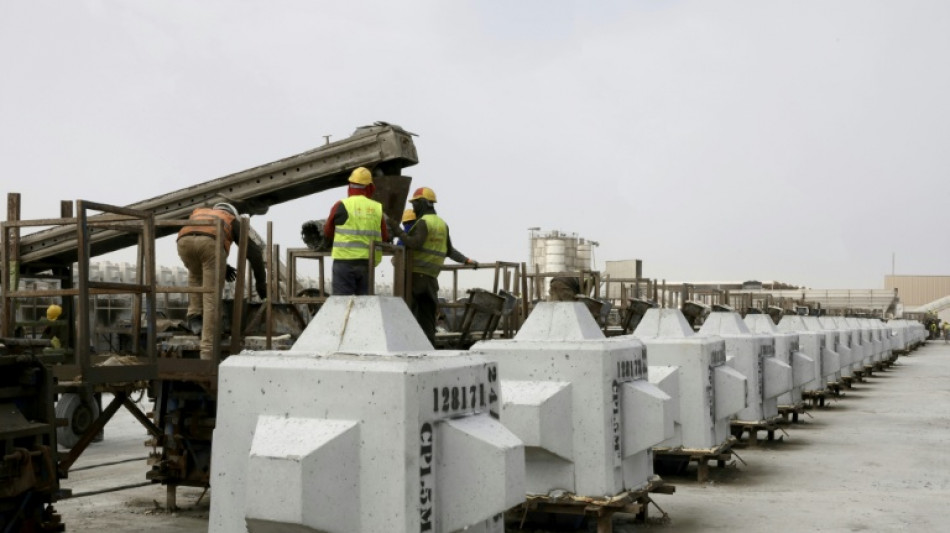
A planned trade corridor linking the landlocked Sahel to the Atlantic is at the heart of an ambitious Moroccan project to tackle regional instability and consolidate its grip on disputed Western Sahara.
The "Atlantic Initiative" promises ocean access to Mali, Burkina Faso and Niger through a new $1.3-billion port in the former Spanish colony claimed by the pro-independence Polisario Front but largely controlled by Morocco.
But the project remains fraught with challenges at a time when military coups in the Sahel states have brought new leaderships to power intent on overturning longstanding political alignments following years of jihadist violence.
The Moroccan initiative aims to "substantially transform the economy of these countries" and "the region", said King Mohammed VI when announcing it in late 2023.
The "Dakhla Atlantic" port, scheduled for completion at El Argoub by 2028, also serves Rabat's goal of cementing its grip on Western Sahara after US President Donald Trump recognised its sovereignty over the territory in 2020.
Morocco's regional rival Algeria backs the Polisario but has seen its relations with Mali, Burkina Faso and Niger fray in recent months after the downing a Malian drone.
Military coups over the past five years have seen the three Sahel states pivot towards Russia in a bid to restore their sovereignty and control over natural resources after decades within the sphere of influence of their former colonial ruler France.
French troops were forced to abandon their bases in the three countries, ending their role in the fight against jihadists who have found sanctuary in the vast semi-arid region on the southern edge of the Sahara.
- 'Godsend' -
After both the African Union and West African bloc ECOWAS imposed economic sanctions on the new juntas, Morocco emerged as an early ally, with Niger calling the megaproject "a godsend".
"Morocco was one of the first countries where we found understanding at a time when ECOWAS and other countries were on the verge of waging war against us," Niger's Foreign Minister Bakary Yaou Sangare said in April during a visit to Rabat alongside his Malian and Burkinabe counterparts.
The Sahel countries established a bloc of their own -- the Alliance of Sahel States (AES) -- in September 2023 but have remained dependent on the ports of ECOWAS countries like Benin, Ghana, Ivory Coast and Togo.
Rising tensions with the West African bloc could restrict their access to those ports, boosting the appeal of the alternative trade outlet being offered by Rabat.
- 'Many steps to take' -
Morocco has been seeking to position itself as a middleman between Europe and the Sahel states, said Beatriz Mesa, a professor at the International University of Rabat.
With jihadist networks like Al-Qaeda and the Islamic State group striking ever deeper into sub-Saharan Africa, the security threat has intensified since the departure of French-led troops.
Morocco was now "profiting from these failures by placing itself as a reliable Global South partner", Mesa said.
Its initiative has won the backing of key actors including the United States, France and the Gulf Arab states, who could provide financial support, according to specialist journal Afrique(s) en mouvement.
But for now the proposed trade corridor is little more than an aspiration, with thousands of kilometres (many hundreds of miles) of desert road-building needed to turn it into a reality.
"There are still many steps to take," since a road and rail network "doesn't exist", said Seidik Abba, head of the Sahel-focused think tank CIRES.
Rida Lyammouri of the Policy Center for the New South said the road route from Morocco through Western Sahara to Mauritania is "almost complete", even though it has been targeted by Polisario fighters.
Abdelmalek Alaoui, head of the Moroccan Institute for Strategic Intelligence, said it could cost as much as $1 billion to build a land corridor through Mauritania, Mali and Niger all the way to Chad, 3,100 kilometres (1,900 miles) to the east.
And even if the construction work is completed, insecurity is likely to pose a persistent threat to the corridor's viability, he said.
O.Ortiz--AT