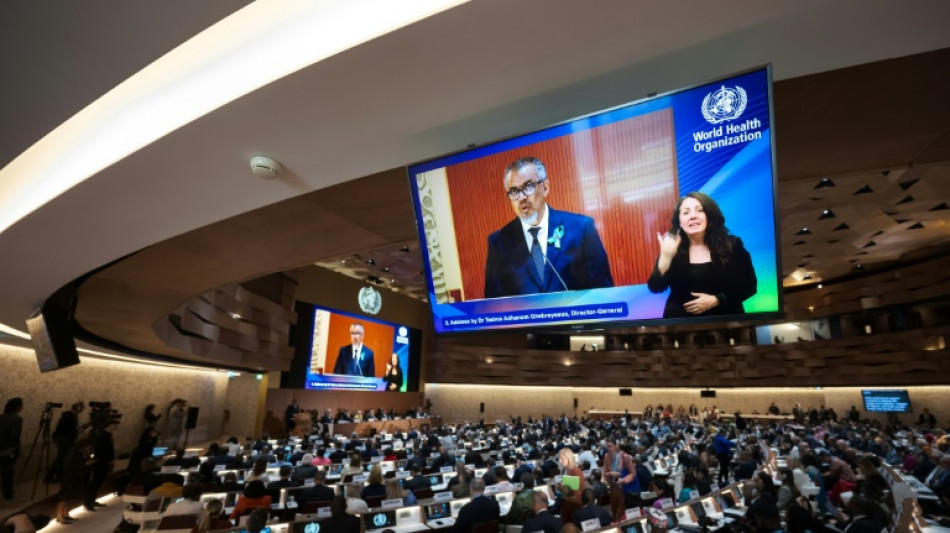
WHO restructures, cuts budget after US withdrawal / Photo: Fabrice COFFRINI - AFP

 Kroenke to buy baseball's Los Angeles Angels: statement
 US defends Trump's Venezuela oil deal

 OpenAI to launch new model with 'stronger safeguards' after hack
 Fans mourn 'bittersweet' final Ariana Grande gig in London
 Norway's King Haakon VIII swears allegiance to constitution
 Syria site infrastructure 'consistent with nuclear reactor': IAEA
 Juventus sign Woltemade, Sarr on loan from Premier League
 US strikes Iran in latest tit-for-tat attacks
 China's Xi arrives in Egypt as US sanctions threat looms over Iran links
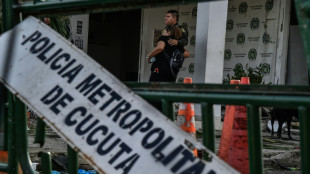 Car bomb at Colombian police station kills one, injures 11
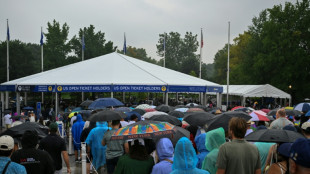 Rain delays start of play on US Open
 Man City agree blockbuster deal to sign Chelsea star Fernandez: reports
 Alkemya Metacore Secures $50M via Tokenised Equity to Scale Nickel Energy and Security Tech
 Man City chase Fernandez, Arsenal sell Jesus on deadline day
 EU says Russian 'hybrid attacks' won't halt aid to Ukraine
 Explosives used in sabotage attack on German power lines
 Nepali families hold symbolic funerals for missing after floods
 Newcastle sign Lille forward Fernandez-Pardo

 Even at Elysee, phones are handed in, Macron tells French pupils
 Chelsea agree to sign Atalanta's Ahanor, with Palace loan for this season
 Chelsea sign Atalanta's Ahanor and loan him to Palace

 UK chalks up hottest summer on record for second year running
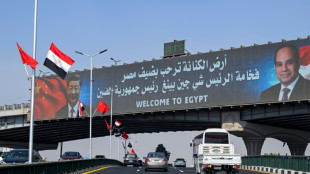 China's Xi visits Egypt as US sanctions threat looms over Iran links
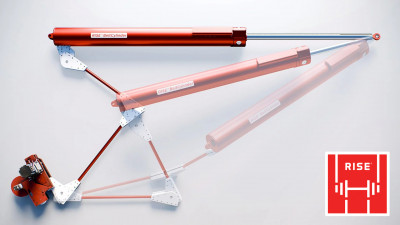 RISE Robotics Awarded $100,000 MassVentures Grant to Accelerate Commercialization of Beltdraulic Technology

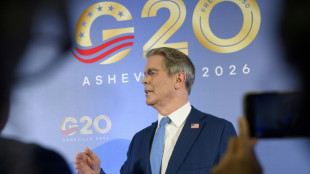 Global bond sell-off deepens on inflation concerns
The World Health Organization tried to stabilise its finances at its annual assembly which ended on Tuesday, but still remains well short of reaching its already reduced target.
Hit by the withdrawal of its biggest donor, the United States, the WHO trimmed its already smaller 2026-2027 budget from $5.3 billion to $4.2 billion.
The UN health agency's programme budget for 2024-2025 was $6.8 billion.
The slimmer budget plan was approved during the World Health Assembly, which serves as the WHO's decision-making body.
But a funding gap of some $1.7 billion remains.
- How WHO funding works -
WHO budgets run in two-year cycles.
Founded in 1948, the agency initially received all its funding through "assessed contributions": nations' membership fees calculated according to wealth and population.
However, the WHO became increasingly reliant on "voluntary contributions", which only go towards outcomes specified by the donor.
By the 2020–2021 cycle, assessed contributions represented only 16 percent of the approved programme budget.
And the organisation had long been over-reliant on voluntary funding from a few major donors.
- 2026-2027 budget -
In 2022, member states agreed to increase their assessed contributions to represent 50 percent of the WHO's core budget by the 2030-2031 cycle at the latest -- giving the WHO more stable, flexible and predictable income streams.
They upped membership fees by 20 percent as part of the 2024-2025 budget.
At this year's assembly, countries approved another 20 percent increase in membership fees, which should represent an additional $90 million in revenue per year.
They also endorsed the WHO's 2026-2027 budget of $4.2 billion.
"Your approval of the next increase in assessed contributions was a strong vote of confidence in your WHO at this critical time," the organisation's chief Tedros Adhanom Ghebreyesus said Tuesday in closing the assembly.
Most of that money is already assured.
"We have now secured 60 percent of our base budget for 2026-2027; a remarkable result in today's financial climate," said Hanan Balkhy, the WHO's Eastern Mediterranean regional director.
But that means the agency is still $1.7 billion short, despite the reduced budget.
- Pledges -
At a pledging event last week, donors put in an additional $210 million for the 2025-2028 investment round, supporting the WHO's base budget.
That included $80 million from Switzerland, $57 million from the Novo Nordisk Foundation, $13.5 million from Sweden and $6 million from Qatar.
"In a challenging climate for global health, these funds will help us to preserve and extend our life-saving work," said Tedros.
- United States -
Upon returning to office in January, US President Donald Trump started the one-year process for leaving the WHO, and had frozen virtually all US foreign aid.
The United States was traditionally the WHO's largest donor. Washington's departure, and its refusal to pay its membership fees for 2024 and 2025, has left the WHO reeling financially.
Washington did not attend the World Health Assembly.
However, US Health Secretary Robert F. Kennedy Jr. sent a video message in which he branded the organization as bloated and moribund, and urged other countries to "consider joining us" in creating new institutions instead.
Kennedy said the UN agency was under undue influence from China, gender ideology and the pharmaceutical industry.
- Reorganisation -
The budget cuts have forced the WHO to reorganise.
It is reducing its executive management team from 14 to seven due to the dramatic US funding cuts.
The number of departments is being reduced from 76 to 34.
The WHO has not yet announced any large-scale layoffs, unlike other UN agencies.
N.Mitchell--AT