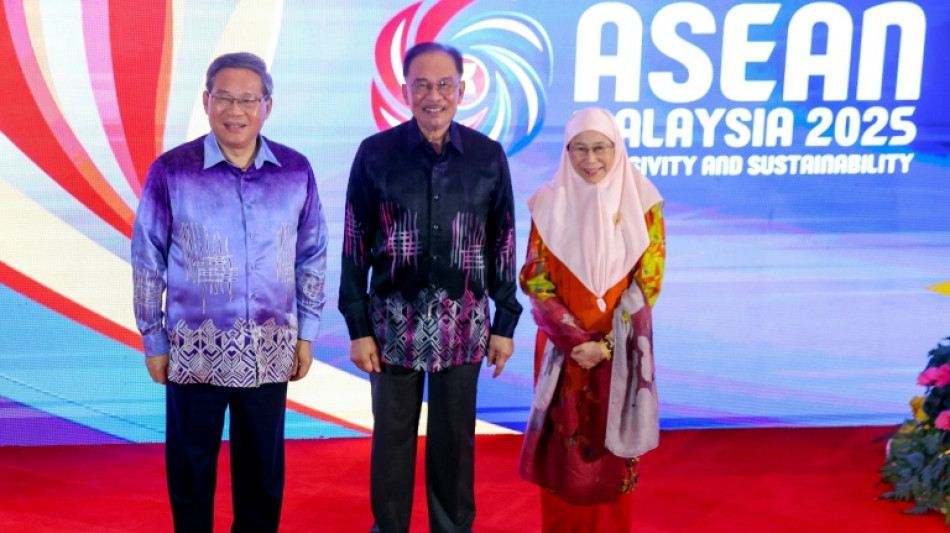
SE Asian leaders meet China's Li and Gulf states to bolster ties / Photo: FAZRY ISMAIL - POOL/AFP

 Kroenke to buy baseball's Los Angeles Angels: statement

 US defends Trump's Venezuela oil deal

 OpenAI to launch new model with 'stronger safeguards' after hack
 Fans mourn 'bittersweet' final Ariana Grande gig in London
 Norway's King Haakon VIII swears allegiance to constitution
 Syria site infrastructure 'consistent with nuclear reactor': IAEA

 Juventus sign Woltemade, Sarr on loan from Premier League

 US strikes Iran in latest tit-for-tat attacks
 China's Xi arrives in Egypt as US sanctions threat looms over Iran links
 Car bomb at Colombian police station kills one, injures 11
 Rain delays start of play on US Open
 Man City agree blockbuster deal to sign Chelsea star Fernandez: reports
 Alkemya Metacore Secures $50M via Tokenised Equity to Scale Nickel Energy and Security Tech

 Man City chase Fernandez, Arsenal sell Jesus on deadline day

 EU says Russian 'hybrid attacks' won't halt aid to Ukraine
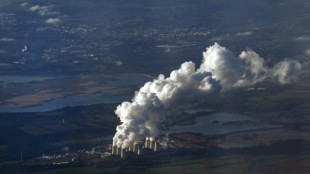 Explosives used in sabotage attack on German power lines
 Nepali families hold symbolic funerals for missing after floods
 Newcastle sign Lille forward Fernandez-Pardo

 Even at Elysee, phones are handed in, Macron tells French pupils

 Chelsea agree to sign Atalanta's Ahanor, with Palace loan for this season

 Chelsea sign Atalanta's Ahanor and loan him to Palace

 UK chalks up hottest summer on record for second year running
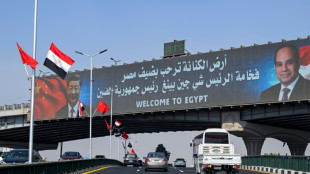 China's Xi visits Egypt as US sanctions threat looms over Iran links

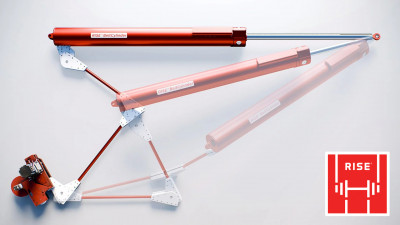 RISE Robotics Awarded $100,000 MassVentures Grant to Accelerate Commercialization of Beltdraulic Technology

 Global bond sell-off deepens on inflation concerns
Southeast Asian leaders are looking to insulate their trade-dependent economies from geopolitical uncertainty, in particular US tariffs, as they hold talks with Chinese Premier Li Qiang and Gulf state dignitaries in Kuala Lumpur on Tuesday.
US President Donald Trump blew up global trade norms in April when he announced a slew of punishing levies targeting countries around the world, including US allies.
Though he subsequently instigated a 90-day pause for most, the experience has spurred the Association of Southeast Asian Nations (ASEAN) to accelerate efforts to diversify its trading networks.
"A transition in the geopolitical order is underway," Malaysian Prime Minister Anwar Ibrahim said in written remarks Monday.
After a lavish gala dinner the night before, Tuesday marks the inaugural summit between ASEAN, China and the Gulf Cooperation Council (GCC) -- a regional bloc made up of Bahrain, Kuwait, Oman, Qatar, Saudi Arabia and the United Arab Emirates.
The meeting shows "the successful reshaping of the matrix of partnership that speaks to today's multipolar reality", Anwar said.
ASEAN has traditionally served as "a middleman of sorts" between developed economies like the United States, and China, said Chong Ja Ian from the National University of Singapore (NUS).
"Given the uncertainty and unpredictability associated with economic relations with the United States, ASEAN member states are looking to diversify," he said.
"Facilitating exchanges between the Gulf and People's Republic of China is one aspect of this diversification."
Malaysia, which holds ASEAN's rotating chairmanship and opened the bloc's 46th summit on Monday, is the main force behind the initiative, he said.
- 'Timely and calculated' -
Beijing, which has suffered the brunt of Trump's tariffs, is also looking to shore up its other markets.
Its foreign ministry said Monday it "look(ed) forward to strengthening cooperation" with ASEAN and the GCC.
China and ASEAN are already each other's largest trading partners, and Chinese exports to Thailand, Indonesia and Vietnam surged by double digits in April -- attributed to a re-routing of US-bound goods.
Premier Li's participation is "both timely and calculated", Khoo Ying Hooi from the University of Malaya told AFP.
"China sees an opportunity here to reinforce its image as a reliable economic partner, especially in the face of Western decoupling efforts."
Beijing and Washington engaged in an escalating flurry of tit-for-tat levies until a meeting in Switzerland saw an agreement to slash them for 90 days.
Chinese goods still face higher tariffs than most though.
According to a draft statement seen by AFP, ASEAN will express "deep concern... over the imposition of unilateral tariff measures".
But it said earlier this year it would not impose retaliatory duties.
The bloc "is unlikely to formally endorse a pro-China position on US tariffs", said Khoo.
"Li's presence is less about coercion and more about shaping long-term narratives and partnerships," she said.
- Treacherous waters -
ASEAN as a body has historically avoided choosing a side between the United States and China.
China is only Southeast Asia's fourth largest source of foreign direct investment, after the United States, Japan, and the European Union, noted NUS' Chong.
Anwar said Monday he had written to request an ASEAN-US summit this year, with his foreign minister saying Washington had not yet responded.
Yet any closer alignment with Beijing presents problems of its own, despite Anwar's insistence Monday night that "whatever is being said... we are here as a friend of China".
On Monday, Philippines leader Ferdinand Marcos said there was an "urgent need" to adopt a legally binding code of conduct in the South China Sea.
Beijing has territorial disputes with five ASEAN member states in the area, with China and the Philippines having engaged in months of confrontations in the contested waters.
"Other disputants... are perhaps willing to let the Philippines bear the brunt of pressure," said NUS' Chong.
However, tension between Manila and Beijing "means that these issues will not fade into the background, much as some other Southeast Asian states wish to focus on economic issues".
R.Lee--AT