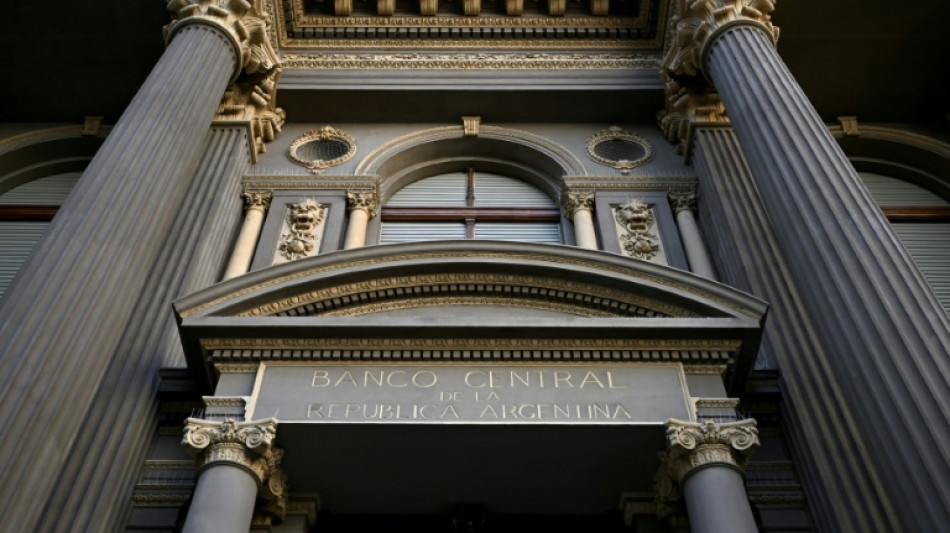
Distrusting Argentines loath to bank their 'mattress dollars' / Photo: Luis ROBAYO - AFP

 From Hollywood to big time tennis: teen makes US Open debut

 Man City secure Premier League record deal to sign Fernandez

 Kaepernick says NFL 'blackballing me' decade after protest

 Atletico loan David from Juve, send Lemar to Elche

 Chelsea 'keeper Sanchez makes deadline-day move to Como

 Kroenke to buy baseball's Los Angeles Angels: statement

 US defends Trump's Venezuela oil deal

 OpenAI to launch new model with 'stronger safeguards' after hack

 Fans mourn 'bittersweet' final Ariana Grande gig in London
 Norway's King Haakon VIII swears allegiance to constitution

 Syria site infrastructure 'consistent with nuclear reactor': IAEA

 Juventus sign Woltemade, Sarr on loan from Premier League
 US strikes Iran in latest tit-for-tat attacks

 China's Xi arrives in Egypt as US sanctions threat looms over Iran links
 Car bomb at Colombian police station kills one, injures 11
 Rain delays start of play on US Open
 Man City agree blockbuster deal to sign Chelsea star Fernandez: reports
 Alkemya Metacore Secures $50M via Tokenised Equity to Scale Nickel Energy and Security Tech

 Man City chase Fernandez, Arsenal sell Jesus on deadline day

 EU says Russian 'hybrid attacks' won't halt aid to Ukraine
 Explosives used in sabotage attack on German power lines
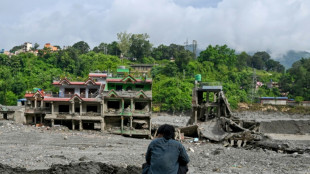
 Nepali families hold symbolic funerals for missing after floods
 Newcastle sign Lille forward Fernandez-Pardo

 Even at Elysee, phones are handed in, Macron tells French pupils
 Chelsea agree to sign Atalanta's Ahanor, with Palace loan for this season

Argentine "Rita Lopez," 84, keeps her US dollars hidden in an empty pea can in the kitchen. Since childhood, she has steered clear of banks in a country that has veered from one economic crisis to another.
"I wouldn't even think of putting my savings in the bank," the former lawyer told AFP at her modest apartment in Buenos Aires. She asked to use a fake name to shield herself from thieves.
Lopez is not alone. The government estimates there are about $200 billion so-called "mattress dollars" out there -- five times the reserves of the Central Bank.
On Thursday, President Javier Milei's government launched a plan to encourage Argentines to bank these dollars, also commonly stashed under floor boards, in safety deposit boxes or offshore accounts.
Under the initiative, anyone can make a deposit of up to 100 million pesos (about $90,000) without having to declare the provenance.
The goal is to boost foreign reserves, stimulate the formal economy and bolster the peso.
But Lopez remains skeptical.
"The one who kept his savings (in the bank) was my father, he always lost, it always went bad for him," she said.
One of the worst moments, said Lopez, was in 2001 when the then-government put in place so-called "corralito" (corraling) measures to limit cash withdrawals and freeze bank accounts.
That move, intended to limit capital flight in the midst of a prolonged recession, was widely considered draconian and the spark for protests that left 39 people dead and toppled a president.
- Trafficking, corruption, smuggling? -
Argentina has faced 16 economic crises since 1860. Lopez has lived through seven of them in the last 50 years.
Countless people lost life savings as the system collapsed over and over, inflation spiraled out of control, and governments imposed currency controls.
Their fingers burnt, many Argentines took to trading their battered pesos for whatever greenbacks they could lay their hands on, and hoarding them at home. In cash.
Now Milei wants that money to enter the system, saying in an interview Monday: "I don't care in the slightest where the dollars come from." His is not the first Argentine government to try this.
As long as the dollars are not in the system, explained economist Julian Zicari of the University of Buenos Aires, they "do not contribute to (foreign) reserves nor generate lending capacity for banks."
Self-declared anarcho-capitalist Milei has imposed strict budget-cutting measures on the South American country since taking office in December 2023, resulting in inflation dropping from 211 percent to 118 percent last year.
Maintaining a stable exchange rate is one of his chief goals.
Last year, a tax amnesty brought in billions of dollars in deposits and, in April, Argentina received a first tranche of $12 billion from a new $20 billion dollar loan agreed by the International Monetary Fund (IMF).
Some fear the "mattress dollar" concessions will abet money laundering, though the government has denied this.
"By not requiring justification of origin... the possibility is enabled for funds from drug trafficking, human trafficking, public corruption or smuggling to be incorporated into the formal system," economist Pablo Tigani wrote in the Ambito newspaper.
In effect, he argued, it amounts to "an amnesty for those who did not pay taxes, without any distinction between tax evasion, illicit enrichment, or even money laundering."
Presidential spokesman Manuel Adorni insisted Thursday that those with undeclared funds "are not criminals, they are the vast majority of Argentines who have been abused by excessive taxes and controls."
Either way, Lopez insists nothing can get her to part with her pea can.
"One day the government tells you one thing and then another government comes in and does something else. I don't trust them. I wouldn't put my money in the bank," she said.
H.Romero--AT