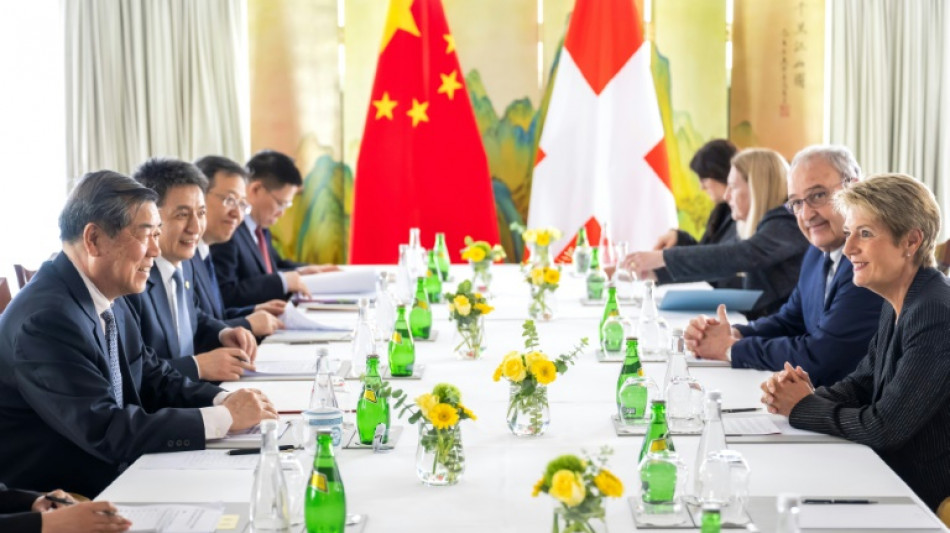
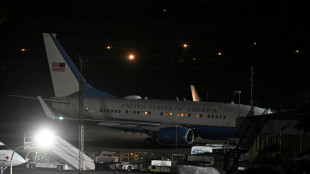
US and China set for talks in bid to 'de-escalate' trade war / Photo: MARTIAL TREZZINI - FDFA/AFP

 Cricketers to get best rooms at Asian Games, says Japan chief
 Zverev out-lasts Sonego in wild five-setter to advance at US Open
 Amid war, Ukrainian soldiers celebrate love at ritual wedding

 Venice to roll out red carpet for Clooney on opening night
 Hong Kong democracy activist Wong pleads guilty to foreign collusion: AFP

 Stocks sink, yields at multi-decade highs and oil spikes on Mideast flare-up

 US defends Trump Venezuela oil deal as energy secretary lands in Caracas

 Jubilant Monfils celebrates birthday with US Open win
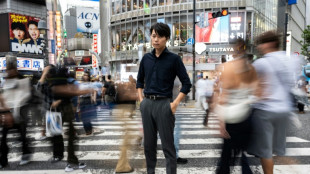 The Japanese idealist behind the last deradicalisation NGO in Somalia

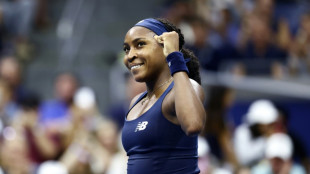 Rybakina, Gauff advance as Zverev launches US Open campaign

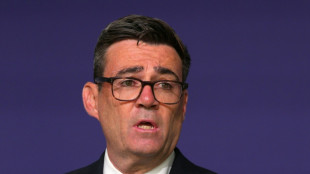 Macron in Britain to help unveil tapestry, hold Burnham talks
 China's Xi to hold talks with Sisi in rare visit to Egypt
 Confident Gauff reaches US Open 2nd round with straight-set win
 US postal whistleblower warns ballot system could disrupt midterms
 InterContinental Hotels Group PLC Announces Transaction in Own Shares - September 02
 G20 finance leaders close talks marked by US welcoming Russia

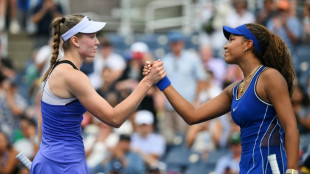 From Hollywood to big time tennis: teen makes US Open debut
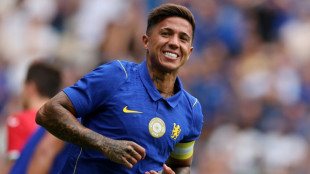
 Man City secure Premier League record deal to sign Fernandez
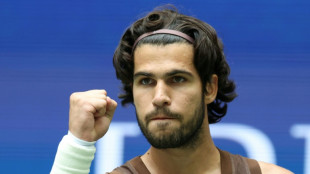
 Kaepernick says NFL 'blackballing me' decade after protest

 Atletico loan David from Juve, send Lemar to Elche

 Chelsea 'keeper Sanchez makes deadline-day move to Como
 Kroenke to buy baseball's Los Angeles Angels: statement
 US defends Trump's Venezuela oil deal
 OpenAI to launch new model with 'stronger safeguards' after hack
 Fans mourn 'bittersweet' final Ariana Grande gig in London
Senior US and Chinese officials will meet in Geneva on Saturday, seeking to de-escalate a trade war sparked by President Donald Trump's sweeping tariff rollout and fuelled by Beijing's strong retaliatory measures.
US Treasury Secretary Scott Bessent and US Trade Representative Jamieson Greer are set to confer with Chinese Vice Premier He Lifeng in the Swiss city in the first such talks between the world's two largest economies since Trump slapped steep new levies on China last month.
The exact venue for the weekend-long talks remained shrouded in secrecy.
Tariffs imposed on the Asian manufacturing giant since the start of the year currently total 145 percent, with cumulative duties on some goods reaching a staggering 245 percent.
In retaliation, China slapped 125 percent levies on US goods, cementing what is effectively a trade embargo between the world's two largest economies.
Trump signalled on Friday that he could lower the sky-high tariffs on Chinese imports, taking to social media to suggest that an "80% Tariff on China seems right!".
"The president would like to work it out with China... He would like to de-escalate the situation," US Commerce Secretary Howard Lutnick told Fox News on Friday evening.
Trump's press secretary, Karoline Leavitt, clarified that the US would not lower tariffs unilaterally, adding that China would need to make concessions as well.
In any case, it would be a symbolic gesture, since the tariffs would remain prohibitively steep.
- 'A good sign' -
"The relationship is not good," said Bill Reinsch, a senior advisor at the Center for Strategic and International Studies (CSIS), referring to current ties between Washington and Beijing.
"We have trade-prohibitive tariffs going in both directions. Relations are deteriorating," said Reinsch, a longtime former member of the American government's US-China Economic and Security Review Commission.
"But the meeting is a good sign."
"I think this is basically to show that both sides are talking -- and that itself is very important," Xu Bin, professor of economics and finance at the China Europe International Business School, told AFP.
"Because China is the only country that has tit-for-tat tariffs against Trump's tariffs."
Beijing has insisted the United States must lift tariffs first and vowed to defend its interests.
Bessent has said the meetings in Switzerland would focus on "de-escalation" and not a "big trade deal".
The head of the Geneva-based World Trade Organization (WTO), Ngozi Okonjo-Iweala, said on Friday she welcomed the talks, calling them a "positive and constructive step toward de-escalation".
Swiss President Karin Keller-Sutter also sounded an upbeat note.
"Yesterday the Holy Spirit was in Rome," she said on Friday, referring to the election of Pope Leo XIV.
"We must hope that he will now go down to Geneva for the weekend."
- 10-percent 'baseline' -
Bessent and He will meet two days after Trump unveiled a trade agreement with Britain, the first deal with any country since he unleashed a blitz of sweeping global tariffs last month.
The five-page, non-legally binding document confirmed to nervous investors that the United States is willing to negotiate sector-specific relief from recent duties -- in this case on British cars, steel and aluminium.
In return, Britain agreed to open up its markets to US beef and other farm products.
But a 10-percent baseline levy on most British goods remained intact and Trump remains "committed" to keeping it in place for other countries in talks with the United States, Leavitt told reporters on Friday.
A few hours later, Trump appeared to contradict her, suggesting there could be some flexibility to the baseline -- but only if the right deals could be reached.
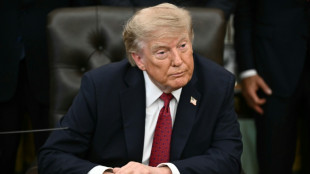
"There could be an exception at some point. We'll see," he said during an Oval Office event.
"If somebody did something exceptional for us, that's always possible."
burs-da-nl/gil
J.Gomez--AT