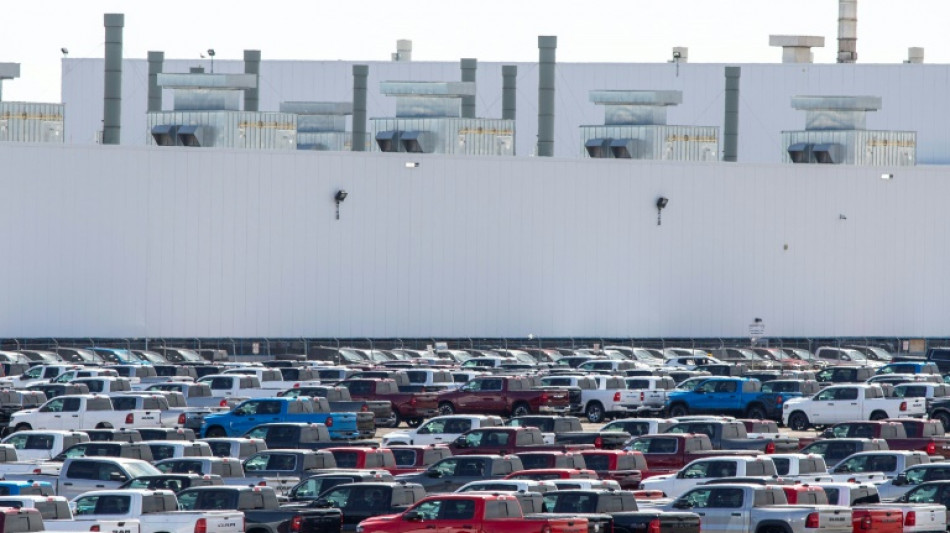
Trump signals relief on auto tariffs as industry awaits details / Photo: BILL PUGLIANO - GETTY IMAGES NORTH AMERICA/AFP/File

 DNA tests and funerals in Nepal, a week after deadly floods

 Iran threatens tougher strategy after US strikes kill 4 at wedding

 Chevron unveils deal to double Venezuela venture output in 5 years

 Uganda names its oil 'Pearl Sweet' as it prepares for first exports
 Tiger Woods driver's license suspended for five years after crash

 Germany probes latest sabotage attacks on power grid

 Wall Street stocks mixed as energy prices, bond yields turn lower

 Tiger Woods pleads guilty to reckless driving, license suspended
 Missing passengers likely went down with sunken ferry: N.Cyprus official

 Premier League clubs splash cash to smash transfer record
 Melting glaciers an 'immediate' climate risk: author of UN report

 Folarin Balogun's move to Everton collapses

 Pacific islands to face food shortages over global warming: scientists

 Venice jury head Maggie Gyllenhaal questions lack of women directors

 Stocks drop, bond yields rally on Mideast flare-up

 China expands Egypt investments in first Xi visit in a decade

 Messi departure leaves Argentina facing rebuild after golden era
 Ourbit SuperCEX Launches "Cosmic Wheel Season 3. Oracle Realm" on September 2 with 3M USDT Prize Pool

 Ebola death toll passes 3,000 in DR Congo: official data
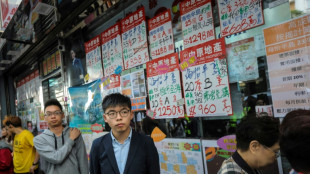 Hong Kong democracy activist Wong pleads guilty to foreign collusion

 World record prize winner Romantic Warrior retires from horse racing

 5,000 US sailors arrive in Thailand after months at sea

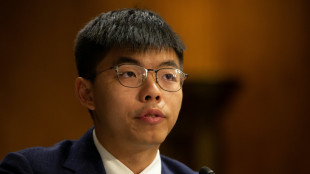 Joshua Wong, Hong Kong's pro-democracy poster child

 Nepal tunnel rescuers seek trapped workers but hit dead ends

 Zverev wins wild five-setter, Rybakina and Gauff ease through at US Open

The White House said Tuesday it will soften tariffs on automakers, sparking optimism in Detroit whose car manufacturing industry has been on tenterhooks awaiting details on President Donald Trump's fast-evolving policy.
The measures, which include a guarantee that a carmaker wouldn't face multiple tariffs on the same vehicle, are designed to prod US and foreign companies to expand or build new factories to support domestic manufacturing.
Automakers have been among the hardest-hit sectors by Trump's multi-pronged assault on free trade. The announcement of relief is being timed in parallel with a visit by the president later Tuesday to the Detroit area to celebrate his 100th day in office.
"The president will sign the executive order on auto tariffs later today," White House Press Secretary Karoline Leavitt told reporters.
Analysts have warned that the myriad levies could result in higher prices, denting US car sales and threatening jobs.
But Trump, who has slammed free trade deals from his first presidential campaign in 2016, has embraced tariffs as necessary to spur more auto manufacturing in the United States.
But the administration determined that some relief was needed to give companies enough time to move supply chains to the country, a senior Commerce Department official said in a briefing.
"You're going to see a massive resurgence of domestic auto manufacturing," the official said.
- Grace period -
Besides a 25 percent tariff on finished imported cars, the industry has also been affected by Trump's 25 percent tariff on steel and aluminum. Automakers are also set to face new tariffs on foreign auto parts expected to take effect on May 3.
Trump's new policy includes a guarantee that a company wouldn't face both a 25 percent levy for an imported vehicle and 25 percent on steel or aluminum; the importer would pay the higher of the two levies, but not both, a Commerce official said.
The other change is that companies that import parts for vehicles assembled in the United States would be able to offset 15 percent of the vehicles list price in the first year and 10 percent in the second year.
That modification is designed to give companies two years to move supply chains to the United States.
Automakers told the Trump administration there would be "dramatic increases in production... as the payoff to America" from a two-year grace period, a Commerce official said.
Roughly half the cars sold in the United States are assembled within the country, with another 25 percent coming from Mexico and Canada and the remainder from a broader swath of nations including Germany, Japan and South Korea.
Automakers have already announced some investment decisions in light of the tariffs.
But analysts have cautioned that Trump's approach will not incentivize multi-billion-dollar investments if the industry does not believe the tariffs will last throughout Trump's administration and beyond.
General Motors said earlier this month that it plans to boost truck production at its plant in Fort Wayne, Indiana.
GM is looking at other actions "we could implement quickly, efficiently and with low near-term costs," Chief Financial Officer Paul Jacobson said Monday.
Jacobson declined to comment on GM's plans for South Korea, where it builds a number of low-cost vehicles that have become popular with US consumers focused on price.
Ford CEO Jim Farley said the company "welcomes and appreciates these decisions by President Trump, which will help mitigate the impact of tariffs on automakers, suppliers and consumers," according to a statement.
"Ford sees policies that encourage exports and ensure affordable supply chains to promote more domestic growth as essential," said Farley, who estimated that US factories could build four million more cars annually, supporting hundreds of thousands of new jobs.
Nissan, Honda and Volvo have been among the foreign automakers that have announced steps to boost investment in the United States.
N.Walker--AT