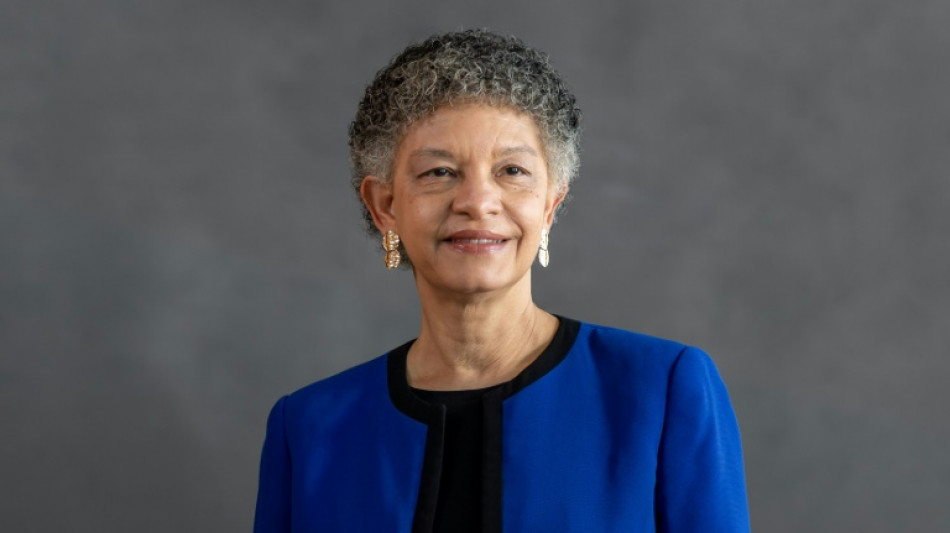
Fed official says 'absolutely' ready to intervene in financial markets / Photo: Handout - Federal Reserve Bank of Boston/AFP/File

 Stocks rise, yields ease as oil slips on Trump hint at short bombing campaign

 Brussels Diamond League finals Day 1 - five events to watch

 Thailand's 'Jurassic Park' shines light on dinosaur evolution
 'Role model' Stokes set to open for Adelaide Strikers

 Palau urges 'unified' Pacific response to China missile test

 Grinding away: in remote Appalachia, old mills fuel US clean food dreams

 Sabalenka races into US Open third round

 Chinese lucky loser stuns Jodar at US Open

 US Open under the influence: content creators spark debate
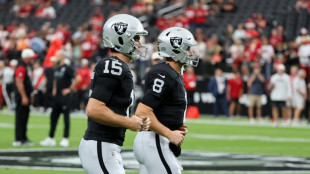
 NBA hammers Clippers over Leonard salary cap violations
 NBA strips five first-round draft picks from Clippers for Leonard salary cap violations
 Kane brace helps Bayern win German Cup opener

 Migrant plight, local anger divide Ceuta one month after influx

 Outrage as Maltese tycoon acquitted of reporter's murder

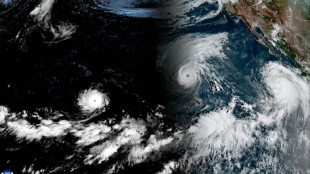 Rare train of Pacific cyclones fueled by historic El Nino
 Macron, King Charles hail UK-France ties after viewing Bayeux Tapestry
 Fury hits out at 'coward' Joshua as 'Battle of Britain' talks go on
 Maltese tycoon acquitted of masterminding reporter's murder
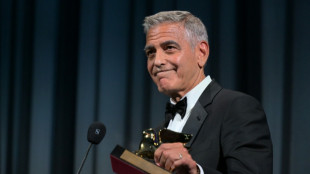 George Clooney: a Hollywood icon and campaigner

 Europe, US closer than they look on tech rules, says EU tech chief

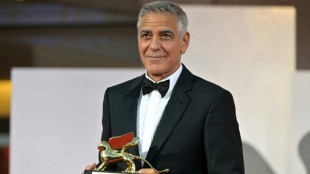 Clooney honoured as Hollywood-light Venice Film Festival kicks off
 Third-ranked Pegula, Medvedev power into US Open third round
 Davis-Woodhall a doubt for Ultimate Championship after car crash
 Third-ranked Pegula powers into US Open third round

 Uber says laying off 'about 10%' of workforce worldwide
The US Federal Reserve is "absolutely" prepared to intervene to help calm nervous financial markets, a senior central bank official said Friday, after President Donald Trump's tariff plans roiled Wall Street.
The US president imposed sweeping import taxes on dozens of countries on April 2, only to abruptly, temporarily roll many of them back to 10 percent in response to turbulence in the stock and bond markets, while leaving China with new tariffs totaling 145 percent.
The Fed would "absolutely be prepared" to deploy its various tools to help stabilize the financial markets if the need arose, Boston Fed President Susan Collins told the Financial Times in an interview published Friday.
Any intervention by the Federal Reserve would depend on "what conditions we were seeing," added Collins, who is one of 12 voting members of the Fed's all-important rate-setting committee this year.
"The higher the tariffs are, the more the potential slowdown in growth as well as elevation and inflation that one would expect," Collins said in a separate interview with Yahoo Finance earlier Friday, adding that she expects inflation to rise "well above" three percent this year, but no "significant" economic downturn.
Her comments indicate she expects price growth to remain stuck firmly above the US central bank's long-term target of two percent, likely preventing the Fed from being able to cut interest rates in the coming months.
- Growth 'below one percent' -
Since Trump's tariffs came into effect earlier this month, Fed officials have been more outspoken than usual about the effects of the government's plans on inflation and growth.
Many have also voiced concerns about long-term inflation expectations, which can cause a vicious cycle of price increases if they are not kept in check.
A widely-referenced consumer sentiment survey published Friday by the University of Michigan noted a sharp drop in consumer confidence, and flagged another worrying rise in both short-term and longer-term inflation expectations.
"Year-ahead inflation expectations surged from 5.0 percent last month to 6.7 percent this month, the highest reading since 1981," the survey noted.
"Long-run inflation expectations climbed from 4.1 percent in March to 4.4 percent in April, reflecting a particularly large jump among independents," it added.
But for now, the University of Michigan's survey on inflation expectations remains an outlier, with financial market measures of inflation expectation still largely pricing in a long-term path closer to the Fed's two percent target.
In a speech in Hot Springs, Arkansas on Friday, St. Louis Fed President Alberto Musalem said "continued vigilance" and "careful monitoring" of the incoming data was needed.
Musalem, a voting member of the Fed's rate-setting committee this year, said that while he still expects a "moderate" pace of economic expansion, the near-term risks were "skewed" toward rising inflation, slower economic growth and a cooler labor market.
"I would be wary of assuming the impact of high tariffs on inflation would be only brief or limited," he said.
On a busy day of speeches from central bank officials, New York Fed President John Williams went further than his colleagues on the bank's rate-setting committee, putting out estimates of how he expects Trump's immigration and tariff policies -- and the uncertainty surrounding them -- to affect the US economy this year.
"I now expect real GDP growth will slow considerably from last year's pace, likely to somewhat below one percent," he told a conference in Puerto Rico.
"With this downshift in the pace of growth... I expect the unemployment rate to rise from its current level of 4.2 percent to between 4.5 and 5 percent over the next year," he said.
Williams added that he expected increased tariffs to "boost inflation this year to somewhere between 3.5 and 4 percent" -- well above the bank's long-term target.
B.Torres--AT