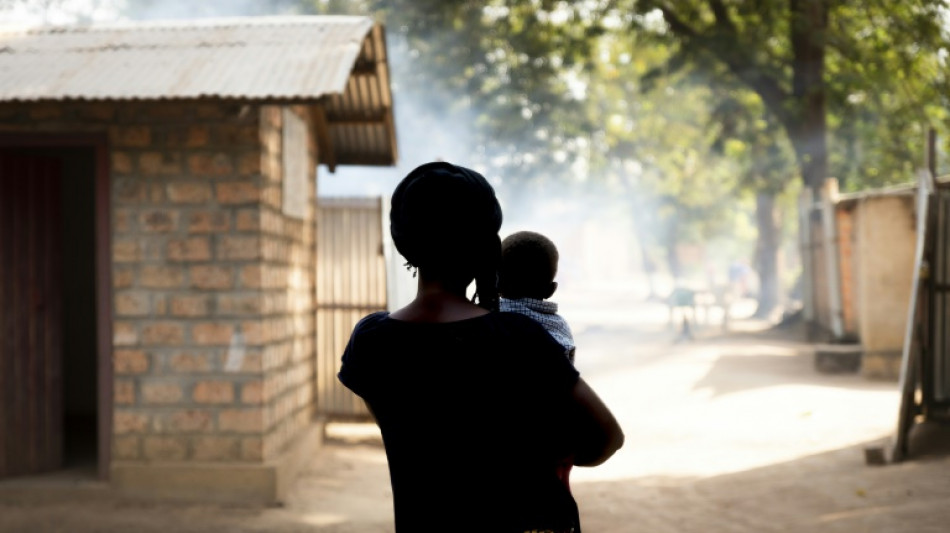
Rape stalks women in C. Africa's dirty war

 Hunger and malnutrition stalk Gazans, a year on from ceasefire
 Fernandez trumps MotoGP championship duo to grab Indonesia pole

 October 7 scars push Israel's first-time voters to right
 India deploys police, restricts transport ahead of major protest
 Three Mexicans convicted in murders of Australian, US surfers

 Powerful waves lash California coast as storm threatens more damage

 Trump hails Russia deal to release diesel as midterms loom

 Lyon blow chance to go top after loss at Lens
 Stocks rise as Trump says Russia to release diesel to world markets
 Wildfire smoke shuts schools in Amazon's biggest city

 Turkey jails 2 journalists pending trial for fund crisis 'misinformation'

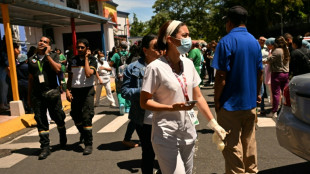 Major earthquake rocks Panama, triggers tsunami warning

 Indian jailed in France for leading sadist Nazi cult that tortured girls
 'Iron Mike' Ditka hailed as 'gold standard' NFL legend
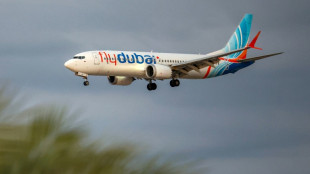 Flydubai co-pilot planned suicide attack on Tel Aviv airport: UAE prosecutor

 Mike Ditka: Chicago Bears icon as player and coach

 Outrage over plan to livestream US military firing squad execution

 US sanctions: a 'test of resilience' for ICC
 NFL legend Mike Ditka dead at 86
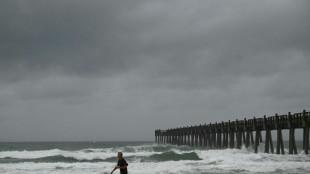
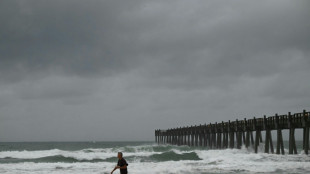 Hurricane Isaias set to strike Gulf Coast late Friday

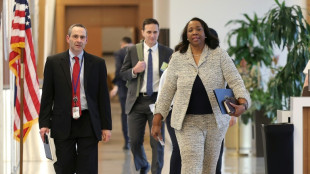 Trump forms panel to probe US Fed governor Lisa Cook
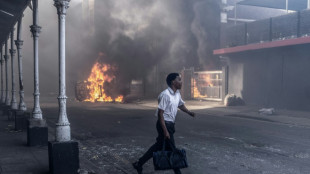 Clashes in Durban as fresh anti-migrant riots erupt in South Africa

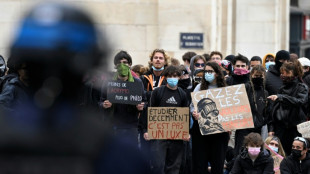 France students plan more protests, UN 'concerned' over violence
 De Zerbi calls on struggling Spurs to react in Man Utd clash
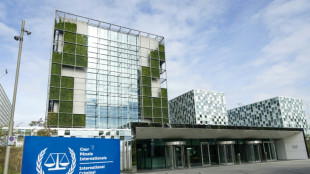 US sanctions on ICC: a 'test of resilience'
Maia looks down at her expanding belly, her eyes welling with tears.
Four months ago, an armed man grabbed and raped the 15-year-old, attacking her as she was harvesting cassava roots.
In the remote northwest of the Central African Republic (CAR), sexual violence targeting women, adolescents and even younger girls is on the rise.
Brutal acts are committed by rebels, militiamen and security forces alike, according to the United Nations.
In Paoua, about 500 kilometres (300 miles) northwest of the capital Bangui, more than a dozen rape victims turn up every day at a clinic run by the Danish Refugee Council (DRC).
The distraught teenager struggles to put her feelings into words. "I was alone in the fields when an armed man wearing a turban grabbed me," she says in a near-whisper.
"I told him I was a virgin and begged him not to hurt me," Maia says, unable to utter the word "rape", even as she bears the unborn child of the man who assaulted her.
Like Maia, Marie was harvesting cassava to feed her family when two armed men appeared.
Her husband fled the scene, but she reacted too slowly.
"They tied my hands, tore my clothes and took turns raping me," says the 23-year-old, who was wearing a traditional gown in the purple, green and white colours of International Women's Day.
The rape victims interviewed by AFP all had similar stories.
Most said they had been assaulted in the fields by rebels of a powerful local militia known as the 3R, a name derived from the French words for Return, Reclamation and Rehabilitation.
- 'Easy target' -
"In this area, it is mainly women who farm and take care of feeding the family," says Lola, an employee at the centre whose name has been changed for her safety, like Maia's and Marie's.
"Alone and helpless in the fields, they are an easy target for the rebels."
A civil war in the CAR that began in 2013, pitting myriad militias against a state on the verge of collapse, had lessened considerably in recent years.
But about a year ago, fighting resumed abruptly when rebels launched an offensive to overthrow President Faustin Archange Touadera.
At the time, armed groups controlled two-thirds of the CAR's territory.
But they ceded most of it when the army, backed by hundreds of Russian paramilitaries, mounted a massive counter-offensive against the rebels.
Today militia forces are confined to the countryside and have switched to guerrilla tactics -- and harassment and abuse of civilians are on the rise.
The UN Office for the Coordination of Humanitarian Affairs (OCHA) recorded 6,336 cases of gender-based violence between January and July 2021 across the deeply poor country.
The agency identified a quarter of such cases as sexual violence, an increase of 58 percent compared with the first half of 2020. Rebels and militiamen are more active in the Paoua region.
Recent reports by the United Nations or by UN-sponsored experts have accused both soldiers and their Russian mercenary allies of committing rapes.
At the Paoua hospital, signs prohibit the carrying of weapons.
A dozen women and girls wait outside a door freshly painted in pink to see Fabrice Clavaire Assana, a doctor who specialises in counseling and treating victims of gender-based violence.
"After a phase of listening and building confidence," Assana says, he carries out gynaecological examinations and provides emergency treatment when needed.
But his options are few.
The "morning-after" anti-pregnancy pill, hepatitis B vaccine and anti-HIV medicine work only if taken within 72 hours. "This is rarely the case," he says regretfully.
- 50km trek -
After Marie was assaulted, she turned first to relatives.
"I was distraught and ashamed. I first went to my in-laws in my torn clothes, but they were unable to pay for my transport to Paoua," she says.
So Marie then walked 50 km to Paoua, "praying" not to tread on a landmine or run into rebels.
"I relive the scene day and night, I can't go back to the fields," sighs Marie, burying her face in her hands.
"My husband has fled -- now I'm alone with two children to feed, and I can't grow crops."
Neither Maia nor Marie has tried to seek justice for the men who raped them.
Such crimes almost always go unpunished in the absence of functioning courts.
H.Gonzales--AT