
Mexico tries to banish homophobic slur from football

 Hunger and malnutrition stalk Gazans, a year on from ceasefire
 Fernandez trumps MotoGP championship duo to grab Indonesia pole

 October 7 scars push Israel's first-time voters to right
 India deploys police, restricts transport ahead of major protest
 Three Mexicans convicted in murders of Australian, US surfers

 Powerful waves lash California coast as storm threatens more damage

 Trump hails Russia deal to release diesel as midterms loom

 Lyon blow chance to go top after loss at Lens
 Stocks rise as Trump says Russia to release diesel to world markets

 Wildfire smoke shuts schools in Amazon's biggest city

 Turkey jails 2 journalists pending trial for fund crisis 'misinformation'
 Major earthquake rocks Panama, triggers tsunami warning

 Indian jailed in France for leading sadist Nazi cult that tortured girls

 'Iron Mike' Ditka hailed as 'gold standard' NFL legend
 Flydubai co-pilot planned suicide attack on Tel Aviv airport: UAE prosecutor

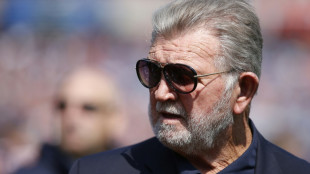 Mike Ditka: Chicago Bears icon as player and coach

 Outrage over plan to livestream US military firing squad execution

 US sanctions: a 'test of resilience' for ICC

 NFL legend Mike Ditka dead at 86
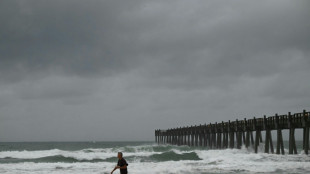 Hurricane Isaias set to strike Gulf Coast late Friday
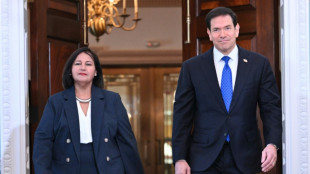
 Trump forms panel to probe US Fed governor Lisa Cook
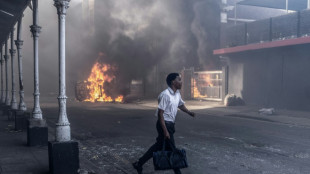 Clashes in Durban as fresh anti-migrant riots erupt in South Africa

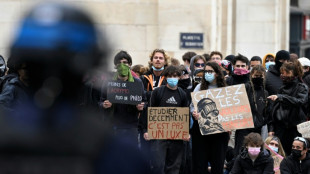 France students plan more protests, UN 'concerned' over violence
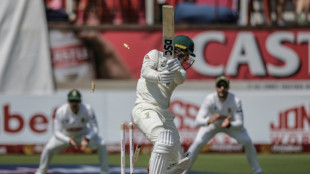
 De Zerbi calls on struggling Spurs to react in Man Utd clash
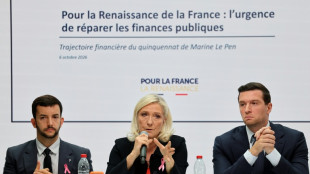
 US sanctions on ICC: a 'test of resilience'
Mexico are playing World Cup qualifiers in front of a limited number of tightly controlled fans -- part of efforts to stamp out an anti-gay slur in the football-loving nation.
When Mexico meet Panama on Wednesday in the Azteca Stadium in the Mexican capital only around 2,000 of the 87,000 seats will be full, as they were against Costa Rica on Sunday.
Fearful of Mexico losing its role as joint host of the 2026 World Cup, the Mexican Football Federation (FMF) has introduced a system of online ticket registration and QR codes for attendees.
It has also boosted stadium security to identify anyone using the homophobic chant frequently shouted at opposing goalkeepers when they take a goal kick.
If caught, the offenders face a five-year ban from stadiums.
The slur -- "puto" -- means male prostitute but in Mexican Spanish it roughly translates as "faggot," and is widely used to insult someone's masculinity.
Some fans welcome the tough measures against the chant, which first emerged as a taunt against a goalkeeper more than 20 years ago,
"Hopefully the homophobic cry will be eradicated once and for all," Jose Jimenez told AFP before entering the stadium for the game against Costa Rica that ended in a draw.
But some other fans said that they did not understand what the fuss is about.
"That word is in common use. I don't know where they got that it's a bad word," said Ismael de Jerez.
"I think they're exaggerating," he added.
- Repeated punishment -
The strict monitoring allowed the Mexican team to avoid playing two games behind closed doors, as world governing body FIFA had initially ordered.
For the fixture against the United States on March 24, the system will be tested with a larger crowd of 35,000 or 40,000 fans.
Mexico has been repeatedly sanctioned over the years for fans shouting the homophobic slur.
Fines totaling around $656,400 and the punishment of playing a game behind closed doors against Jamaica in September were not enough to deter thousands of fans from using the chant.
"We cannot tolerate discriminatory acts, we cannot play in empty stadiums, we cannot put the soccer authorities at risk of taking away points or affecting our sports performance," FMF president Yon de Luisa said last month.
He has previously warned that if the chants continued Mexico was in danger of losing its role as joint host of the 2026 World Cup.
- 'Respect each other' -
Mexican fans first began shouting the slur at matches in the early 2000s, at a derby between Atlas and Chivas, the two top teams in Mexico's second city, Guadalajara.
It spread quickly, soon arriving at Mexican national team matches.
Former Mexico coach Miguel Herrera believes that "it's part of the colloquial language."
Oswaldo Sanchez, the ex-goalkeeper who was the first target of the chant in 1999, does not consider it "homophobic, or offensive."
But for Andoni Bello, the creator of an amateur team of sexually diverse football players, accepting the slur amounts to an attack on sexual minorities who also love the sport.
"Only a small number are upset by the homophobic shouting. That's the problem!" he told AFP.
Alan Rosado, coach of the Kraken LGBTQ football team in Mexico City, hopes that the measures will help to improve the country's image when it hosts the 2026 World Cup.
"We have to open ourselves to the world and say 'come, this is Mexico and in Mexico we respect each other,'" he said.
B.Torres--AT