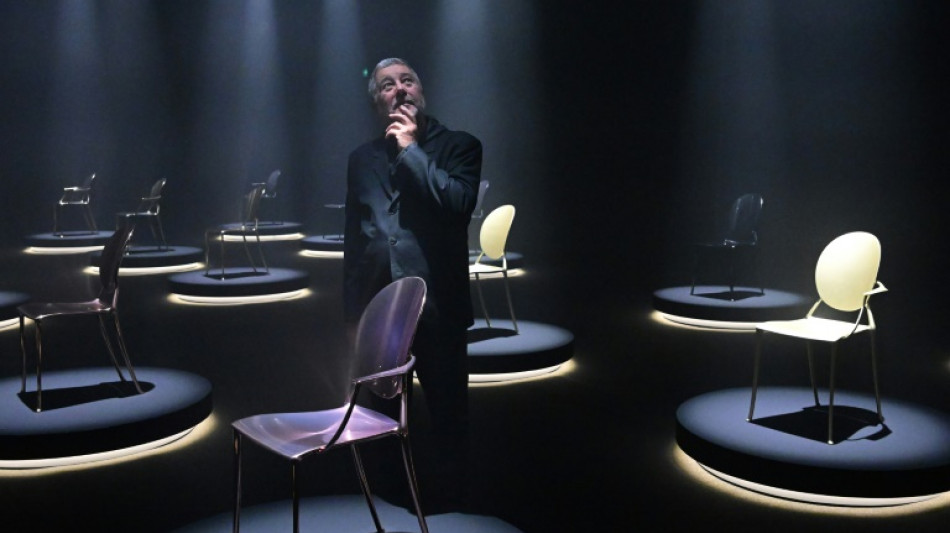
Starck unveils new Dior chair, predicts end of design / Photo: Miguel MEDINA - AFP

 In Iceland, the mystery of the poet, the tomb and the Danish grocer

 Ratko Mladic: Bosnian Serb commander to convicted war criminal
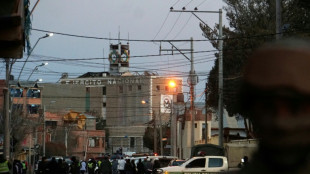 Bolivian army base blasts kill two, wound dozens

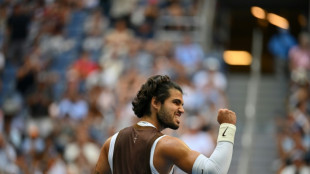 Alcaraz, Sabalenka into US Open last 16 as Williams sisters lose on return

 Williams sisters fall in thrilling return to US Open doubles
 Bangladesh measles toll nears grim 1,000-child mark
 Bolivia farmers return to streets over diesel price hikes

 Tetris distances itself from controversial White House 'arcade' games

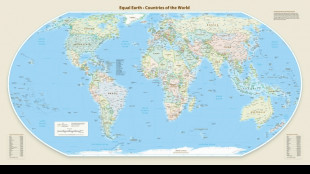 Africa bigger, US smaller - UN adopts new map
 Bad weather will not affect All Blacks, says captain Savea

 Mbappe misses penalty as Parrott lifts Betis past Real Madrid

 PSG still winless in Ligue 1 as Monaco go top
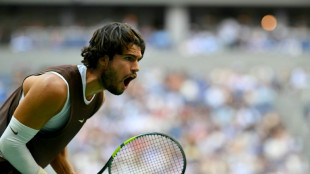 Defending champion Alcaraz reaches last 16 at US Open

 Lyles ends season before Budapest due to injury flare ups

 US Republicans announce probe into environment groups

 Sabalenka survives despite 'tricky' weed smell at US Open
 S&P Revises Outlook on Freedom Holding Corp. and Core Subsidiaries to Positive

 Job growth but record-high diesel prices -- Trump's midterms mixed bag

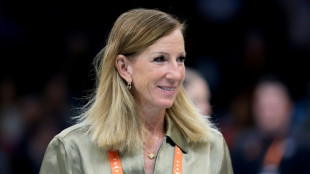 Women's NBA comissioner Engelbert to retire at season's end

 Luis Enrique extends contract as PSG coach until 2030

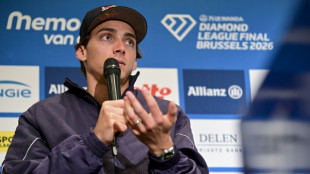 Duplantis pulls out of Diamond League finals

 Defending champ Sabalenka, Pegula lead way into US Open fourth round

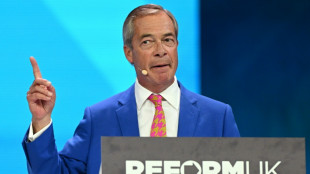 UK hard-right party rallies behind leader after new donation scandal

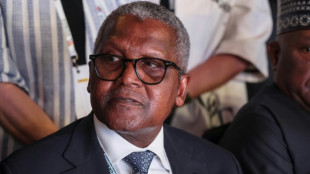 Nigeria's Dangote refinery looks to raise $1.6 bn in IPO
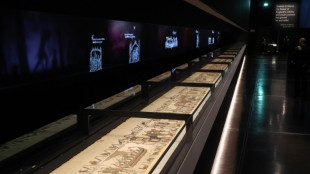
 Portugal extends talks to privatise national carrier TAP

Philippe Starck made his name making everyday objects extraordinary, but the French designer and architect believes the "dematerialisation" of modern life will soon make such talents redundant.
"What is the future of design? Well, there isn't one, because you must understand that everything has a birth, a life and a death and for design it is the same," he told AFP on the sidelines of the Milan Furniture Fair.
He is here to present a new chair created for fashion house Dior, an update on Christian Dior's iconic 1947 version of the Louis XVI medallion chair.
Starck, 73, is one of the most prolific inventors of his generation, designing everything from top hotels, luxury yachts and best-selling furniture to juicers and toothbrushes.
He believes, however, that the advance of technology means talents such as his may one day become redundant.
"We make everything disappear," he said, adding: "Look at your iPhone -- the number of products it replaces, it's extraordinary.
"Before, the size of a computer -- it was a building, a suburban house, now it is embedded under the skin."
The process will reach its end, he says with a smile, when "man is naked on the beach, ultra-powerful, ultra-calculating, ultra-communicative".
- 'Say no' -
The new Miss Dior chair is made entirely in aluminium, available in black chrome, pink copper or gold, while one of the three models rather whimsically has just one armrest.
It comes two decades after Starck launched his best-selling ultra-modern plastic Louis Ghost model, also inspired by the 18th-century Louis XVI medallion chair with its distinctive oval back.
Unlike the plastic chair, however, which retailed around 350 euros (around $370), the Miss Dior costs between 1,700 and 5,000 euros.
"Chairs are an interesting exercise because they are very difficult, despite appearances... slightly easier than going to the moon but not far off," Starck quipped.
He wanted to ensure his new creation would last, so chose an "extremely solid, extremely technical material, a very ecological and totally recyclable aluminium".
Starck is a keen advocate of ecological design, dreaming up electric bikes, intelligent thermostats and personal wind turbines among his many creations.
"Ecology, above all, is saying: I want to buy this, but do I need it? If you are honest with yourself, 80 percent of the time you would say no," he said.
- 'Every 16 seconds' -
It also means buying something "for always -- it must last".
Starck traces his pursuit of industrial minimalism to his father, who designed airplanes.
"To make a plane fly, it must be light, you have to remove everything that serves no use," he said.
He added: "All my life I've tried to find the centre of things, the sense of things, the soul of things."
He says concern for the environment can be met "by not producing" -- but he is not giving up yet.
"I have an idea every 16 seconds," he says.
He justifies making something by asking "if the object is right, if it deserves to exist, if it was made with the minimum of material and energy, if it is accessible to the maximum number of people, if it brings... happiness, laughter".
If it also allows someone to "sit down, wash, eat -- then in that case it is useful and I am proud of it," he said.
R.Chavez--AT