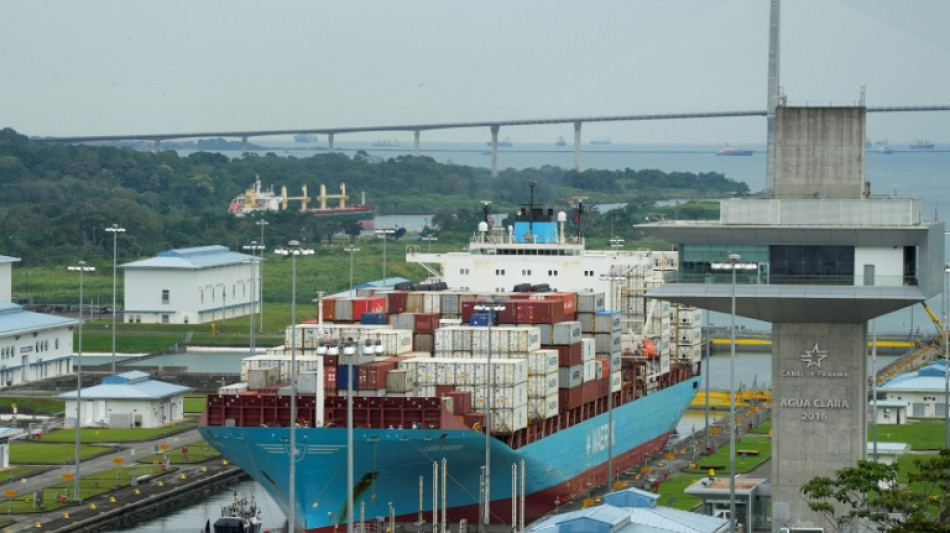
Does China control the Panama Canal, as Trump claims? / Photo: ARNULFO FRANCO - AFP/File

 Trump envoys arrive in Kyiv for first Ukraine visit
 Indonesia's main airport suspends operations after volcanic eruption
 US aircraft carrier departs Thailand after port call
 Haze emergency grips Malaysian Borneo town
 Messi creates both Miami goals in 2-2 draw with Atlanta
 Rybakina books US Open fourth-round berth, inches closer to No. 1
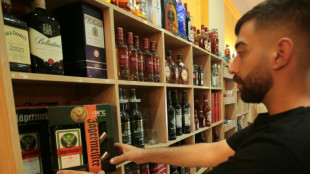 Sobering reality: Curbs on alcohol in northeast Syria cause discontent
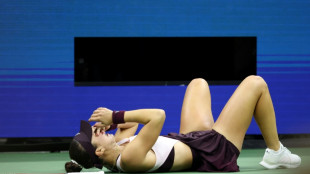
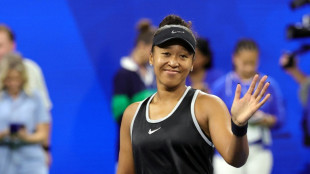 Wobbly Osaka 'shocked' to battle past Mertens and reach last 16
 Indian Oscar-nominated filmmaker turns camera on his cancer
 Argentina 'let off hook' by Australia as Kiss's winning run ends
 Argentina threatens to sanction oil projects around Falklands
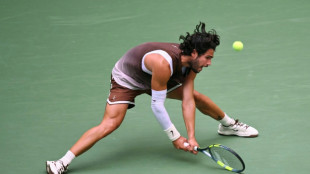
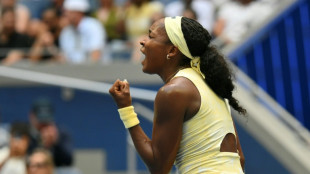 Gauff into round four at US Open after straight-set win
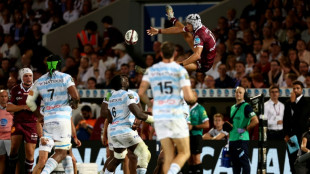 Bordeaux hammer Racing in Top 14 start as Bielle-Biarrey extends deal

 Zheng, Potapova pull off upsets to reach US Open last 16
 Swiatek into US Open fourth round in tight two-setter
 Werro wins in Brussels, as Russell and Dos Santos shine
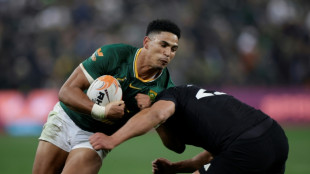 Kolbe breaks jaw and shoulder injury sidelines Savea
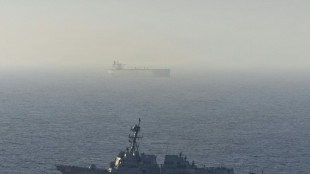 US military strikes oil tankers as Iran vows tougher reprisals

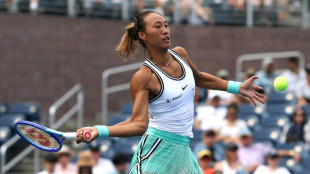 Zheng rallies to stun Keys, Anisimova out in US Open third round
 Bayern held to draw by stubborn Schalke
 Lens lose again ahead of Champions League date

 Olympic champion Zheng storms home to reach US Open last 16
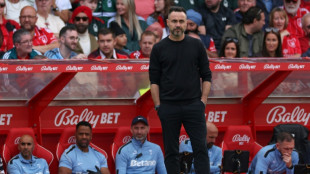 Big-spending Spurs must make better attacking decisions, says De Zerbi

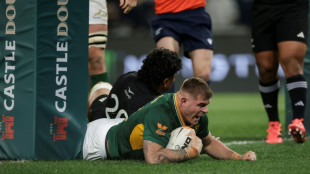 South Africa dominate New Zealand in second half to lead series
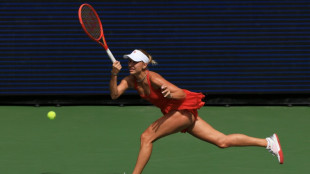
 Kiefer Sutherland still in action, but ibuprofen lending helping hand
US President Donald Trump's threat to seize the Panama Canal over alleged undue Chinese influence may really be aimed at limiting Beijing's growing diplomatic and economic presence in Latin America, experts say.
Actually using force to take the interoceanic waterway, which carries five percent of world maritime trade and 40 percent of US container traffic, seems an unlikely endeavor, they concur.
Here's what we know:
Who owns the canal?
Constructed by the United States mainly with Afro-Caribbean labor and opened in 1914, the canal was administered by America until 1977, when treaties were signed under then-US president Jimmy Carter for its handover to Panama.
Since the handover in 1999, the canal has been managed by the Panama Canal Authority (ACP) -- an autonomous entity whose board of directors is appointed by the legislature and president of Panama.
The government has granted concessions to private company Hutchinson Ports -- a subsidiary of Hong Kong-based conglomerate CK Hutchison Holdings -- to operate ports on either extreme of the 82-kilometer (51-mile) waterway.
According to Rebecca Bill Chavez of the Inter-American Dialogue think tank, "Panama has honored the canal treaties by maintaining the canal’s operations efficiently and ensuring its neutrality."
Yet Trump, in his inaugural address Monday, complained that "China is operating the Panama Canal, and we didn't give it to China, we gave it to Panama."
"China does not operate or control the Panama Canal," said Chavez.
- Could this change? -
In the eye of the storm is Hutchinson Ports, which has operated the Balboa and Cristobal ports since 1997.
Trump's Secretary of State, Marco Rubio, has questioned whether Chinese companies could take control of the ports under orders of Beijing and "shut it down or impede our transit."
Panama's President Jose Raul Mulino has insisted his country operates the canal on a principle of neutrality, as per the treaties.
"There are reasonable concerns related to the presence of a Chinese company," Benjamin Gedan, director of the Washington-based Wilson Center's Latin America program, told AFP.
"The channel is of enormous value to the United States, both commercially and strategically," Gedan said, adding it is a potential target were China to exert influence over Hutchinson Ports, or even nationalize it.
Beijing said Wednesday it has "never interfered" and "does not participate in the management and operation" of the canal, of which the United States is the biggest user, followed by China.
Hutchinson Ports said audits a few years ago by the office of the comptroller, which oversees public spending, and the Panama Maritime Authority, found the company was in "full compliance" with its contractual obligations.
The comptroller has announced another audit since Trump's threats.
- The art of the deal? -
Trump has complained that American ships -- including US Navy vessels -- are "severely overcharged" for using the port.
But for Euclides Tapia, professor of international relations at the University of Panama, this appears to be "a false argument" to conceal Trump's real goal: "for Panama to reduce its relations with China to a minimum."
Panama broke diplomatic ties with Taiwan in favor of Beijing in 2017, much to Washington's dismay.
Since then, China's footprint has expanded greatly in Panama as in the rest of Latin America, mainly through infrastructure projects.
The United States remains Panama's main political and commercial partner, but subsidiaries of Chinese companies have in recent years built a $206-million port at the Pacific entrance to the canal, and are spending some $1.4 billion on a bridge over it.
"He (Trump) is definitely trying to frighten Panama," said University of Essex international relations expert Natasha Lindstaedt.
She added that "this is a negotiation tool or a distraction, or both."
- Is force likely? -
Under the 1977 treaties, Panama committed to ensuring the canal is open to all countries equally.
Nothing "mentions, let alone authorizes, the United States recovering or reclaiming the canal," said Julio Yao, a former government policy advisor who was part of the Panamanian team that negotiated the treaties.
According to Tapia, the international relations professor, Washington introduced amendments to the treaties that allow for unilateral US military force to defend the canal against threat of closure.
"Only the fabrication of a false flag operation... could justify the use of military force in Panama" under existing conditions, said Tapia.
And that could only happen "to keep the channel open, not to take it and exploit it economically," the analyst added.
The Wilson Center's Gedan sees a military intervention as "unlikely," but noted Trump could put pressure on Panama through tariffs, for example.
A.Anderson--AT