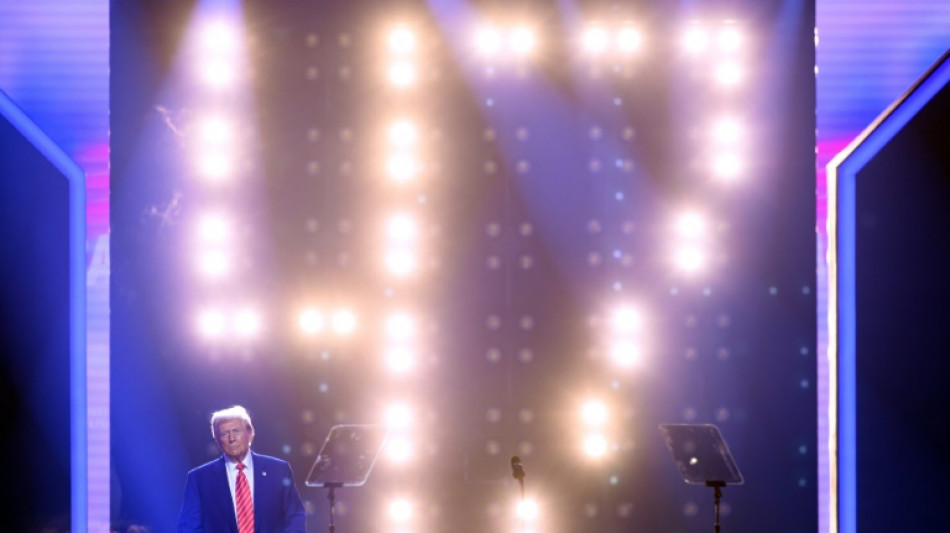
Trump's return threatens resurgence of trade wars / Photo: JOSH EDELSON - AFP/File

 Championship leader Antonelli wins Italian Grand Prix

 Vardy signs for Championship strugglers Burnley
 FIFA confirms Infantino will run in presidential election

 With joy and grief, Palestinian football marks return

 Iran threatens greater force if US launches more attacks

 Vandals uproot Berlin tree commemorating Pride attack victims

 Trump envoys arrive in Kyiv for first Ukraine visit
 Indonesia's main airport suspends operations after volcanic eruption

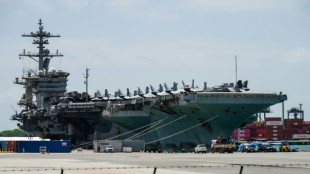 US aircraft carrier departs Thailand after port call

 Haze emergency grips Malaysian Borneo town
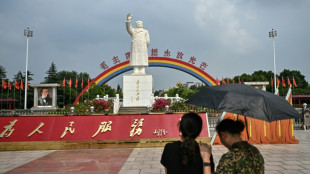
 Messi creates both Miami goals in 2-2 draw with Atlanta
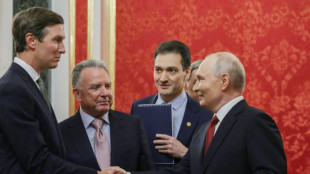
 Rybakina books US Open fourth-round berth, inches closer to No. 1
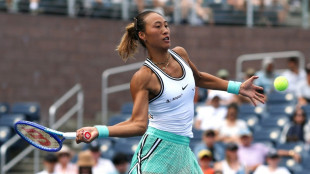
 Sobering reality: Curbs on alcohol in northeast Syria cause discontent

 Wobbly Osaka 'shocked' to battle past Mertens and reach last 16

 Indian Oscar-nominated filmmaker turns camera on his cancer

 Argentina 'let off hook' by Australia as Kiss's winning run ends
 Argentina threatens to sanction oil projects around Falklands

 Gauff into round four at US Open after straight-set win
 Bordeaux hammer Racing in Top 14 start as Bielle-Biarrey extends deal

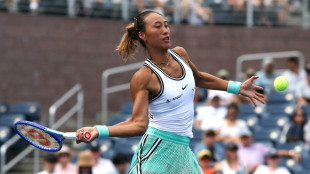 Zheng, Potapova pull off upsets to reach US Open last 16

 Swiatek into US Open fourth round in tight two-setter
 Werro wins in Brussels, as Russell and Dos Santos shine

 Kolbe breaks jaw and shoulder injury sidelines Savea

 US military strikes oil tankers as Iran vows tougher reprisals

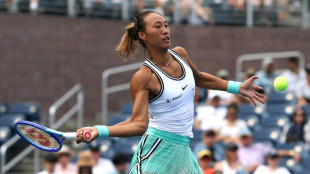 Zheng rallies to stun Keys, Anisimova out in US Open third round
Donald Trump's second presidential term promises a return to tariffs as he pressures partners and rivals to tackle everything from migration to drug trafficking, while protecting US industries -- in moves that could trigger new trade wars.
Even before taking office, Trump has raised the prospect of fresh levies on companies, countries and groups of states as he seeks to implement his agenda.
He has vowed tariffs on Mexico, Canada and China until they crack down on fentanyl and border crossings, and he threatened "economic force" against Ottawa after suggesting Canada should become the 51st US state.
Trump also warned of 100 percent tariffs on BRICS nations -- a bloc including Brazil, Russia, India, China and South Africa -- if they create a rival to the US dollar.
New trade wars could rock the global economy, worsen tensions with Beijing and upend ties with allies.
US manufacturers, farmers and small business owners await his first moves, girding for higher import costs on anything from batteries to wines, while bracing for retaliation.
"I'm not necessarily against all tariffs," said Mark Pascal, a restaurant owner based in New Jersey.
He said he understands the rationale of taxing a country that unfairly suppresses prices.
But "we're concerned about any tariff that would apply broadly to wine and spirits, which is an industry that is not unfairly competing in any way," added Francis Schott, who co-runs restaurants with Pascal.
Trump introduced a range of duties in his first term, including on steel and aluminum, and on Chinese imports as he waged an all-out trade war on the world's second biggest economy.
In 2019, he imposed tariffs on European food and drinks as Washington and Brussels clashed over aviation subsidies.
While these were later suspended, restaurateurs worry their return would batter small establishments.
"It raised our costs, so it raised our prices," said Pascal.
- Global impact -
Trump has used tariffs as a bargaining tool and will probably do so again, said Joshua Meltzer of the Brookings Institution.
But China is signaling pushback and Europe is more prepared policy-wise, he told AFP.
Governments appear to have "reached a similar conclusion that they are better off threatening retaliation at least at this stage, rather than capitulating," Meltzer added.
EY chief economist Gregory Daco warned that tariffs and other measures could tip the world economy into stagflation -- stagnation with elevated inflation -- if pursued to their fullest.
Trump's other promises include an across-the-board levy of 10 percent or more, with a steeper rate on China.
- Growth risks -
Domestically, Trump has touted tariffs as a means to protect US manufacturing, coupled with policies like tax cuts and deregulation that he says will spur growth.
His Treasury secretary nominee Scott Bessent said in a November interview that tariffs would not be inflationary even if there were a "one-time price adjustment."
But Daco estimates higher import costs could lift consumer price inflation by 1.2 percentage points after a year.
"The long-run impact is that it shrinks the US economy and it reduces the value of our incomes," said Erica York of the Tax Foundation.
While the Congressional Budget Office estimated a uniform 10 percent hike and added 50 percent on Chinese goods would slash deficits, this could also lower real GDP.
- Emergency? -
Analysts expect Trump could implement tariffs quickly using the International Emergency Economic Powers Act.
This allows the president to regulate imports during a national emergency, although it could be hindered by lawsuits.
A tried-and-tested method would be the trade law, with Trump previously using Section 301 as justification for tariffs.
But this takes more time as it calls for a government probe.
He could also use Section 232 of the Trade Expansion Act to hike tariffs on goods with national security implications.
N.Walker--AT