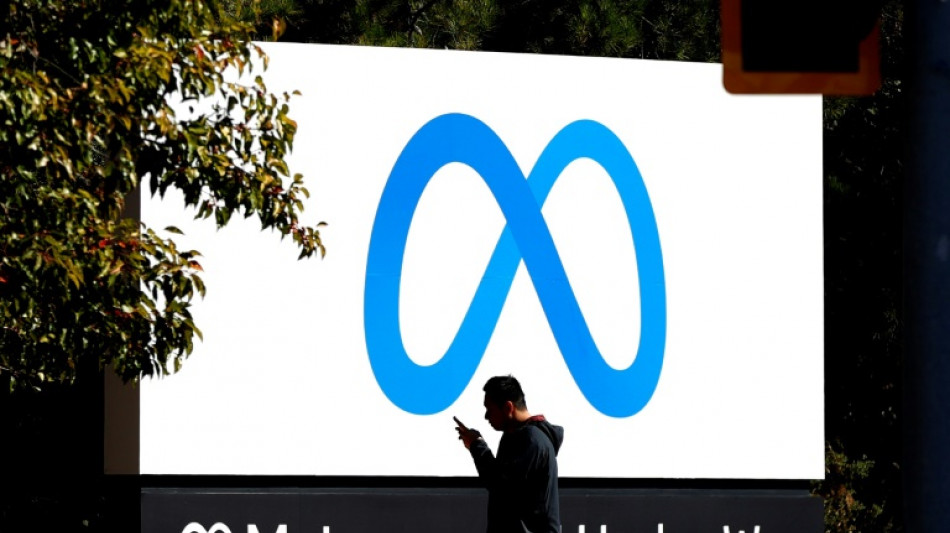
Meta policy reversal puts question mark on furure of fact-checking / Photo: JUSTIN SULLIVAN - GETTY IMAGES NORTH AMERICA/AFP/File

 Sabalenka surges past Townsend to reach US Open quarter-finals
 Smiling face of Germany's far-right AfD: Ulrich Siegmund

 Lebanon president calls for US help as Israeli strikes kill 7
 Yamal hits double as perfect Barca thrash Valencia

 Venice festival turns gaze on war reporters, media industry
 Sensational Antonelli wins Italian GP from back of grid
 Susan Sarandon says still losing roles over Gaza stance

 US envoys hold 'important' talks in first trip to Kyiv
 Championship leader Antonelli wins Italian Grand Prix
 Vardy signs for Championship strugglers Burnley
 FIFA confirms Infantino will run in presidential election
 With joy and grief, Palestinian football marks return
 Iran threatens greater force if US launches more attacks
 Vandals uproot Berlin tree commemorating Pride attack victims
 Trump envoys arrive in Kyiv for first Ukraine visit
 Indonesia's main airport suspends operations after volcanic eruption
 US aircraft carrier departs Thailand after port call
 Haze emergency grips Malaysian Borneo town
 Messi creates both Miami goals in 2-2 draw with Atlanta
 Rybakina books US Open fourth-round berth, inches closer to No. 1

 Sobering reality: Curbs on alcohol in northeast Syria cause discontent
 Wobbly Osaka 'shocked' to battle past Mertens and reach last 16
 Indian Oscar-nominated filmmaker turns camera on his cancer
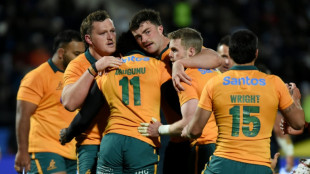
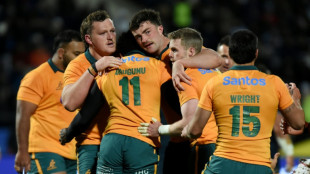 Argentina 'let off hook' by Australia as Kiss's winning run ends
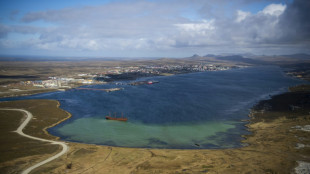 Argentina threatens to sanction oil projects around Falklands

Media outlets around the world have been left scratching their heads over the future of their fact-checking operations after Meta's shock announcement that it will halt its US programme.
Here are the key facts about how the practice has developed and what could lie ahead for the sector.
- Years of growth -
Fact-checking emerged in the United States in the early 2000s to become a genre of journalism all its own.
The practice rode the rising wave of internet usage and was the lifeblood of new media operations pitting politicians' statements against reality.
PolitiFact, a landmark of the sector, was launched in 2007 and won a Pulitzer prize in 2009.
Methods like live corrections to figures provided on TV or online articles marked up as true or false spread around the world, providing the foundation for the next stage.
Social media giants were already labouring under allegations that their platforms were being used to spread disinformation and conspiracy theories when scrutiny increased following 2016's shock Brexit vote and the election of Donald Trump to the US presidency.
Meta and other web firms stoked the spread of fact-checking beyond politics, enlisting media organisations that saw the activity as a welcome new revenue opportunity in a sector struggling to stay afloat.
- Vital revenue stream -
Ten organisations are affected by Meta's announcement that it will end fact-checking in the US.
Some, such as Check Your Fact, are totally dependent on income from the tech firm, US outlet Business Insider reported.
Others including PolitiFact are less exposed, with the outlet receiving a little over five percent of its revenue from the Meta partnership, according to the New York Times.
AFP currently works in 26 languages with Facebook's fact checking programme, in which Facebook pays to use fact checks from around 80 organisations globally on its platform, WhatsApp and on Instagram.
The news agency's management has said it is "evaluating the situation".
African media appear particularly exposed should Meta's worldwide fact-checking programme be stopped.
"There are business models that are more or less dependent on Facebook" such as the Johannesburg-based Africa Check, said Laurent Bigot, a journalism professor who also vets applications to join the International Fact-Checking Network (IFCN).
Several media were founded purely to join Facebook's scheme, including Data Check in Cameroon, Balobaki Check in the Democratic Republic of Congo, or TogoCheck, Bigot pointed out.
He warned that "this verification work will never be done anywhere else, while disinformation kills people every day in these countries".
- Pushback -
Meta boss Mark Zuckerberg said in announcing the pullback that "the fact-checkers have just been too politically biased and have destroyed more trust than they've created, especially in the US".
His company would be "restoring free expression on our platforms," he added.
Elon Musk, who owns X and has Trump's ear, and many Republican politicians have for years accused fact-checkers of "censoring" conservative voices.
Such criticism misunderstands fact-checkers' role in regulating social media content, said Angie Holan, head of the IFCN network that now includes 137 organisations.
Fact-check journalism "has never censored or removed posts" from platforms, Holan said in a statement.
Rather, it has "added information and context to controversial claims" under a "Code of Principles requiring nonpartisanship and transparency", she added.
Digital investigation journalists have often experienced increased pressure and even threats during election campaigns -- as seen last year in India, South Korea or Croatia.
Meta's new policy is "part of a global strategy of marginalizing journalism and its actors in the name of a freedom of expression perverted to serve ideological interests," Reporters Without Borders said in a statement.
- Fact-checking isn't dead -
Philippine Nobel peace laureate Maria Ressa said Meta's decision would "allow lies, anger, fear and hate to infect every single person on the platform".
Zuckerberg had chosen a "world without facts," warned Ressa, founder of the Rappler news site that spent years fighting online disinformation while battling court cases filed under former Philippine president Rodrigo Duterte after critical reporting of his deadly drug war.
Bigot was less categorical, saying that Meta had simply "put an end to an abnormal situation".
"The platforms spread vast amounts of disinformation and buy themselves a clear conscience with this type of programme," added Bigot, who teaches at the University of Tours in France.
French left-wing daily Liberation ended its own partnership with Meta in 2021.
Cedric Mathiot, who heads its CheckNews arm, believes such contracts can be both "a financial crutch that helps out" but also "perhaps prevent" further development of fact-checking.
Mathiot said that without Meta "paradoxically, fact-checking could be pushed to be more ambitious" with more in-depth investigations and varied topics.
G.P.Martin--AT