Invisible man: German startup bets on remote driver / Photo: Patrick T. Fallon - AFP

 Alonso urges Chelsea to learn from painful defeat at Arsenal
 Defending champion Sabalenka reaches US Open quarter-finals

 Minnows Augsburg sink Frankfurt to top Bundesliga table
 Yamal hits double as 'nearly perfect' Barca thrash Valencia
 Antonelli living 'a dream' after astonishing home win

 Impressive Daryz keeps Arc double dream alive
 Strasbourg hit Troyes for six as Amo-Ameyaw sparkles

 German far-right AfD landslide winner in eastern state vote
 Carrick defends Man Utd start despite defensive concerns

 More than 140 killed in latest Yemen clashes: military sources

 Van Aert claims shortened Vuelta stage 15 win in high heat
 Everton shrug off transfer window woes to hold Man Utd
 'Nothing has changed': FIFA confirms Infantino to run for re-election

 UN's Nepal chief makes emotional plea for flood-ravaged country
 Italian GP red-flagged after massive Leclerc crash

 US envoys hold talks with Zelensky on first Kyiv visit

 'Truly scared': Blazes outpace firefighters in Indonesian Borneo
 German director Wenders clarifies views on film and politics
 Nepali rescuers buoyed by miracle finds but tough conditions persist

 At last: Straight sets win over Tabilo puts Zverev in US Open last 16

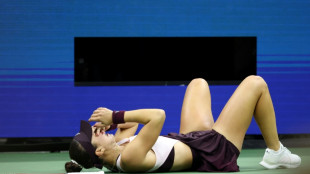 Jovic 'loses sanity five times over' to oust friend Eala in US Open epic

 China's memories of Mao fade to nostalgia 50 years after his death

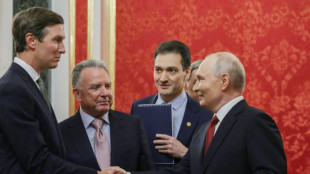 US envoys discuss with Putin 'substantive' plans for steps to end Ukraine war
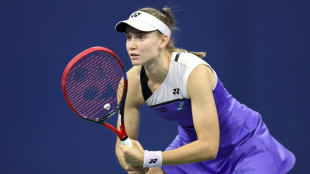
 Zheng stuns Keys as US Open upsets dim American hopes
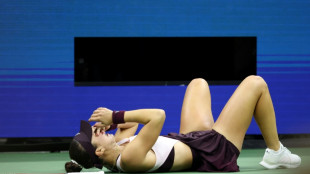 Jovic 'loses sanity five times over' to oust Eala and book Gauff clash
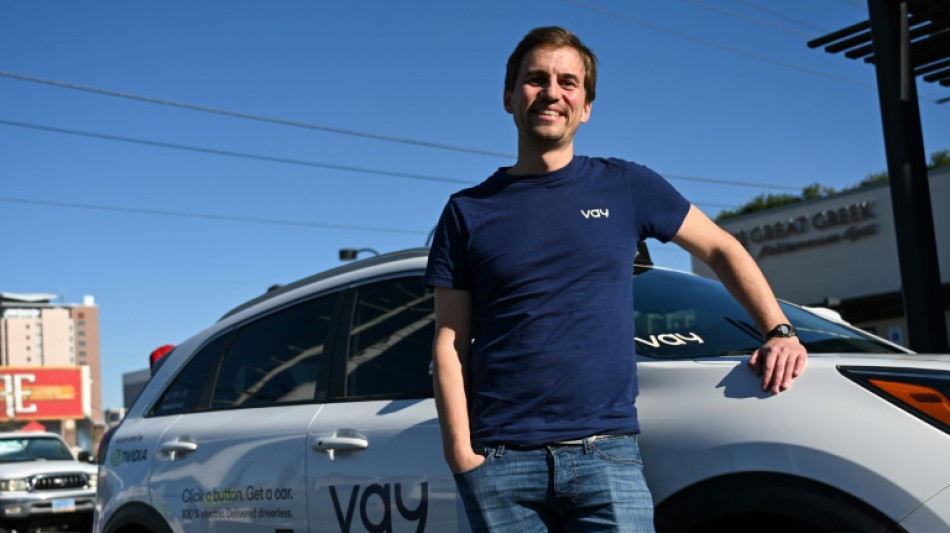
With no one in the driver seat, the SUV pulling up resembles an autonomous robotaxi like those becoming increasingly present in some cities -- but the car from German startup Vay is something else.
One of a number of emerging players aiming to disrupt road transportation, the seven-year-old company is built around remote driving, where a human is very much present, though sitting in an office using TV monitors to guide the car.
Over the last year, riders in Las Vegas have been able to test drive Vay, and the company was demonstrating its technology ahead of the Consumer Electronics Show (CES), the world's most important tech show.
Thomas von der Ohe, chief executive and co-founder of Vay, said his was a lower-cost approach "that has nothing to do with autonomous driving."
Von der Ohe, who previously worked at Zoox, the Amazon-owned autonomous driving company, said that unlike autonomous driving companies, Vay doesn't have to "run massive amounts of simulations" to be safe.
"Our core safety principle is that the (human driver) can make the decision," he said.
And unlike a Tesla or Waymo, there is no dream at Vay of one day shedding the steering wheel, which twists and turns during rides as if maneuvered by the Invisible Man.
The remote driving approach also employs fairly inexpensive camera technology, which costs a fraction of the envelope-pushing Lidar sensing systems favored by leading autonomous companies.
A demonstration of the remote driving technology showed someone watching three screens -- which included live imagery from front, side and rear-view cameras -- as they operated a system similar to at-home racing simulators, with a steering wheel and pedals.
Vay is offering rides for half the price of Uber or Lyft. Von der Ohe hopes to reach profitability in the next year or two, depending on how quickly the company can scale.
Since launching 12 months ago, Vay's Las Vegas fleet has grown from two to 30 vehicles, completing 6,000 rides, von der Ohe said.
But Von der Ohe believes the company's cash cow will not be ride-hailing, but the delivery of autos to consumers who then drive the vehicles.
In this way, Vay resembles a car rental company.
Since the launch in Las Vegas, some customers have ordered up Vay vehicles for home delivery and then driven them themselves.
That flexibility is one reason "we believe this can be a real alternative to private cars," von der Ohe said.
A.Anderson--AT