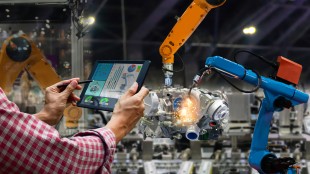
Move over Mercedes: Chinese cars grab Mexican market share / Photo: ALFREDO ESTRELLA - AFP

 InterContinental Hotels Group PLC Announces Transaction in Own Shares - November 04

 No. 22 UCLA defeats No. 5 Arizona 84-75 despite Kharchenkov's 38 points

 Vessel operator seeks witnesses after Vancouver grounding

 US Air Force deploys F-16 fighters to remote Aleutian base for readiness drill

 Bezos grant helps Seattle nonprofit move thousands of families toward housing

 Shrini Srivastava joins crew of Varanasi-Delhi Vande Bharat Sleeper service

 Nearly Half of Australian Workers Overqualified, Survey Finds

 RBI eases export-declaration compliance for individual service exporters
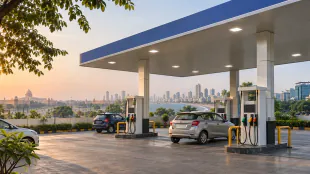
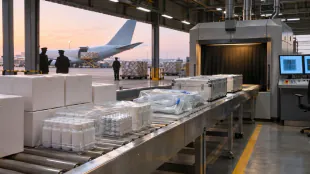 India proposes more import entry points for drugs and medical devices

 Derek Tierney Outlines Ten-Year Strategy for National Digital Health System

 NBC’s Steve Kornacki Reveals Tech Habits Ahead of Midterm Elections

 India and Israel oppose UN draft on regional conventional arms control

 BLS Polymers shares open 65.3% above IPO price

 Capital-markets shares rally as Motilal Oswal and Angel One lead gains

 Latino Voters Defy ICE Fears, Turn Out in Record Numbers for Midterms

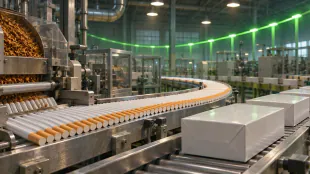 ITC shares rise as analysts anticipate gradual cigarette-business recovery

 Reliance rally puts historical one-year return pattern in focus
 Kuwait edges Oman 1-0 in veterans Gulf Cup in Doha

 Saudi Aramco quarterly profit climbs 34.6% amid elevated oil prices

 Washington reports movement in Iran negotiations aimed at preventing escalation

 Korea’s Labor Share of GDP Hits Record Low Amid Semiconductor Boom

 littlefish and Halo Dot Partner to Replace Payment Terminals with SoftPOS

 Kuwait inspectors destroy 115 kilograms of unverified meat in Farwaniya

 Egypt Accelerates Construction of 341km Sinai Railway Linking Arish and Taba

 John Schneider Admits Owes Millions in 'Dukes of Hazzard' Divorce Battle
The growing popularity of Chinese sport utility vehicles and pickup trucks has shaken up Mexico's luxury car market, hitting sales of traditionally dominant brands such as Mercedes-Benz and BMW.
According to industry experts, Mexicans are increasingly switching from traditionally dominant sedans to Chinese vehicles due to a combination of comfort, technology and price.
It is no small feat in a country home to factories of foreign brands such as Audi and BMW, and where until a few years ago imported Chinese cars were stigmatized, as in other parts of the world.
According to the Mexican Association of Automotive Distributors (AMDA), the high-end segment of the market registered a sales drop of 8.1 percent from January to November.
Audi's sales slumped by 21.9 percent, while BMW, which includes the Mini brand, saw no growth in Latin America's second-largest economy, home to 129 million people.
Mercedes-Benz suffered a 9.8 percent decline, according to the state-run statistics institute INEGI.
In contrast, Motornation, which sells the BAIC, JMC and Changan brands in Mexico, saw an 8.8 percent increase in sales in the first 11 months of this year, while those of Jetour rose 131 percent, it said.
Chinese firms now control 9.3 percent of the Mexican market, according to the AMDA.
They have brought stiff competition to the pickup truck segment, with many of the features of high-end models offered by premium brands, the association's president Guillermo Rosales told AFP.
Traditionally, the premium segment included sedan-type vehicles with luxury engines and top-of-the-range features.
However, over the past decade consumer preferences have shifted toward utility vehicles such as pickup trucks, minivans and SUVs.
Asian brands also benefited from an exemption from import tariffs on electric vehicles that was in effect in Mexico from 2020 until October 1.
- 'Simple arithmetic' -
As in other Latin American countries, Mexicans are becoming more used to seeing Chinese brands on the streets that were unknown to them until about five years ago.
Miguel Reyes, a 71-year-old retiree, said that choosing a Chinese car over others was "simple arithmetic."
"I needed a car that had the necessary technology, such as steering assist, to make driving safer," Reyes said.
As well as the design and comfort, the "competitive" price was another factor, said Reyes, who paid around 550,000 pesos -- roughly $27,000 dollars.
A similar model from a traditional brand would have cost him between $40,000 and $50,000, he said.
According to Gerardo Gomez, an expert at the data and analytics company J.D. Power, there are around 30 Chinese brands in Mexico, with vehicles ranging from compacts to luxury cars.
"They can offer you anything at any point in the range."
BYD offers an electric pickup truck for more than a million pesos ($50,000) but also a compact car for $17,000.
Zeekr, a premium electric brand, sells luxury models for around $40,000.
- Trump tensions -
Chinese cars' growing presence in Mexico, which is itself a major exporter of vehicles, comes at a time when China is a source of contention between the United States, Mexico and Canada, partners in a regional free trade agreement.
During his campaign, US President-elect Donald Trump suggested that China was building car factories in Mexico to sell vehicles in the United States.
Canadian officials have accused Mexico of being a springboard for Chinese products in the region -- a claim denied by Mexican authorities.
Trump has also threatened to impose 25 percent tariffs on both Mexico and Canada unless they stop flows of migrants and drugs.
According to Mexican President Claudia Sheinbaum, only seven percent of the components of cars manufactured in the Latin American country are Chinese.
"There's no evidence from anywhere that proves that Mexico is being used as a springboard" for Chinese products, said Diego Marroquin, a trade policy specialist at the Wilson Center in the United States.
"It's a political narrative that comes from the United States and now from Canada."
Sheinbaum said last month that she would propose to the United States and Canada a Chinese import substitution plan, noting that in the case of Mexico alone, the trade deficit with the Asian giant amounted to $80 billion.
N.Mitchell--AT