Sierra Leone student tackles toxic air pollution / Photo: Saidu BAH - AFP

 Tiafoe tops Medvedev in straight sets at US Open
 Zverev seeks US Open last eight as Osaka faces Rybakina

 Alcaraz turns up heat to reach US Open quarters
 Gatti salvages Juve draw with AC Milan in Serie A

 Sinayoko stars as unbeaten Paris FC down Marseille
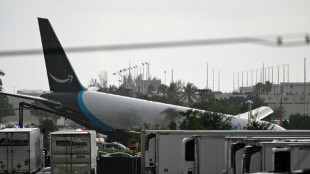
 Still on top: 'Spider-Man' dominates North American box office
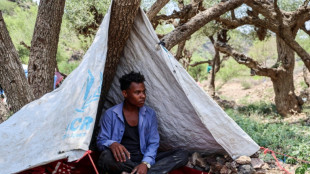
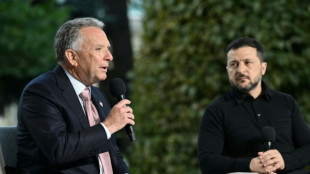 Zelensky in fresh talks with US envoys: Ukraine official

 Noskova edges Kostyuk to reach US Open quarter-finals
 Alonso urges Chelsea to learn from painful defeat at Arsenal

 Defending champion Sabalenka reaches US Open quarter-finals

 Minnows Augsburg sink Frankfurt to top Bundesliga table
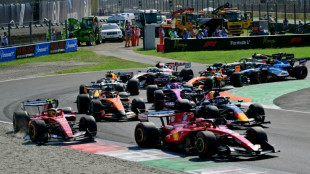
 Yamal hits double as 'nearly perfect' Barca thrash Valencia

 Antonelli living 'a dream' after astonishing home win
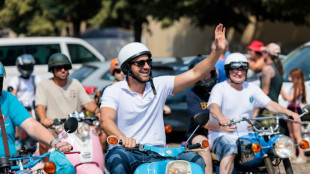
 Impressive Daryz keeps Arc double dream alive
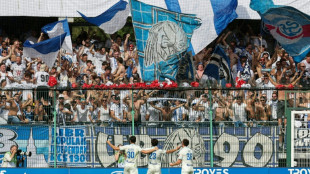 Strasbourg hit Troyes for six as Amo-Ameyaw sparkles

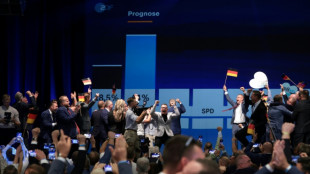
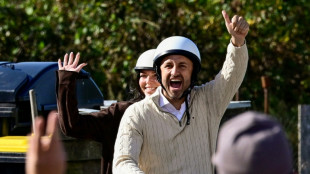 German far-right AfD landslide winner in eastern state vote

 Carrick defends Man Utd start despite defensive concerns
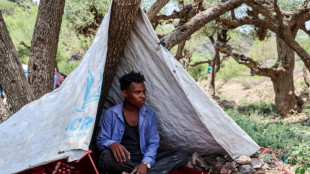 More than 140 killed in latest Yemen clashes: military sources

 Van Aert claims shortened Vuelta stage 15 win in high heat

 Everton shrug off transfer window woes to hold Man Utd
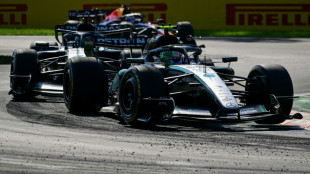
 'Nothing has changed': FIFA confirms Infantino to run for re-election

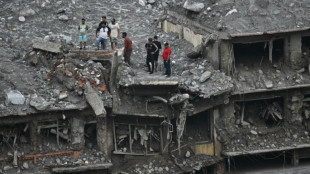 UN's Nepal chief makes emotional plea for flood-ravaged country

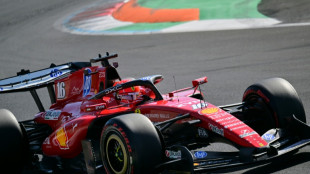 Italian GP red-flagged after massive Leclerc crash

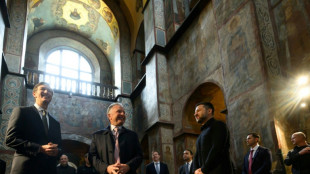 US envoys hold talks with Zelensky on first Kyiv visit

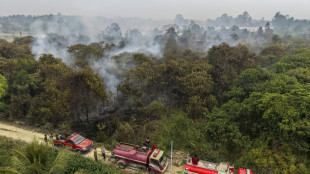 'Truly scared': Blazes outpace firefighters in Indonesian Borneo
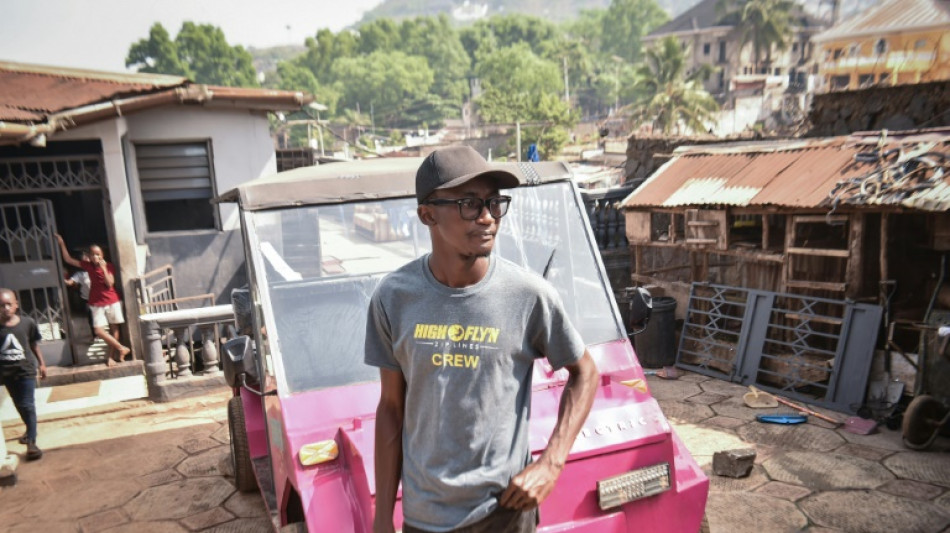
In his small Freetown workshop, engineering student James Samba tinkered with batteries and electrical parts he hoped could help clean up Sierra Leone's polluting public transport system.
Rush hour in the West African country's major cities is a frenetic medley of minibuses, mopeds, shared taxis and three-wheeled vehicles known as "kekehs" –- each spluttering toxic emissions into the atmosphere.
Samba said that his uncle died from a respiratory illness after years of inhaling roadside exhaust fumes, spurring the 23-year-old to develop his own model for an electric kekeh.
Assembled from recycled scrap metal and powered by batteries, the pink four-wheeled vehicle now roams the streets of the capital.
Although the project is still in its infancy, Samba aims to offer an eco-friendly alternative to traditional fuel-run models.
"I wanted to save others from dying of lung and respiratory disease due to air pollution... by manufacturing a prototype electric vehicle," Samba said.
Worldwide, an estimated 4.2 million premature deaths per year are attributed to outdoor air pollution, the World Health Organization (WHO) says, with low- and middle-income countries overwhelmingly impacted.
Vehicle emissions are also a leading contributor to climate change.
Like in much of West Africa, lengthy traffic jams in Sierra Leone's major cities and poorly maintained vehicles with inefficient exhausts exacerbate the emissions problem.
The United Nations Environment Programme (UNEP) says that in 2021, fine particle air pollution killed 1,200 people in Sierra Leone, a country of 8.5 million people.
- 'Good for business, environment' -
Samba first ventured into engineering when he built an electric wheelchair for his uncle, who had long struggled to access public transport.
He has since set up his own company, Sierra Electric, with the aim of eventually manufacturing a fleet of solar-powered kekehs and disability-friendly electric vehicles.
Lacking the immediate means to cover production costs, Samba has partnered with start-up NEEV Salone to develop a kekeh powered by a rooftop solar panel.
The Freetown-based firm already has a fleet of more than 100 solar tricycles, three charging stations and battery swapping cabinets for customers, according to co-founder and operations officer Emmanuella Sandy.
"Our e-kekeh products are thriving. We swap batteries to reduce waiting time for commercial riders and we have trained 60 university students from the mechanical engineering department on electric vehicle assembly and maintenance," she said.
The development of electric vehicles faces numerous hurdles in Sierra Leone, where the national grid suffers from chronic underperformance and frequent outages, and a six-month rainy season hampers the functioning of solar panels.
Just over 20 percent of households have access to electricity via the national grid or mini-grids, according to a 2024 World Bank report.
NEEV Salone alternates between solar power, off-grid generators and the national grid to maintain supply to their charging points.
Samba says solar kekehs are cheaper to run than fuel-powered alternatives, as drivers face lower maintenance costs and no fuel bill.
The smallest of NEEV Salone's solar kekehs sells for 120,000 new leones (around $5,270), a high price for those living in one of the world's poorest countries.
Despite the cost, some drivers have already converted to renewables in the face of rising fuel prices.
"The solar tricycle is comfortable and a profitable business. I no longer worry about fuel scarcity in the country," said 25-year-old driver Thomas Kanu.
"The solar kekeh is good for business and our environment."
F.Ramirez--AT