Argentina's dollar craze cools under greenback-loving Milei / Photo: Luis ROBAYO - AFP/File

 Tiafoe tops Medvedev in straight sets at US Open
 Zverev seeks US Open last eight as Osaka faces Rybakina

 Alcaraz turns up heat to reach US Open quarters
 Gatti salvages Juve draw with AC Milan in Serie A

 Sinayoko stars as unbeaten Paris FC down Marseille
 Still on top: 'Spider-Man' dominates North American box office
 Zelensky in fresh talks with US envoys: Ukraine official

 Noskova edges Kostyuk to reach US Open quarter-finals
 Alonso urges Chelsea to learn from painful defeat at Arsenal
 Defending champion Sabalenka reaches US Open quarter-finals

 Minnows Augsburg sink Frankfurt to top Bundesliga table

 Yamal hits double as 'nearly perfect' Barca thrash Valencia
 Antonelli living 'a dream' after astonishing home win

 Impressive Daryz keeps Arc double dream alive
 Strasbourg hit Troyes for six as Amo-Ameyaw sparkles

 German far-right AfD landslide winner in eastern state vote

 Carrick defends Man Utd start despite defensive concerns

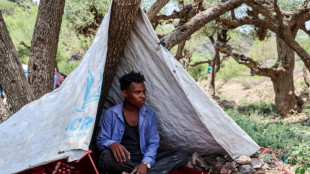 More than 140 killed in latest Yemen clashes: military sources

 Van Aert claims shortened Vuelta stage 15 win in high heat

 Everton shrug off transfer window woes to hold Man Utd

 'Nothing has changed': FIFA confirms Infantino to run for re-election

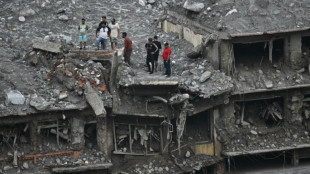 UN's Nepal chief makes emotional plea for flood-ravaged country
 Italian GP red-flagged after massive Leclerc crash

 US envoys hold talks with Zelensky on first Kyiv visit

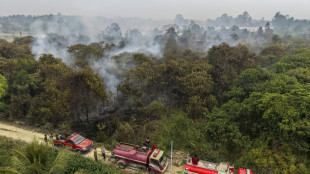 'Truly scared': Blazes outpace firefighters in Indonesian Borneo

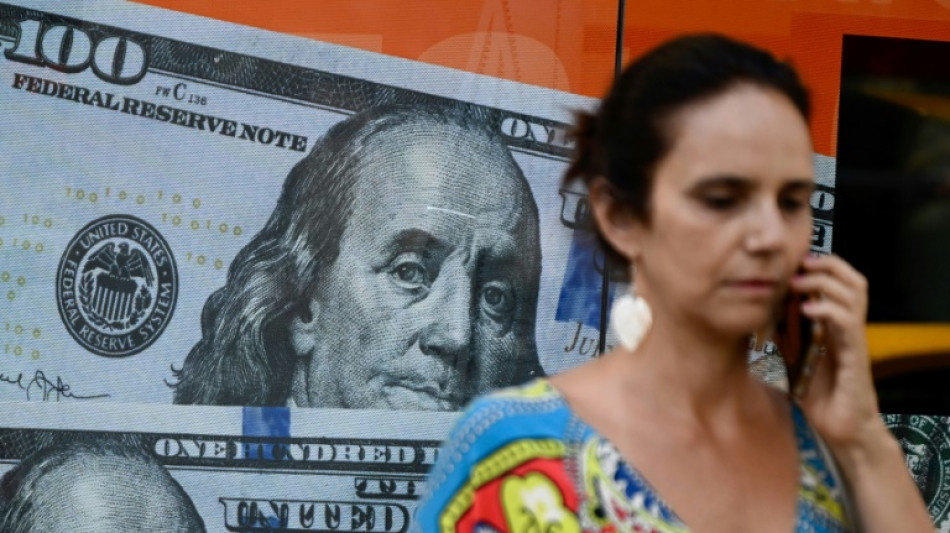
"Dollars, selling dollars!" a money changer shouts to people streaming past in Buenos Aires' financial district.
But there are no takers as Argentina's decades-long dollar craze finally shows signs of cooling.
Over years of high inflation and currency controls, Argentines lined up to trade their increasingly worthless pesos for dollars, propelling the US currency to a record 1,500 pesos on the black market on July 12.
But as the inflation rate slows under cost-cutting President Javier Milei -- from 25.5 percent in December 2023 to 2.4 percent in November 2024 -- the clamor for dollars has quieted, even after Milei pledged on the campaign trail last year to swap the peso for the greenback.
- Amnesty brings in billions -
Experts cite several reasons for the fall in demand for dollars. Milei's biting austerity measures have cratered Argentines' purchasing power, shattering their ability to save in hard American cash -- the preferred way to create a nest egg.
The experts also point to a tax amnesty launched by the government in July to encourage Argentines to deposit dollars that have been stashed under mattresses and floorboards, or tucked in safety-deposit boxes and offshore accounts.
The scheme has brought in $20 billion in deposits so far, helping ease a dollar shortage.
Meanwhile, the central bank has taken advantage of a stronger peso to build up its dollar reserves from $21 billion when Milei took power a year ago to $32 billion.
In a sign of how times have changed, the black market dollar rate, which at one point was double the official rate, is now nearly aligned with the official rate, at a little over 1,000 pesos to the greenback.
- Under the mattress -
Oscar, one of Buenos Aires' many black-market money changers -- they are dubbed "arbolitos,"or little trees, because they plant themselves in the street offering green notes -- told AFP that business has slowed dramatically.
"Up to a year ago I was conducting around 40 transactions in a six-hour period; now I have four, at most, in 10 hours," said Oscar, who works openly near the presidential palace but declined to give his full name due to the illegal nature of his work.
These days, his only customers for dollars are Bolivian and Peruvian migrant workers, who change small amounts to send home.
In scenes unthinkable just months ago, most of his Argentine customers are now offloading dollars -- because they need more pesos to pay bills that have soared since Milei took office and slashed energy and transport subsidies.
Retirees "walk the whole city center looking for the best deal" for pesos, Oscar said.
In the back room of her estate agency in the middle-class Caballito neighborhood, where she trades dollars on the black market, Fabiana is also struggling.
To compete, she offers home delivery service for well-off Argentines buying dollars to go on holiday abroad or for people cashing in savings in dollars, some of them "stained from having been kept under the mattress."
Money-changing is merely a source of "petty cash" these days, Fabiana said.
Most of her business comes from property sales, which are booming thanks to the amnesty, which also covers investments in real estate projects and certain property purchases.
- Impact on exports -
Experts warn the peso's strengthening against the dollar may be temporary if, as expected, the effects of the tax amnesty soon wear off or if Milei fails to secure a new cash injection from the International Monetary Fund.
The IMF said Thursday it was in talks with Argentina on a new program to replace a $44 billion loan agreement set to expire on December 31.
Economist Hernan Letcher credited the tax amnesty with helping stabilize demand for dollars, but said that program and any new IMF cash injection are one-off measures that do not resolve Argentina's currency woes.
"The amnesty dollars aren't yours (don't belong to the state) and you have to pay back the IMF dollars," he said.
Meanwhile, the strengthening of the peso risks hurting exports to Brazil, Argentina's biggest trading partner.
Brazil's currency, the real, fell to a record low against the dollar last week over concerns about its economy.
H.Romero--AT