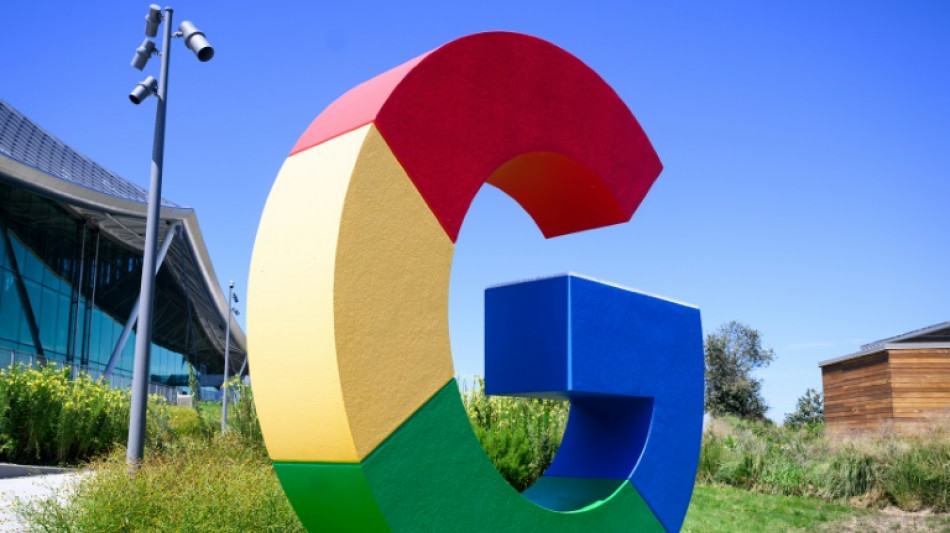
Google unveils latest AI model, Gemini 2.0 / Photo: Josh Edelson - AFP/File

 Trump Signals Willingness to Work With Democrats After Midterm Defeat

 Qatar media bodies discuss support for humanitarian initiatives
 InterContinental Hotels Group PLC Announces Transaction in Own Shares - November 04

 No. 22 UCLA defeats No. 5 Arizona 84-75 despite Kharchenkov's 38 points

 Vessel operator seeks witnesses after Vancouver grounding

 US Air Force deploys F-16 fighters to remote Aleutian base for readiness drill

 Bezos grant helps Seattle nonprofit move thousands of families toward housing

 Shrini Srivastava joins crew of Varanasi-Delhi Vande Bharat Sleeper service

 Nearly Half of Australian Workers Overqualified, Survey Finds

 RBI eases export-declaration compliance for individual service exporters

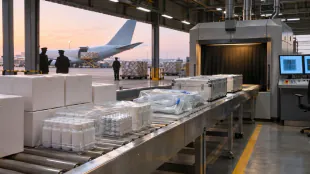 India proposes more import entry points for drugs and medical devices

 Derek Tierney Outlines Ten-Year Strategy for National Digital Health System

 NBC’s Steve Kornacki Reveals Tech Habits Ahead of Midterm Elections

 India and Israel oppose UN draft on regional conventional arms control

 BLS Polymers shares open 65.3% above IPO price

 Capital-markets shares rally as Motilal Oswal and Angel One lead gains

 Latino Voters Defy ICE Fears, Turn Out in Record Numbers for Midterms

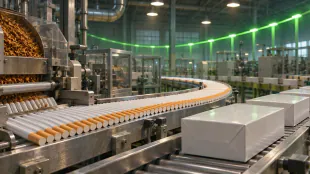 ITC shares rise as analysts anticipate gradual cigarette-business recovery

 Reliance rally puts historical one-year return pattern in focus

 Kuwait edges Oman 1-0 in veterans Gulf Cup in Doha

 Saudi Aramco quarterly profit climbs 34.6% amid elevated oil prices
Google on Wednesday announced the launch of Gemini 2.0, its most advanced artificial intelligence model to date, as the world's tech giants race to take the lead in the fast developing technology.
CEO Sundar Pichai said the new model would be marking what the company calls "a new agentic era" in AI development, with AI models designed to understand and make decisions about the world around you.
"Gemini 2.0 is about making information much more useful," Pichai said in the announcement, emphasizing the model's enhanced ability to understand context, think multiple steps ahead, and take supervised actions on behalf of users.
Google, ChatGPT maker OpenAI, Meta and Amazon are furiously taking steps to release more powerful AI models despite their immense cost and some questions about their immediate usefulness to the broader economy.
An AI agent, the latest Silicon Valley trend, is a digital helper that is supposed to sense surroundings, make decisions, and take actions to achieve specific goals.
The tech giants promise that agents will be the next stage of an AI revolution that was sparked by the 2022 launch of ChatGPT, which took the world by storm.
Gemini 2.0 is initially being rolled out to developers and trusted testers, with plans for broader integration across Google's products, particularly in Search and the Gemini platform.
The technology is powered by Google's sixth-generation TPU (Tensor Processing Unit) hardware, dubbed Trillium, which the company has now made generally available to customers.
Google emphasized that Trillium processors were used exclusively for both training and running Gemini 2.0.
Most AI training has been monopolized by chip juggernaut Nvidia, which has been catapulted by the AI explosion to become one of the world's most valuable companies.
Google said that millions of developers are already building applications with Gemini technology, which has been integrated into seven Google products, each serving more than two billion users.
The broader rollout of Gemini 2.0's enhanced Search capabilities is scheduled for early 2025, with plans to expand AI Overviews to additional countries and languages throughout the year.
The first release from the 2.0 family of models will be Gemini 2.0 Flash, offering faster performance while handling multiple types of input (text, images, video, audio) and output (including generated images and text-to-speech).
The Gemini app is getting 2.0 Flash integration globally, with plans to expand to more Google products in early 2025.
W.Stewart--AT