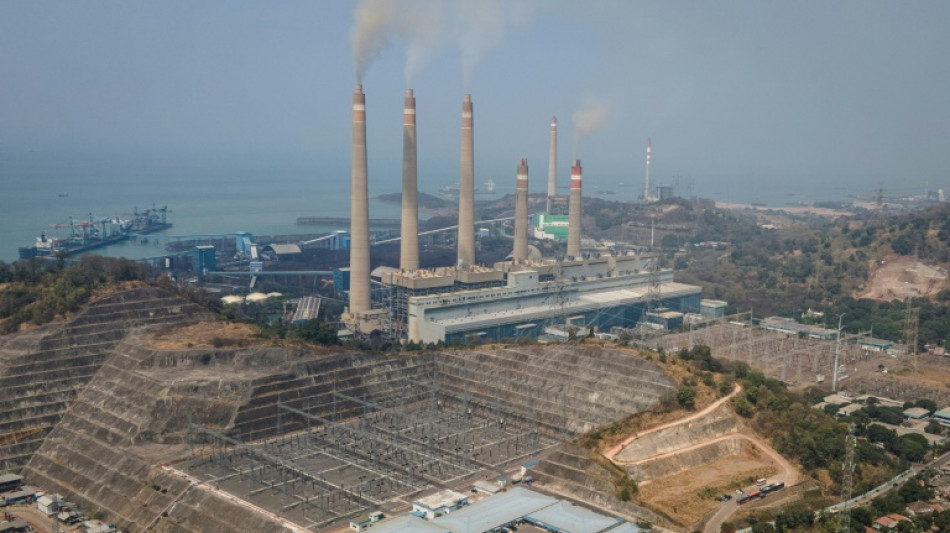
Indonesia's new coal phase-out goal sets 'daunting task' / Photo: Ronald SIAGIAN - AFP/File

 Ohtani 'unlikely' to pitch again this season, says Dodgers manager

 Driver thanks 'superhero' rival for saving him from flaming race car

 Can dogs sniff cancer? AI joins the hunt in India

 Shelton steams into US Open quarter-final clash with Alcaraz

 25 years on, America seeks to keep 9/11 memories alive
 'Trumpapalooza' tests Republican bet on unpopular US president
 Pegula tops Cirstea to reach US Open quarter-finals

 Australians could opt out of social media algorithms under new law

 Tiafoe tops Medvedev in straight sets at US Open
 Zverev seeks US Open last eight as Osaka faces Rybakina

 Alcaraz turns up heat to reach US Open quarters
 Gatti salvages Juve draw with AC Milan in Serie A

 Sinayoko stars as unbeaten Paris FC down Marseille
 Still on top: 'Spider-Man' dominates North American box office
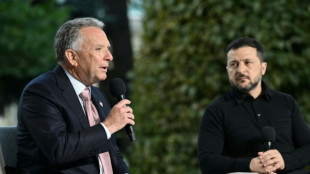 Zelensky in fresh talks with US envoys: Ukraine official

 Noskova edges Kostyuk to reach US Open quarter-finals

 Alonso urges Chelsea to learn from painful defeat at Arsenal

 Defending champion Sabalenka reaches US Open quarter-finals

 Minnows Augsburg sink Frankfurt to top Bundesliga table

 Yamal hits double as 'nearly perfect' Barca thrash Valencia

 Antonelli living 'a dream' after astonishing home win

 Impressive Daryz keeps Arc double dream alive
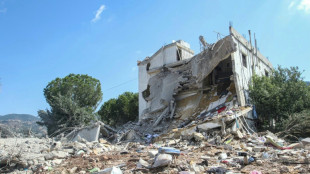
 Strasbourg hit Troyes for six as Amo-Ameyaw sparkles

 German far-right AfD landslide winner in eastern state vote

 Carrick defends Man Utd start despite defensive concerns

Meeting Indonesia's pledge to phase out coal power in just 15 years and reach net-zero emissions by mid-century is a "daunting task" that will require immediate and ambitious action, experts warn.
New President Prabowo Subianto offered a surprise commitment at last month's G20 summit to close hundreds of coal and fossil-fuel power plants by 2040, a bold pledge from one of the world's top coal producers and consumers.
"It will be difficult to achieve. We need a total change to do it," said Fahmy Radhi, a lecturer and energy economist at Gadjahmada University.
Indonesia currently has 253 operational coal-fired power plants, according to the Ministry of Energy and Mineral Resources, including Southeast Asia's biggest at the Suralaya complex on Java island.
Dozens more are under construction, including so-called captive coal plants that supply energy to industry rather than the grid.
Shutting down this network to achieve Prabowo's target of meeting net-zero emissions a decade earlier than previously planned could cost tens of billions of dollars, according to estimates by researchers.
And while Indonesia secured a $20 billion Just Energy Transition Partnership with developed nations in 2022, which was supposed to speed its clean energy transition, little of that money has been seen so far.
Jakarta's goal before Prabowo's announcement was to close 13 coal-fired plants by 2030, indicating the ambition in his new timeline.
The government says it wants to build over 75 gigawatts of renewable energy capacity by 2040 but so far has laid out little detail on how it hopes to achieve its new aims.
Prabowo's brother Hashim Djojohadikusumo, a businessman with interests in mining and renewable energy who is now special envoy for energy and the environment, said Jakarta wants to build two nuclear power plants.
But construction is far off, with Jakarta yet to even propose locations for them.
"The commitment is there, but I currently don't see any implementation or realisation," said Fahmy.
- Gear shift -
The archipelago's coal addiction has proven hard to break before.
Prabowo's predecessor Joko Widodo announced a moratorium on new coal power plant construction in 2022.
However, projects agreed before the ban continued and coal still accounts for two-thirds of power generation, according to the International Energy Agency.
That reflects the fact that coal is a cheap, reliable resource for rapidly expanding economies like Indonesia, where energy demand is steadily growing.
Indonesia's coal plants are also mostly young, making retiring them early an expensive prospect.
The Institute for Essential Services Reform (IESR), a Jakarta-based energy think tank, estimated Indonesia would need $27 billion by 2040 to shut down coal power plants that generate a total capacity of 45 gigawatts.
And state electricity company PLN, which says shutting a single plant could run close to $2 billion, insists it will not shoulder the cost.
"Shutting down a coal power plant must be cost-neutral. If there are additional costs, they're not the responsibility of the government or PLN," its director Darmawan Prasodjo told parliament last week.
Campaigners argue a gear shift is needed.
"There are still many policies that don't aim for the real energy transition," Adila Isfandiary, a climate and energy campaigner at Greenpeace Indonesia, told AFP.
"Our investment climate is not that good, (investors) still don't see renewable energy as a bankable project for them, especially because coal is still very cheap," she said.
- 'Actually doable' -
Experts say there is a pathway to achieving its targets if the government is serious.
It will need to retire three gigawatts of coal capacity annually over the next 15 years while swiftly ramping up renewable energy, particularly solar, according to energy think tank Ember.
Indonesia launched the region's largest floating solar plant last year with a capacity of 192 megawatts and it also has untapped biomass and geothermal energy capacity.
Most of all, the government needs to match its bold initiative with a bold roadmap, said IESR executive director Fabby Tumiwa.
"This whole thing is a daunting task and a very expensive one at that," he told AFP.
"We need to treat this as a mission and to achieve it we need changes, improvement, and reformation.
The government must ensure no new coal construction after next year and refuse extensions to the plants set for retirement.
It can also streamline regulations and provide incentives for renewable energy, he said.
"Now it might feel like a mission to Mars," Fabby said.
"But if we approach it aggressively, it's actually doable."
A.Williams--AT