OECD warns of protectionism weeks before Trump return / Photo: CHIP SOMODEVILLA - GETTY IMAGES NORTH AMERICA/AFP/File

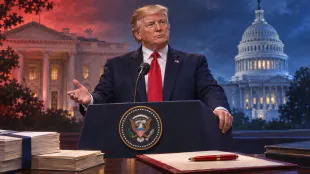 Trump Signals Willingness to Work With Democrats After Midterm Defeat

 Qatar media bodies discuss support for humanitarian initiatives

 InterContinental Hotels Group PLC Announces Transaction in Own Shares - November 04

 No. 22 UCLA defeats No. 5 Arizona 84-75 despite Kharchenkov's 38 points

 Vessel operator seeks witnesses after Vancouver grounding

 US Air Force deploys F-16 fighters to remote Aleutian base for readiness drill

 Bezos grant helps Seattle nonprofit move thousands of families toward housing

 Shrini Srivastava joins crew of Varanasi-Delhi Vande Bharat Sleeper service

 Nearly Half of Australian Workers Overqualified, Survey Finds

 RBI eases export-declaration compliance for individual service exporters

 India proposes more import entry points for drugs and medical devices

 Derek Tierney Outlines Ten-Year Strategy for National Digital Health System

 NBC’s Steve Kornacki Reveals Tech Habits Ahead of Midterm Elections

 India and Israel oppose UN draft on regional conventional arms control

 BLS Polymers shares open 65.3% above IPO price

 Capital-markets shares rally as Motilal Oswal and Angel One lead gains

 Latino Voters Defy ICE Fears, Turn Out in Record Numbers for Midterms

 ITC shares rise as analysts anticipate gradual cigarette-business recovery

 Reliance rally puts historical one-year return pattern in focus

 Kuwait edges Oman 1-0 in veterans Gulf Cup in Doha

 Saudi Aramco quarterly profit climbs 34.6% amid elevated oil prices
The OECD warned Wednesday that protectionist trade measures pose a major risk to disrupting the world economy, just weeks before Donald Trump is set to return to the White House.
The Organisation for Economic Cooperation and Development, a Paris-based body that advises industrialised nations on policy matters, never named Trump in its updated analysis of the world economy.
But with the president-elect vowing to slap tariffs on US trading partners after his return to power next month, it was abundantly clear that the OECD was warning about Trump's possible measures.
While the organisation raised its 2025 global growth forecast to 3.3 percent, it cautioned that "greater trade protectionism, particularly from the largest economies" poses a "downside risk" along with geopolitical tensions and high public debts.
On the campaign trail, Trump threatened blanket tariffs of at least 10 percent on all imports and since his election has vowed to slap 25 percent import tariffs against Canada and Mexico, top US trade partners.
"Increases in trade-restrictive measures could raise costs and prices, deter investment, weaken innovation and ultimately lower growth," the OECD warned in its economic outlook.
"Further increases in global trade restrictions would add to import prices, raise production costs for businesses and reduce living standards for consumers," it added.
During his first term in office from 2017 to 2021, Trump slapped tariffs on certain products from China and other trading partners, including the European Union, but on a smaller scale than the measures he has pledged to take upon his return to the White House.
A recent study by the Roland Berger consultancy calculated the cost of the US measures and likely countermeasures by China and the EU at more than $2.1 trillion through 2029.
- 'Major shocks' -
Trump is far from the only risk in terms of protectionist measures.
The Covid-19 pandemic and the war in Ukraine showed the dependency of many countries upon global trade, but instead of facilitating the exchange of goods and service many countries have sought to shorten certain supply chains and protect markets.
A spat has also broken out between Brussels and Beijing after the EU imposed import tariffs on Chinese electric vehicles. China has retaliated with tariffs on EU brandy, including cognac.
The OECD noted "the global economy has demonstrated remarkable resilience despite being subject to major shocks such as the pandemic and an energy crisis."
It even raised its global growth forecast for next year to 3.3 percent, an increase of 0.1 percentage points from its previous outlook in September, due in large part to the strong performance of the US economy.
- Strong US growth -
The OECD now sees the US economy expanding by 2.4 percent next year, up from its September forecast of 1.6 percent growth.
It also raised its forecast of British growth next year by 0.5 percentage points, to 1.7 percent, due to higher public spending planned by the new Labour government.
China's economy is now expected to expand by 4.7 percent next year, an increase of 0.2 percentage points, while India's growth forecast was raised 0.1 percentage points to 6.9 percent.
But both France and Germany saw to 0.3 percentage point cuts to their 2025 growth forecasts, to 0.9 percent and 0.7 percent, as both countries face political crises amid mounting fiscal pressure.
The downgraded forecast comes as France's new minority government faces being brought down Wednesday by lawmakers after it forced through the adoption of the social welfare budget.
N.Mitchell--AT