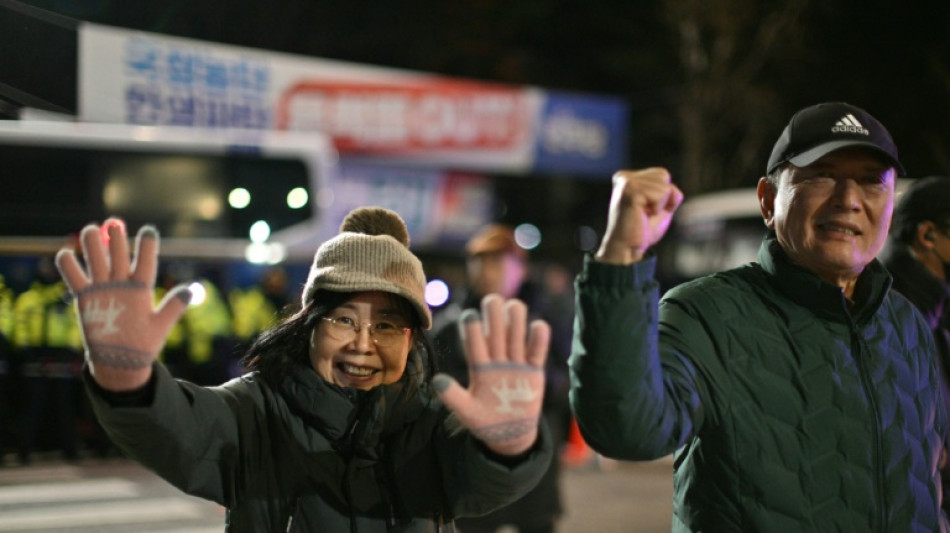
Seoul stocks sink amid S. Korea drama as Asian markets mixed / Photo: Anthony WALLACE - AFP

 Philippine sensation Eala looks forward to Asian Games 'fun'

 Jakarta airport extends closure after volcano eruption
 Lonely woman director in Venice sees industry backsliding on gender
 Tech firms rally on mixed day for Asian markets, with eyes on US inflation
 World number one An sends Asian Games warning with China hat-trick
 PSG go for three in a row as Champions League returns

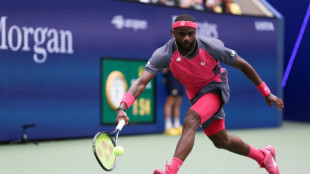
 "Super-human' Alcaraz books US Open quarter-final clash with Shelton
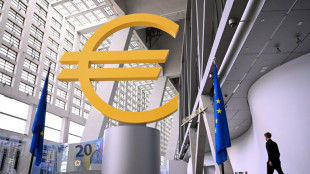 ECB set to hike interest rates as Iran war flares anew
 AI data centers are less thirsty now, tech giants say
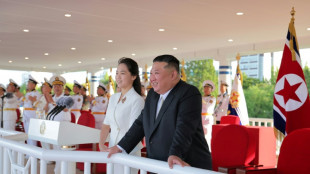 North Korea vows nuclear-armed navy as US ally drills open

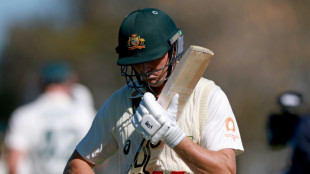 Under-fire Labuschagne named in Australia Test squad for South Africa

 Enjoying the moment: Alcaraz steps it up to reach US Open quarter-finals
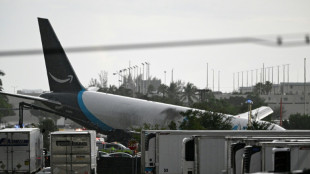 Five dead, five injured after Amazon cargo plane overshoots Miami runway
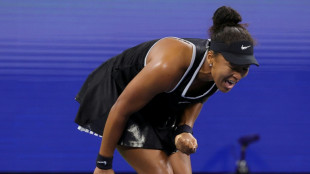
 La Rochelle half-backs lead fightback against Toulouse
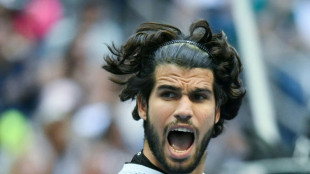
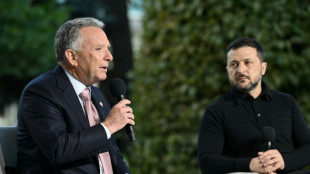 US envoys have 'more effective proposals': Ukraine official

 Defending champion Alcaraz powers into US Open quarter-finals

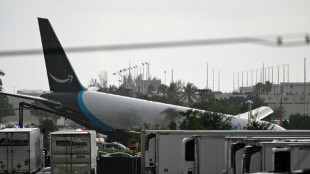 Amazon cargo plane overshoots Miami runway, hits vehicles, catches fire

 Toll from Yemen clashes passes 300 as civilians flee homes
 Sabalenka books US Open quarter-final clash with Noskova

 German AfD supporters jubilant at far right's thumping win
 Zelensky warns war likely to continue into winter after US talks

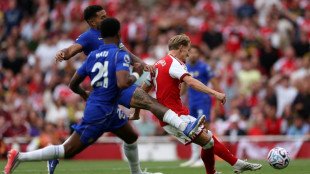 Arsenal deliver statement fightback to end Chelsea's flying start

 Leclerc accepts blame as Hamilton laments Ferrari approach

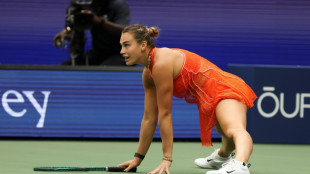 Sabalenka surges past Townsend to reach US Open quarter-finals

 Smiling face of Germany's far-right AfD: Ulrich Siegmund
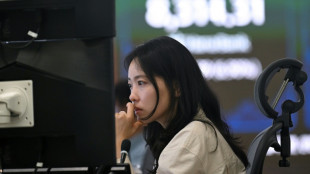
South Korean stocks sank Wednesday while the won rebounded from earlier losses after President Yoon Suk Yeol dramatically declared martial law overnight before reversing the decision hours later.
The shock announcement sent shivers through the trading floor in Seoul and fuelled a political crisis in Asia's third-biggest economy, with the opposition party saying it had submitted a motion to impeach Yoon.
Investors are now keeping a close eye on developments in the country, with analysts pointing out that the upheaval comes as authorities steeled for the second US presidency of Donald Trump who has vowed to reignite his hardball trade policy.
The Kospi index ended down more than one percent, having shed as much as 2.3 percent at the open, as traders fretted over the impact of Yoon declaring South Korea's first martial law in more than four decades.
He said the decision was made "to safeguard a liberal South Korea from the threats posed by North Korea's communist forces and to eliminate anti-state elements plundering people's freedom and happiness".
However, he backed down hours later when lawmakers voted to oppose the declaration, while thousands of protesters took to the streets and the nation's largest umbrella labour union called an "indefinite general strike" until Yoon resigned.
The won tumbled more than three percent to a two-year low of 1,444 per dollar after the declaration, then bounced back to around 1,410 following the U-turn.
"Rarely does a combined sell-off in a country's stocks, bonds, and currency feel like a relief rally," said Thomas Mathews, head of Asia-Pacific markets at Capital Economics.
Mathews said the situation could have been "much worse" had the president not aborted his plan.
"Investors now 'only' have to worry about a period of significant political uncertainty," he said.
The South Korean finance ministry and central bank looked to provide stability and reassure markets.
"As announced together with the government, it has been decided to temporarily supply sufficient liquidity until the financial and foreign exchange markets stabilise," the Bank of Korea said.
It added that "the range of securities eligible for (repo) transactions and the target institutions will be expanded".
Deputy Prime Minister Choi Sang-mok, who also holds the economy portfolio, said financial authorities will keep international partners informed about developments.
But Michael Wan at MUFG warned of remaining uncertainty, despite the measures to recover from the initial economic hit.
"From a macro perspective, South Korea was already one of the more vulnerable countries to the impact of Trump's proposed tariffs," he said in a commentary.
"This recent development could raise some further risk premium on the currency at least until we get clarity on political stability," he added.
The losses in Seoul came on a mixed day for Asia markets, with Tokyo, Hong Kong, Singapore, Taipei, Mumbai, Bangkok and Jakarta rising but Shanghai, Sydney, Wellington and Manila falling.
Wall Street had provided a healthy lead, with the S&P 500 and Nasdaq hitting fresh records as investors try to assess the chances of the Federal Reserve slashing interest rates again this month.
Meanwhile, Germany's DAX ended above 20,000 for the first time.
Even Paris eked out gains despite the brewing political crisis in France, where opposition lawmakers vowed to topple the three-month-old minority government of Prime Minister Michel Barnier in a no-confidence vote owing to a budget standoff.
The euro remained wedged close to a 14-month low of around $1.0500 on concerns about the outlook for the eurozone's number two economy.
Oil prices extended gains after surging around 2.5 percent Tuesday on reports that major producers at the OPEC+ grouping were close to a deal to extend output limits.
- Key figures around 0710 GMT -
Seoul - Kospi Index: DOWN 1.4 percent at 2,464.00 (close)
Tokyo - Nikkei 225: UP 0.1 percent at 39,276.39 (close)
Hong Kong - Hang Seng Index: UP 0.1 percent at 19,756.97
Shanghai - Composite: DOWN 0.4 percent at 3,364.65 (close)
Euro/dollar: DOWN at $1.0510 from $1.0511 on Tuesday
Pound/dollar: UP at $1.2692 from $1.2673
Dollar/yen: UP at 150.00 yen from 149.53 yen
Euro/pound: DOWN at 82.88 from 82.94 pence
West Texas Intermediate: UP 0.3 percent at $70.12 per barrel
Brent North Sea Crude: UP 0.3 percent at $73.82 per barrel
New York - Dow: DOWN 0.2 percent at 44,705.53 (close)
London - FTSE 100: UP 0.6 percent at 8,359.41 (close)
R.Chavez--AT